
Mark Zuckerberg pushes Meta to build a money-free betting alternative to Kalshi and Polymarket
If prediction markets face regulation, Zuck is betting the social layer can still cash out, minus cash bets.
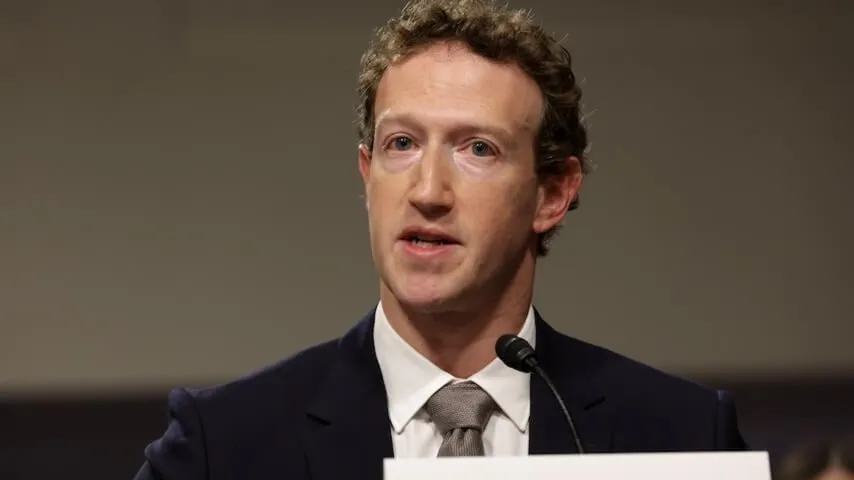
Mark Zuckerberg is reportedly pushing Meta designers to develop Arena, a prediction market project Meta plans to launch, drawing inspiration from Kalshi and Polymarket. The reported twist is that Arena would use meaningless points instead of real cash, potentially reshaping how social platforms intersect with wagering.
Mark Zuckerberg is reportedly nudging Meta hard toward launching Arena, a prediction market that aims to live in the same attention space currently served up by Kalshi and Polymarket. The key detail is also the most revealing: the project reportedly runs on meaningless “points,” not actual cash. In other words, Meta is exploring the dopamine loop without the money part, at least on paper.
Why does that matter right now? Because prediction markets have become a regulatory lightning rod, with growing scrutiny from many legislators and state governments. Zuckerberg’s reported approach suggests Meta is trying to keep the “betting” excitement but reduce the legal and political heat that comes with turning a social platform into a site where users wager real money. If you are a product leader in tech, media, or fintech, this is the new strategic question: can you get the engagement mechanics of wagering without crossing the lines that trigger enforcement.
The story, per reporting this week in The New York Times, places Arena as Meta’s attempt to participate in a market that has shifted betting out of stadiums and into the internet. The same reporting frames prediction markets as the next step in the broader online gambling ecosystem, where entertainment marketing and wagering have increasingly blurred. The A.V. Club notes how sports betting sites recruit recognizable celebrities to voice commercials while bundling messaging into “content,” and it points to how prediction markets allow bets to move into premise-driven questions like “Will the United States invade other countries and capture their heads of state?” That kind of packaging is exactly why regulators are nervous: it is not just gambling mechanics, it is a scalable format.
Zoom out for a second and you see why Arena, if it launches, is more than a side project. Prediction markets are designed around forecasting and scoring, but they are also built to be sticky. Users come back because they want to test their judgment against other people and see whether they were right. Meta is reportedly trying to translate that into a social conversation model. In the source, Meta executives are quoted saying, “We believe that prediction markets are one of the more interesting new content types. With the right containers, the social conversation is the payoff as people aim to show off how good they are at predicting things to their friends.” That quote matters because it signals Meta’s framing: prediction markets as “content,” with the “container” being social.
The “money-free” twist deepens the incentive picture. The source lays out two possibilities, both about risk. One is straightforward: Meta may want to avoid getting yelled at or regulated by people who would be angry about Facebook turning into an actual gambling site. The other is more cynical and focused on user psychology: perhaps people are more addicted to the betting experience itself, rather than the winning money. For decision-makers, the practical takeaway is that Meta seems to be studying consumer behavior while managing regulatory optics. Even if Arena uses points, it still would aim to replicate the core interaction: choose a side, track outcomes, and return to see how you did.
Meanwhile, the prediction market industry is not operating in a regulatory vacuum. The source says prediction markets have faced increased scrutiny from many legislators and state governments. It also notes that the federal government has been very slow to say anything negative, and it calls out an additional political wrinkle: both Kalshi and Polymarket have paid Donald Trump, Jr., to serve as a “strategic advisers” for them over the last two years. That detail is included in the source, and it is a reminder that these markets are already tangled with mainstream politics. When you add a giant like Meta to the mix, the spotlight grows brighter, and so do the questions about how “points” might still function like money in practice.
For Meta competitors and adjacent platforms, Arena is a strategic stress test. If a major platform can launch something that looks and feels like a prediction market while claiming it is “just content,” it could pressure other companies to either mimic the engagement model or differentiate themselves by going the other direction, away from anything resembling wagering. Boards should care because the risk is reputational as well as regulatory. If legislators treat “points” as a loophole, the product could still become a target. If they do not, then the engagement model could spread quickly, because social networks replicate what works.
And for founders and operators watching engagement playbooks, the broader message is simple: regulators are not the only gatekeepers here. Courts, states, federal agencies, and public opinion all act as a kind of market infrastructure. The source references a high-profile court case involving prediction markets and a U.S. Army soldier accused of making more than $400,000 off predictions fueled by knowledge of plans for the capture of Venezuela’s Nicolás Maduro earlier this year. That is an example of how “prediction” can bleed into real-world stakes. Arena is Meta’s attempt to step into a space full of real consequences while trying to control what users pay with, and therefore what regulators can claim users are doing.
This story's Key Insights and Take-aways are locked.
Create a free account to unlock Executive Actions for one credit.
Register to UnlockAlways free for Executives Club members. Join the Club
More in Business

Anthropic’s Levant Alpöge cracks the Jacobian conjecture after 87 years
A Harvard valedictorian used Claude to hit a 1939 breakthrough, but the missing “why” is the real problem.

Uber buys Delivery Hero for nearly $15B, vaulting to top food delivery outside China
The deal doubles Uber's dual-services footprint and pushes a ride-and-eats bundling play into 50 more markets.

Epic and Google drop settlement bid, forcing rival Android app stores by July 22
Google told the court it is ready to carry third-party app stores starting Wednesday, July 22.