
Matt Damon drops “The Nomad” rap for Water.org’s Get Blue, not a career pivot
He even asks Hit-Boy if the whole thing is just Damon spelled backwards, then explains why the campaign matters.
Matt Damon debuted his rap alter ego “The Nomad” in a Water.org clip to promote the charity’s “Get Blue” initiative, alongside brands like Gap, Starbucks, and Amazon. For decision-makers, the playbook is clear: entertainment plus measurable donation triggers is how Water.org plans to scale awareness fast.
Matt Damon is stepping into the studio, but not into a music career. In a clip posted to Instagram earlier this month, the actor debuts his rap alter ego, “The Nomad,” to riff on the “constant struggle” to get water into the homes of people who need it most. Damon’s pitch has an important qualifier: it is for charity, and it is meant to cut through noise, not chase stardom.
The clip also includes a moment of producer-led reality check. Damon seeks advice from Hit-Boy, the Grammy-winning producer, who jokes, “Isn’t ‘Nomad’ just ‘Damon’ spelled backwards?” Damon is embarrassed by the line, but he doubles down on the mission. He tells Billboard, “We’re always looking for ways to cut through all the noise, and sometimes, humor is a shortcut to get people’s attention. We’ll try anything, you know?” And when it comes to the big question people always ask when celebrities try something new, Damon shuts it down: “Obviously, Kendrick has nothing to worry about. I’m not gonna become a rapper,” he says. “I don’t think that would go well.”
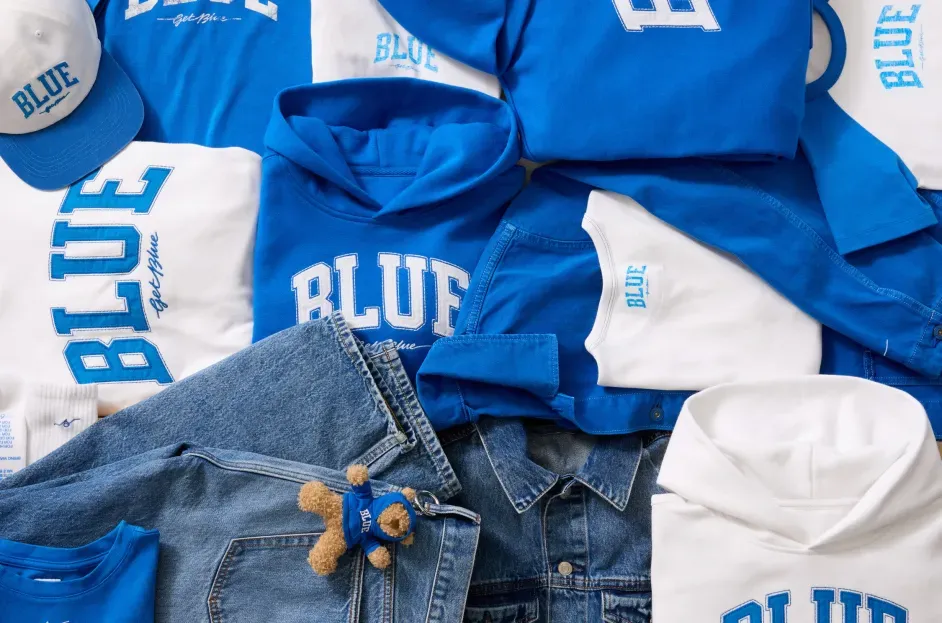
So what is Damon actually promoting? Water.org’s “Get Blue” campaign, built around partnerships with mainstream brands that already sit in the daily lives of buyers. The mechanics are straightforward: for every purchase of a Get Blue product on the Gap site, on Amazon’s Get Blue storefront (the official page is coming in July), or a purchase of two specialty drinks on Starbucks (the Iced Blue Coconut Matcha and the Blue Coconut Refresher), the brands will make a donation to Water.org. The campaign is also designed to be “always-on,” with incentives embedded into shopping behavior rather than requiring people to seek donations out on their own.
Amazon’s layer is especially targeted at how people actually consume music and devices. Amazon says it will donate $1 to Water.org every time someone plays a participating artist’s REDISCOVER playlist, with the exact list of artists announced in July. For even lower friction, customers with an Alexa-enabled device can say, “Alexa, donate to Get Blue,” and Amazon will contribute $5 on their behalf. In other words, Water.org is treating awareness like a funnel: product pages and playlists become the top, and built-in donation triggers become the conversion.
Damon’s personal angle is not brand lore, it is relatability. He points to the difficulty of connecting emotionally to global issues when the people affected feel far away. He says it is “so hard for us to relate to growing up here,” because “You’re only a few steps away from a clean drink of water, whereas if you think about AIDS or cancer or things like that, usually there’s an emotional connection for somebody. You’re never very many degrees removed from somebody who’s struggling with that.” Water becomes the counterpoint. While his framing is emotional, the underlying fact is concrete: Damon notes that more than two billion people still lack access to safe water, “that’s one in four people globally.”
That number matters for strategic reasons beyond shock value. Water scarcity and safe drinking water access are the kind of problems that tend to compete poorly for attention unless a campaign makes them feel immediate. Damon argues Get Blue does that by “rais[ing] the awareness, and then hopefully, we can start this larger cultural conversation, and it’ll stay at the front of people’s minds.” It is the same logic behind why brands keep chasing cultural moments. The difference here is that Water.org is trying to keep the moment from being purely aesthetic by tying it to donations.
Water.org’s leadership describes the audience problem in plainer terms. The campaign continues work led for decades by Gary White, the CEO and co-founder of Water.org. The charity works with local partners on the ground to offer small, affordable loans so families can get pipes, pumps, or plumbing needed for safe drinking water at home. Education is also a key part of the advocacy, because White says many young children in developing countries cannot attend school since they are in charge of water collection for their families. White tells Billboard, “So many people around the world, when they wake up tonight, they don’t know where they’re going to get their water, and they have to spend time and sometimes money just to get it.”
White’s goal for Get Blue is measurable, which is exactly what makes the charity partnerships business-like. He says, “We’ve reached over 90 million people with our water programs and I think in the next four years, we can reach another 100 million.” Importantly, White ties that target to partners with reach: “We need to bring in a wider audience,” and it is “critically important” to have partners “who have a platform, who have a voice, who know how to connect through cool shirts or music, because that’s where people live.” That is not a throwaway line. It is a thesis about scale: partnerships reduce the cost and complexity of reaching new audiences, while Water.org brings the operational model on the ground.
For executives, creators, and anyone building programs that depend on public attention, Damon’s “The Nomad” moment is a reminder that culture is distribution. It is also a reminder that distribution only counts when it has a conversion path. Here, the conversion path is explicit, from Gap purchases to Starbucks drinks to Amazon playlists and Alexa prompts. And the second-order implication is bigger than one viral clip: when charities borrow the incentive architecture of retail and platforms, they can move beyond “awareness” and toward repeatable mechanisms for donations and reach. Damon may be adamant he will not become a rapper. But Water.org is proving it does not need a star to be famous. It needs a star to get people to click, buy, listen, and give.
This story's Key Insights and Take-aways are locked.
Create a free account to unlock Executive Actions for one credit.
Register to UnlockAlways free for Executives Club members. Join the Club
More in Entertainment

Russell Brand's accuser 'bewildered and confused' as he denies 7 sex charges
The criminal case against the comedian is a live test of how media companies manage talent risk when serious allegations go public.

'It's a Magic Trick': Ballet Experts Say Rosalía's SNL Pose Is Impossible
Three ballet experts tell Rolling Stone Rosalía's gravity-defying SNL stillness shouldn't be possible - and why the debate is now part of the show.

Activision CMO: GTA 6 Will Boost Call of Duty, Not Bury It
Activision's top marketer says Rockstar's blockbuster will drive players back to consoles and into Modern Warfare 4, even as the company admits its recent strategy failed.