

Mbappe’s eighth World Cup goal and Dembele’s second send France past Morocco into semis
France turn Mbappe’s earlier penalty miss into momentum, dispatch Morocco, and book a semi-final spot.
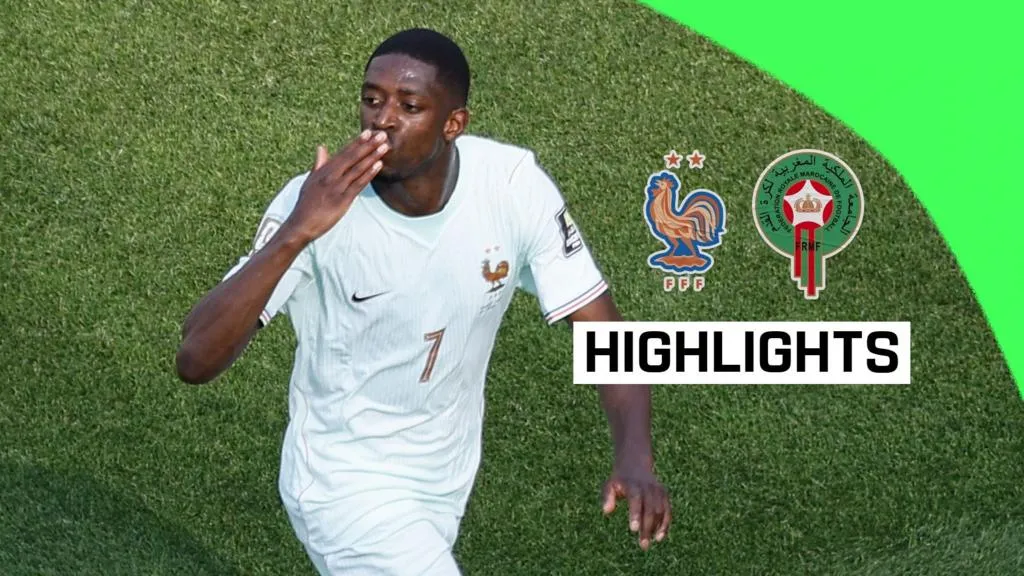
Kylian Mbappe scored his eighth goal of this World Cup, making up for an earlier penalty miss, as Ousmane Dembele added a second. France proved too good for Morocco and moved into the semi-finals, setting up what comes next in the tournament.
France did not just win. It erased a potential storyline in real time. Kylian Mbappe scored his eighth goal of this World Cup to make up for an earlier penalty miss, and Ousmane Dembele added a second as France proved too good for Morocco and moved into the semi-finals.
That sequence matters because it converts pressure into execution. A missed penalty can freeze a team, or at least make the rest of the match feel like damage control. Instead, Mbappe immediately flipped the emotional and tactical balance by finding the net again, and Dembele’s second turned what could have been a tense finish into a cleaner, more dominant passage through the match.
If you are a decision-maker watching this kind of moment, you can translate the underlying pattern into board-level thinking without pretending football is finance. In high-stakes environments, the first signal people react to is often the error. Teams, like organizations, can get stuck in the “what went wrong” loop, which drains decision quality. France avoided that trap, and the scoreline reflected it. Once Mbappe got his goal tally to eight and the team added another through Dembele, the match became less about improvisation and more about control.
Now, zoom out to the tournament context. World Cup matches are not isolated events. They are a chain of consequences where fitness, confidence, and game-plan clarity compound. When a side reaches the semi-finals, the “who looked best under pressure” narrative becomes more than a headline. It shapes how players manage minutes, how coaches plan adjustments, and how opponents prepare. France’s semi-final qualification is a clear stake because every next game is a smaller margin between winning and going home. A comfortable win matters because it usually means fewer lingering problems for the next round, even if you cannot measure that directly from a single report.
There is also a classic competitive dynamic hiding in plain sight: penalty-taking is both skill and psychology. Mbappe’s earlier penalty miss introduced risk, but his ability to score again suggests something teams always chase: resilience that shows up in performance, not speeches. In organizational terms, it is the difference between “we had a bad moment” and “we corrected it fast.” France corrected it in this match, and by the time Dembele added a second, the correction had become a verdict.
For executives, that is the transferable lesson in incentives. When a high performer underperforms in one narrow moment, the natural governance instinct is to over-monitor the next attempt. But France did not appear to crumble into caution. The team kept functioning through the plan, and Mbappe’s response converted individual accountability into collective momentum. If you run a business, you recognize the management challenge: how do you build systems that let people recover quickly from mistakes without triggering paralysis?
The strategic stakes extend beyond France and Morocco because semi-finalists change the behavior of everyone around them. Opponents can adjust their preparation based on how a team handled adversity. If France can absorb a penalty miss, still generate goals, and keep the match under control, then upcoming opponents cannot reduce France to a single threat. They need to prepare for both the scoring output and the psychological stability that helped turn the match.
Finally, think about what this result signals about the tournament ladder. France are through to the semi-finals after a comfortable win over Morocco, with Mbappe moving to eight goals at this World Cup and Dembele adding the second. Those are not just numbers. They are indicators of continuity: goal production from key players, and the ability to keep performance steady after a wobble. In a competition where one moment can decide everything, that kind of steadiness is a strategic advantage, and it will define what peers watching today are thinking about tomorrow.
This story's Key Insights and Take-aways are locked.
Create a free account to unlock Executive Actions for one credit.
Register to UnlockAlways free for Executives Club members. Join the Club
More in Entertainment

12TB Steam 'teraleak' goes beyond Valve: GTA 3, Mafia 2 prototypes exposed
A 12-terabyte dump of Steam data reveals prototypes and builds of third-party classics like GTA 3 and Mafia 2, plus unreleased Valve content, rewriting game history.

LinkedIn's romance problem: 1 in 4 workers say dating on it is fair game
A new survey shows a quarter of U.S. employees treat the professional network as fair game for romance, even as LinkedIn bans it and removes hundreds of thousands of offending posts.

Enhypen's first No. 1 album breaks K-pop's Billboard 200 streak
The K-pop group's 98,000-unit debut tops the chart while Dolly Parton's catalog reentry shows how death reshapes streaming.