

McDonald's sells HK$110 million Quarry Bay shop, continuing Hong Kong real-estate sell-down
What one HK$110 million retail sale signals about how McDonald's is re-monetizing long-held property across Hong Kong.
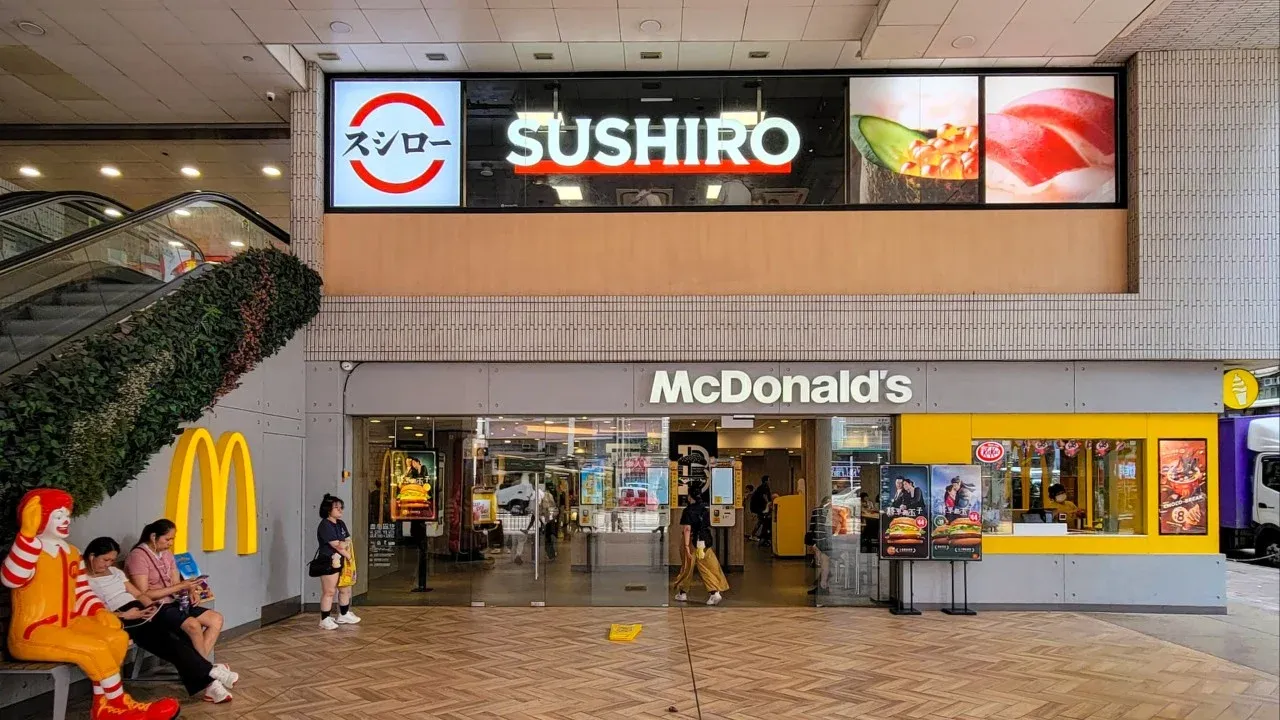
McDonald's, via a company linked to it (MCD Real Properties), sold Shop 1 at Parkvale Place in Quarry Bay for HK$110 million (US$14 million), based on Hong Kong Land Registry records. For decision-makers, it is another datapoint in a multi-year strategy that turns accumulated property exposure into cash and liquidity.
McDonald's just added another HK$110 million retail deal to its Hong Kong property sell-down. The company disposed of Shop 1 on the upper ground floor of Parkvale Place, located on King’s Road in Quarry Bay, with Land Registry records showing the shop changed hands for HK$110 million (US$14 million). In plain terms: a brand best known for burgers is still actively managing a portfolio of real estate it built while expanding quickly across the city over the past few decades.
The buyer was Uni Investment, which purchased the unit from MCD Real Properties, a company linked to McDonald’s. That matters because it connects the dots between corporate appetite for cash and a real estate strategy that has been running for years. This is not a one-off divestment. It is part of a longer effort to cash in on Hong Kong real estate assets accumulated during McDonald’s earlier expansion.
To understand why this keeps showing up, it helps to look at how real estate behaves as an operating asset versus a financial one. For retailers, property can be a platform: a way to lock in locations, build brand presence, and stabilize costs. But property can also become a concentrated risk and a capital sink, especially in dense cities like Hong Kong where asset values, leasing economics, and regulatory frameworks can shift. When companies sell retail units, they are making a deliberate choice to convert something fixed and local into something liquid and portable.
McDonald’s approach looks like the latter. The SCMP Business report frames the latest disposal as continuation of “years-long effort to cash in on real estate assets.” That phrasing is the key. The company is not merely reacting to a single market moment. It is harvesting value from assets accumulated during earlier decades of rapid expansion, when the economics of establishing a physical footprint often justified tying capital to prime locations.
The deal details are also a reminder of how corporate real estate decisions get validated. Land Registry records are public documentation, which means the market does not have to guess. Here, the records show the transaction size, the unit, and the chain: MCD Real Properties sells Shop 1, Uni Investment buys it, and McDonald’s stays connected as the brand and the linked corporate vehicle. For executives, that transparency changes the interpretation. It suggests a formal process, not a casual disposal.
There is also a second-order implication for boards and finance leaders: property sales can alter the company’s capital allocation storyline even when the core business looks unchanged. In other words, investors may read the strategy as part of broader liquidity management. If you are a CFO or treasurer, the question becomes less “why sell this shop?” and more “how does this fit into the cash needs and risk appetite of the overall company?” A steady pattern of sales can reduce exposure to property-specific downside and free up capital that can be redeployed elsewhere, even if the reported business headlines focus on menu items, store openings, and franchise operations.
For peers, the strategic stakes are simple. In markets where prime real estate is scarce and expensive, companies often face a trade-off between operational control and financial flexibility. McDonald’s latest HK$110 million Quarry Bay sale shows one way to resolve that tension: keep the brand, keep the operating model, but periodically monetize property holdings rather than letting them remain locked up indefinitely.
If you are tracking similar retail and franchise operators, this is the pattern to watch. Look for linked entities, read the Land Registry disclosures, and pay attention to whether sales cluster into a consistent playbook. When they do, it signals board-level priorities about capital structure and asset recycling, not just sporadic optimization. And as long as Hong Kong property sell-down continues, McDonald’s will remain a case study in how a global consumer brand can treat real estate as a controllable financial lever, not just a historical footprint.
This story's Key Insights and Take-aways are locked.
Create a free account to unlock Executive Actions for one credit.
Register to UnlockAlways free for Executives Club members. Join the Club
More in Business

Anthropic’s Levant Alpöge cracks the Jacobian conjecture after 87 years
A Harvard valedictorian used Claude to hit a 1939 breakthrough, but the missing “why” is the real problem.

Uber buys Delivery Hero for nearly $15B, vaulting to top food delivery outside China
The deal doubles Uber's dual-services footprint and pushes a ride-and-eats bundling play into 50 more markets.

Epic and Google drop settlement bid, forcing rival Android app stores by July 22
Google told the court it is ready to carry third-party app stores starting Wednesday, July 22.