
McKinsey says China, not Vietnam or India, is still the hard reset
Joe Ngai and Nick Leung argue boards cannot swap China for a cleaner alternative, because the market still combines scale, supply chains, and brutal competition.
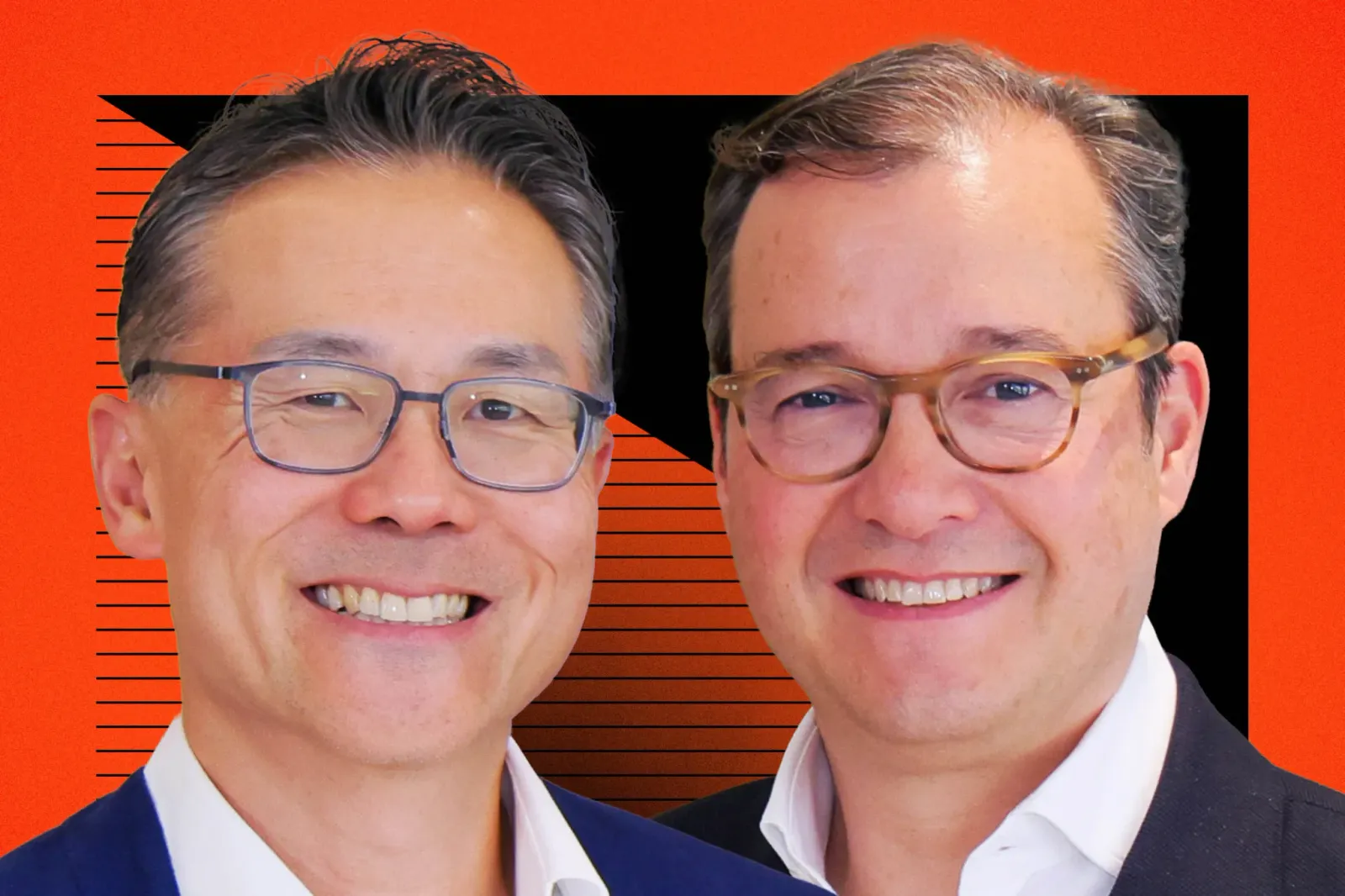
McKinsey Greater China chair Joe Ngai and McKinsey Global Institute director Nick Leung say the world's second-largest economy remains the only real China-sized market, even after years of de-risking talk. For executives, that means China strategy is no longer optional, but it has to be built for a tougher, lower-margin, hyper-competitive market.
Joe Ngai, McKinsey’s Greater China chair, is making a blunt argument to anyone still shopping for a replacement: the next China is still China. He and Nick Leung, director of the McKinsey Global Institute and Ngai’s predecessor as Greater China chair, have turned that thesis into a book, The Next China is Still China: An Insider’s Playbook for Winning in the New Era. Their core point is simple and inconvenient for boards that have spent years talking about diversifying away from China or de-risking from China: there is no other market with China’s combination of scale, manufacturing depth, and consumer power.
That is the first thing executives need to absorb. Vietnam and India can be important, but Ngai says they cannot fully replace what China offers. As he puts it, “You can’t find another China. There’s no other China out there now.” The reason that matters is not nostalgia for a giant market. It is capital allocation. China is still the world’s second-largest economy, and for multinationals deciding where to invest, build, source, and sell, the question is not whether China has changed. It has. The question is whether any rival market can match what China still does best, and McKinsey’s answer is no.
The backdrop has shifted since Ngai started saying this on social media. At the time, China was in a post-COVID slump, with sluggish consumption and a property market crash weighing on growth. Foreign companies were rethinking China both as a consumer market and as a manufacturing hub, and asking where the next China might be. Since then, the narrative has moved again. AI has reset some of the conversation around China’s ability to innovate, Chinese products are winning converts overseas, and the U.S.-China relationship is no longer in free fall following U.S. President Donald Trump’s state visit to Beijing in May, the first by a U.S. leader since Trump’s last trip in 2017. None of that means China is easy. It means it is still too big to write off.
Ngai and Leung are careful, though, not to dress this up as a happy story for incumbents. They describe China as a “hard, competitive, and oversupplied” market. That has real consequences for brands that used to treat the country like a profit machine. Nike, Starbucks, and Volkswagen are all now struggling amid fierce competition from hungry Chinese companies. For years, foreign brands benefited from a structural advantage: Chinese consumers were often willing to pay a premium for global names that beat local products. That edge is gone. Apple now contends with Huawei and Xiaomi. Nike is losing share to Li Ning and Anta Sports. General Motors, Honda, and Volkswagen are scrambling against BYD and Geely. The old playbook, where global brands assumed they could print money in China forever, no longer works.
Ngai and Leung push back hard on the familiar “overcapacity” argument that Western governments and commentators use to explain Chinese companies like BYD. The claim is that China makes more than it can absorb, then dumps the excess overseas, either to crush local competition or because it needs somewhere to send the goods. That framing has helped fuel trade protectionism in the U.S., Europe, and even in developing markets like Vietnam and Indonesia. Their counterargument is that China’s rise came from a deeper mix: the reform era starting in the 1980s, which produced entrepreneurs like Alibaba founder Jack Ma and Xiaomi founder Lei Jun; a financial system and provincial-government competition that fed cheap credit to local businesses; and consumers who move quickly to whatever delivers the best product at the lowest price. Ngai calls China “the world’s toughest gym.” Leung’s version is sharper still: Europeans once used the same kind of language to describe America as “cowboy capitalism,” and China is simply an even more intense version of that extreme entrepreneurism.
That intensity shows up in price wars that can bleed entire sectors. BYD, the world’s largest EV manufacturer, has repeatedly cut prices to grab market share, and its net profit fell 55% in the first quarter of the year. In food delivery, JD.com’s push into a market dominated by Meituan and Alibaba forced all three to spend more than 100 billion yuan, or $14 billion, on subsidies and discounts across just two quarters. Meituan, the market leader, has posted three straight quarters of net losses. Beijing has even weighed in, with state media outlet Economic Daily writing in March that the industry had fallen into “a vicious cycle of losing money in an attempt to grab market share, ultimately dragging down the broader trend of consumption recovery.” Ngai says the competition is “at 11 right now,” and that getting it down to an eight or seven would mean less waste and less capital destruction. But China’s capital controls also mean investors can be stuck with lower returns because money has nowhere else to go. As Ngai puts it, “It can be at ten-and-a-half for a very long time.”
For global multinationals, the strategic answer is becoming clearer, even if it is not comfortable. Some, like Coach and Logitech, are giving more autonomy to local executives and designers in a “China for China” strategy. Others, including Volkswagen and Stellantis, are partnering with Chinese companies to borrow their manufacturing and design capabilities. Still others, like Starbucks and General Mills, are selling their China businesses to local investors. Leung’s point is that the winners will be the companies that reimagine China as a business in itself, with its own capital, ownership, management structure, and speed. The losers will be the ones that keep running China like just another subsidiary of a global organization.
And then there is the next frontier. Chinese companies have already started taking share in Europe, Southeast Asia, and Latin America, competing on both quality and price. BYD sold more than one million cars overseas in 2025. But going global is not just a matter of shipping better products. Leung says Chinese companies are still learning how to build emotionally compelling brands, not just strong features. He points to Coca-Cola, where “Drinking Coke makes you cool,” and says the value sits in the emotional connection as much as the liquid. Some Chinese firms are starting to test that idea. MiHoYo, the Shanghai-based game developer behind Genshin Impact and Zenless Zone Zero, has broken into Japan and the U.S. gaming markets. Luckin Coffee has opened in New York City and used viral social media campaigns and localized products to push into the city’s coffee scene. Li Ning signed an endorsement deal with Steph Curry. For executives, the bigger message is hard to miss: China is no longer just a market to enter. It is a competitive system that is shaping the companies now challenging everyone else.
This story's Key Insights and Take-aways are locked.
Create a free account to unlock Executive Actions for one credit.
Register to UnlockAlways free for Executives Club members. Join the Club
More in Business

Anthropic’s Levant Alpöge cracks the Jacobian conjecture after 87 years
A Harvard valedictorian used Claude to hit a 1939 breakthrough, but the missing “why” is the real problem.

Uber buys Delivery Hero for nearly $15B, vaulting to top food delivery outside China
The deal doubles Uber's dual-services footprint and pushes a ride-and-eats bundling play into 50 more markets.

Epic and Google drop settlement bid, forcing rival Android app stores by July 22
Google told the court it is ready to carry third-party app stores starting Wednesday, July 22.