
Messi’s 18th World Cup goal beats Marta as Argentina wins 2-0
The GOAT storyline finally tilts the record books, while Egypt ends a 92-year World Cup wait and Spain steadies itself.

Lionel Messi scored both goals in Argentina's 2-0 win, taking him to 18 World Cup goals and the all-time lead, passing Marta. The record-setting moment signals how match momentum, spotlight stars, and national tournament narratives can reshape pressure going into the next group decisions.
Lionel Messi scored both goals in Argentina's 2-0 win, and that 18th World Cup goal moves him past Marta to become the all-time leading World Cup scorer. The headline number is not just trivia. It changes the psychological math inside tournament football, because the team with the star who can decide a match becomes harder to manage, harder to prepare for, and harder to “game-plan away.” In a competition where margins are razor thin and group standings can flip after a single result, a captain who can reliably carry offense becomes a strategic asset that coaching staff cannot ignore.
Messi’s Argentina captaincy also matters because it revisits the benchmark he was chasing. He moved level with Brazilian great Marta, whose 17 goals in the women's tournament had stood as the overall World Cup record. Now the record is no longer a shared reference point, it is a new ceiling. That sets a standard for every scouting and analytics department watching the World Cup ecosystem, but it also sets expectations for fans and internal decision-makers: if a team believes it has a captain who can own goal totals at this scale, the question becomes how the surrounding squad is built and managed so that the captain never has to play alone.
Elsewhere in the same World Cup orbit, Egypt’s story hit a different kind of pressure valve. A fringe winger turned a surprise call-up into a defining moment by scoring and assisting as Egypt beat New Zealand, ending a 92-year wait for a first World Cup victory. That sequence is a reminder that tournament rosters are not just about star power; they are about who gets trusted when the game requires something unexpected. For decision-makers running football operations, it is also a lesson in risk management. Surprise inclusions can feel like a gamble in the short term, but if they deliver direct goal contributions, they rewrite what “safe selection” even means.
The Spain narrative also moved from doubt to belief, but not in a straight line. A lethargic scoreless draw with Cape Verde led to doubts over Spain’s ability to go all the way. Then the team delivered a 4-0 victory inspired by the return of Lamine Yamal, restoring faith. This is how tournaments punish complacency and reward recovery speed. For boards, executives, and performance teams, the second-order implication is clear: early group-stage outcomes shape public and internal confidence, and that confidence feeds preparation quality, squad rotation decisions, and the willingness to lean on a specific tactical identity.
Yamal’s individual moment stacked onto Spain’s resurgence. The source notes that he scores his first World Cup goal at 18 years and 343 days, edging the Argentine’s record on football’s biggest stage. For football people, it is the dream timeline: the young player becomes the match event. For commercial people, it is a supply shock in attention. Viral momentum and record benchmarks drive viewership, sponsorship interest, and content demand. In plain terms, when an 18-year-old shows up on the tournament’s biggest stage with a first goal and a record-adjacent edge, the market tends to amplify everything around that player, including the team he represents.
Belgium’s match, meanwhile, illustrated the cold reality behind highlight reels. Belgium dominated possession and peppered Iran's goal, but goalkeeper Alireza Beiranvand repeatedly denied them with a string of saves. This matters to executives because it is a reminder that performance data alone does not guarantee outcomes. When one goalkeeper’s execution repeatedly blocks volume chances, the “expected” score can diverge sharply from the “actual” result, which in turn affects group standings, coaching timelines, and pressure on front offices. In other words, the governance question is not only “Did we create opportunities?” It’s “Did we convert when variance hit?”
The operational theater of tournament football also showed up in Argentina’s fan-facing instincts and superstition culture. The team left a handwritten note for fans in Los Angeles after their second group-stage match. Separately, the Argentina shirt on the iconic Rocky Balboa statue in Philadelphia blended rivalry, mind games, and tribute to one of sport’s enduring superstitions. These details are not fluff. They highlight how football brands manage engagement and identity in real time, using physical symbols and deliberate fan moments to keep attention anchored between matches.
Finally, the tactical and emotional command structures around group games came through in Egypt’s coaching and the Spain/Belgium contrasts. Egypt coach Hossam Hassan told his players they would not return to the pitch for the second half against New Zealand unless they were determined to get the win their proud supporters deserved. That is a governance move disguised as motivation: it sets a clear accountability condition that can cut through hesitation. And in another coaching boundary, the source says Bubista insisted his players must remain grounded despite impressive performances against two former World Cup winners heading into their final group match. For any executive watching this tournament as an ecosystem, the strategic stakes are the same: decisions made under pressure, whether on selection, motivation, or match management, end up shaping not only points, but narratives that influence next-round opportunity, sponsor value, and institutional credibility.
This story's Key Insights and Take-aways are locked.
Create a free account to unlock Executive Actions for one credit.
Register to UnlockAlways free for Executives Club members. Join the Club
More in Entertainment

Encore Films locks worldwide rights for Stephen Chow’s Kung Fu Soccer outside China
A Singapore distributor just secured distribution power for Stephen Chow’s Shaolin Soccer follow-up, reshaping the film’s global rollout.
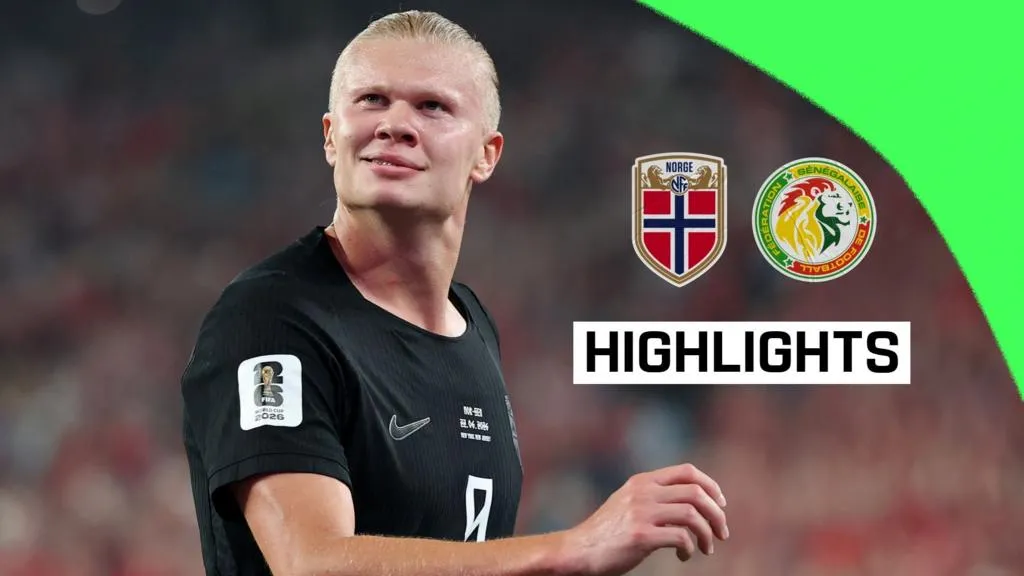
Haaland nets two as Norway beat Senegal 3-2 to reach World Cup last 32
In New Jersey, Erling Haaland’s brace turns a five-goal thriller into a direct ticket to the last 32.

GTA 6 trailer hides Tommy Vercetti's lizard painting for half a second
A Vice City wink in Trailer 2 took over a year to notice, raising questions about what GTA 6 will reference.