
Meta becomes Qualcomm’s first named Dragonfly C1000 data center customer
Qualcomm says Meta is launching with its Dragonfly C1000, a major signal it is taking AI infrastructure seriously.
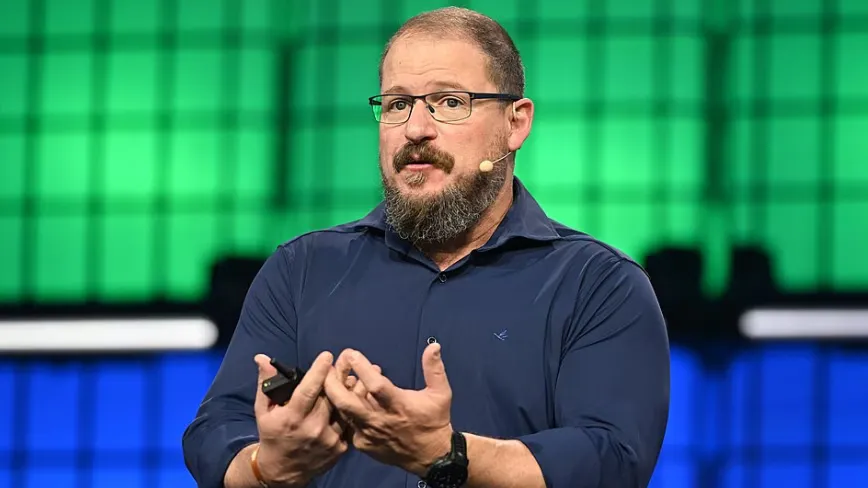
Qualcomm announced at its investor day in New York on Wednesday that Meta is its first named customer for the Dragonfly C1000 data centre processor. The move gives investors and enterprise buyers a clearer read on Qualcomm's strategy to compete in AI infrastructure, not just mobile chips.
Qualcomm just made a clean, loud statement about its AI infrastructure ambitions, and it came with a named customer. At its investor day in New York on Wednesday, the mobile chipmaker announced that Meta is the first named customer for its new Dragonfly C1000 data centre processor.
That matters because “first named customer” is not marketing fluff. It is an indicator that Qualcomm is past the early “we can build it” phase and moving into “someone important is willing to bet with us” territory. In a market where hardware platforms often win or lose based on customer lock-in and deployment timelines, getting a heavyweight like Meta attached to a new data centre processor is a credibility accelerator.
This announcement also sits in the broader pattern Qualcomm is trying to execute. The company positioned the Dragonfly C1000 alongside additional compute moves at the same event, including a new AI300 accelerator chip. Taken together, the message is that Qualcomm is not treating AI as an add-on. It is building a stack intended to plug into data center workloads, where performance per watt, software enablement, and schedule reliability tend to decide what gets deployed.
So why is a data centre chip strategy such a big deal for decision-makers? Because it reframes Qualcomm’s competitive terrain. Mobile chips live and die by handset demand cycles, carrier relationships, and power efficiency for battery-powered devices. Data centre chips, meanwhile, compete against incumbents and platform ecosystems that have already earned mindshare with builders and operators. Winning there typically requires more than raw compute; it also requires customers who are willing to integrate, test, and then scale.
The “strongest signal yet” framing in the source is telling. Qualcomm has been seeking a larger role in AI infrastructure, and the named Meta tie-in provides a sharper proof point than generic forecasts. For investors, it reduces some of the uncertainty around whether Qualcomm can translate manufacturing and architecture capabilities into real deployments. For enterprises and operators who might be evaluating compute options, it increases the odds that Qualcomm will offer an actually usable alternative rather than a one-off demo.
There is also an industry and governance backdrop that helps explain why these announcements are watched so closely. Data centre infrastructure decisions are capital intensive and operationally sticky. Once a model of servers, accelerators, and supporting software libraries is in production, switching hardware tends to be disruptive and costly. That makes early customer signals disproportionately important. They are often used by the market to anticipate whether a platform will be supported for the long run, whether engineering teams will prioritize drivers and tooling, and whether procurement departments can plan multi-year roadmaps without getting burned.
Regulation does not usually dominate this exact kind of chip news in the way it might for consumer privacy or telecom licensing, but it still sits underneath the practical reality. Governments and regulators worldwide have pushed for supply chain resilience, export controls, and local resilience in critical infrastructure. For semiconductor companies, that translates into pressure to deliver reliable products to global customers with confidence around availability. When Qualcomm ties a new data centre processor to Meta as its first named customer, it is effectively signaling that the execution path is credible enough for large-scale buyers who have to manage those constraints.
From a second-order standpoint, Meta being the first named customer can also shape how peers interpret the platform risk. Other hyperscalers and enterprise buyers tend to benchmark early adopters to judge integration effort and roadmap clarity. If Qualcomm can demonstrate that Dragonfly C1000 works in real deployment conditions, that can lower perceived risk for additional customers, which matters because data centre chip adoption often resembles a snowball: once engineering teams see a path, procurement follows.
For Qualcomm itself, this is more than a headline. It is a competitive fork in the road. The company is signaling that it wants to compete in the AI infrastructure market using data centre processors like Dragonfly C1000 and accelerators like AI300. If it executes, Qualcomm can expand beyond mobile and capture a share of the spend that comes with training and inference workloads. If it stumbles, the named-customer spotlight can quickly turn into a benchmark that the market uses to measure follow-through.
For executives sitting on boards or in strategy roles at other chip and infrastructure companies, the strategic stake is simple: customers are sending a clear message about what they want. They want credible alternatives with named deployments, not speculative roadmaps. Qualcomm now has one of those signals, and with Meta attached, the bar for the next steps just got higher.
This story's Key Insights and Take-aways are locked.
Create a free account to unlock Executive Actions for one credit.
Register to UnlockAlways free for Executives Club members. Join the Club
More in Business

SpaceX sells $25B in debt under two weeks after IPO, despite $90B in orders
The satellite and rocket company’s quick $25 billion borrowing move signals how it plans to finance scale after going public.

Accenture’s $4.18bn play fails as AI fears spark a 20% worst-ever stock plunge
On Thursday, Accenture hit its biggest one-day drop on record after forecasting worries that AI could hollow out consulting.

SpaceX stock jumps 3% after it overtakes Amazon’s market cap
CNBC says SpaceX’s shares surge following its IPO Friday, forcing investors to reprice what “space” and “AI” are worth.