

Meta launches Muse Image for Instagram and WhatsApp, pushing into the AI image race
Muse Image can create realistic images inside Instagram and WhatsApp, as Meta scrambles to keep up globally.
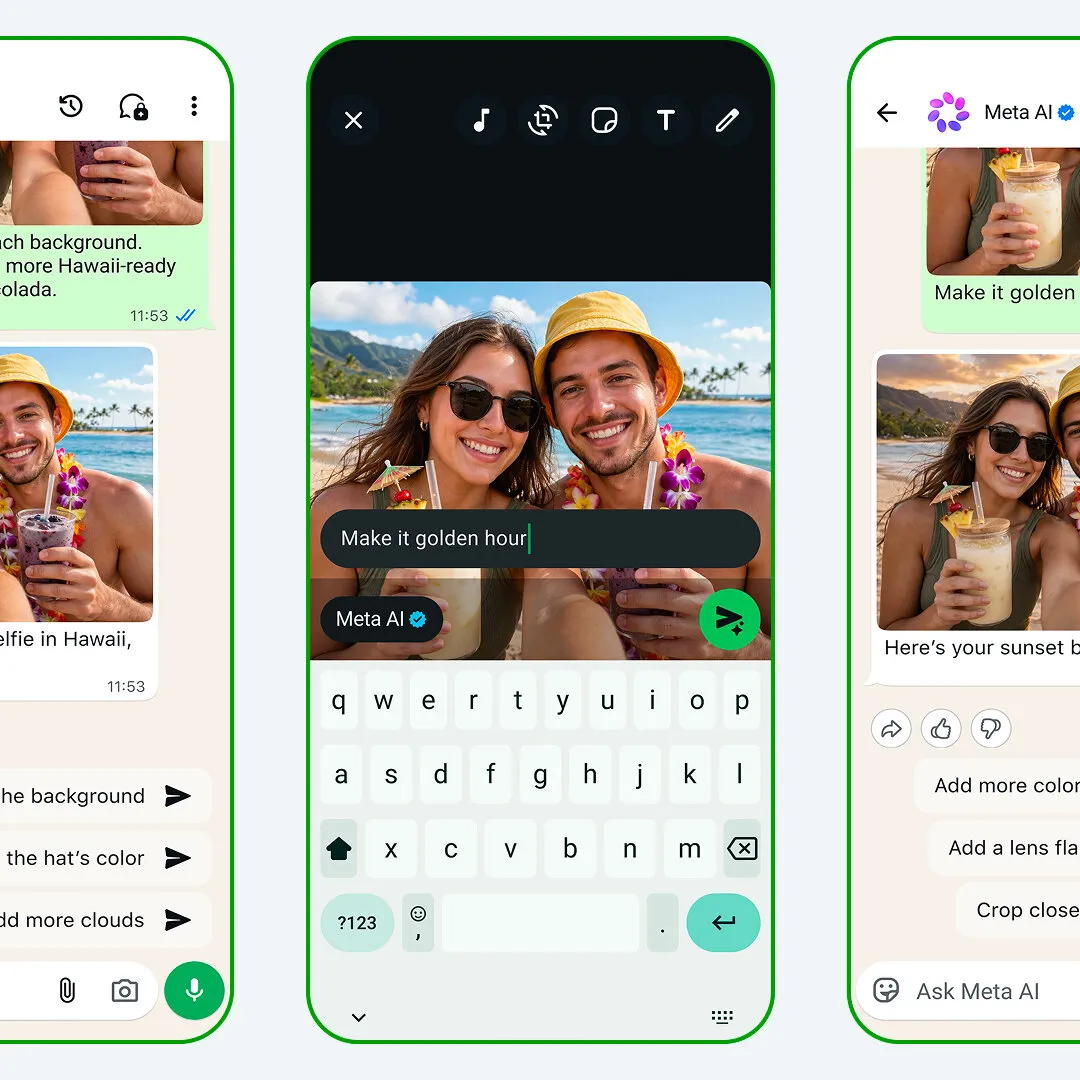
Meta has unveiled Muse Image, an A.I. image generator that creates realistic images for users on Instagram and WhatsApp. For decision-makers, the move signals how Meta is trying to catch up in the global artificial intelligence race by embedding generation where attention already lives.
Meta is rolling out Muse Image, an A.I. image generator that can create realistic images for users directly on Instagram and WhatsApp. The company framed it as its latest attempt to catch up in the global artificial intelligence race, essentially betting that distribution matters as much as model capability.
If you are an operator, investor, or board member watching the AI landscape, the key point is not just “Meta has an image tool.” It is the placement. Muse Image is built for experiences that already hold millions of daily creators, conversationalists, and brands. By putting generation inside Instagram and WhatsApp, Meta is trying to turn A.I. from a novelty into a workflow, where users do not have to leave their favorite apps to make and share imagery.
This matters because the AI race is no longer only about who trains the best systems. It is also about who wins the most practical interface. In consumer tech, the interface is the moat: it determines habit, it determines latency expectations, and it determines what users consider normal. A generation feature that lives inside a social feed can be used on demand, shared instantly, and iterated in seconds. A standalone tool can be powerful but still feel like an extra step. Muse Image is designed to reduce that friction.
Meta’s timing is also telling. The source describes Muse Image as “the company’s latest attempt to catch up.” That phrase reflects a reality many tech leaders now face: when the market moves faster than internal product cycles, catching up often means launching narrower, better-integrated experiences instead of waiting for a moonshot. Image generation is one of the most visible and viral categories of modern A.I., and it is easy for users to understand because the output is immediate and visual.
For decision-makers, the strategy likely extends beyond delight. Embedding A.I. generation in Instagram and WhatsApp can influence engagement loops, creator behavior, and content velocity. Even if Muse Image does not replace existing tools overnight, it can shift how often people generate images, how quickly they post, and how they experiment with styles and concepts. Those second-order effects show up in retention metrics and in the economics of attention, especially when content creation becomes faster.
There is also a regulatory backdrop that boards cannot ignore, even when a product announcement is focused on features. A.I. image generation raises policy questions around authenticity, misuse, and safety, and those concerns tend to accelerate as capabilities improve and adoption grows. Regulators are particularly sensitive to tools that can produce realistic media, because the line between legitimate creation and deceptive content gets thinner. While the source does not list specific compliance steps for Muse Image, the direction of travel is clear: deploying realistic image generation inside major consumer platforms will inevitably put pressure on enforcement systems, user protections, and governance processes.
The competitive dynamics here are simple. Once a platform adds a realistic image generator, competitors feel the pull in two directions. First, users may come to expect image generation as a baseline feature of social and messaging apps, not a specialist capability. Second, creators and brands may move faster to exploit new tools, using them to generate variations, marketing assets, and campaign visuals with less dependence on traditional design cycles. Meta’s “catch up” framing is a signal that the company believes the category is moving, and that speed of deployment matters.
Second-order implications for peers are straightforward. If Meta normalizes A.I. image creation on Instagram and WhatsApp, other platform leaders will be asked why their own ecosystems are not offering similar capabilities. That can shift internal roadmaps, budgets, and talent strategies, and it can create board-level urgency around both product readiness and governance readiness. For executives, the competitive question becomes less “who has A.I.” and more “who turns A.I. into daily behavior while maintaining trust.” Muse Image is Meta’s attempt to win that question, by placing the generator where people already spend time and where content creation is already a habit.
This story's Key Insights and Take-aways are locked.
Create a free account to unlock Executive Actions for one credit.
Register to UnlockAlways free for Executives Club members. Join the Club
More in Technology

Nvidia's $89B data center quarter: the 9 companies cashing in
The AI buildout is minting fortunes beyond GPUs, and memory, cloud, and cooling suppliers are riding the same wave.

Google quietly links your phone number to every Android account on your SIM
Adding a SIM now ties your phone number to all Google accounts - and future accounts inherit it. Here's the security and privacy stakes.

Hijacker AI 'Skynet mode' runs 100,000 attack steps against exposed models
Symantec caught a criminal AI agent that borrows other models, steals data, and mines crypto; the only relief is no confirmed victims yet.