

Meta pledges $115M for 5-week data-center training plus guaranteed jobs
The program aims to plug skilled-trades gaps as Meta plans $600B in U.S. data centers by 2028.
Meta is launching America’s Workforce Academy, partnering with CBRE, Associated Builders and Contractors, and the National Urban League, and committing $115 million this year. The move is designed to supply data center technician talent as Meta pushes its $600 billion U.S. data center build-out through 2028.
Meta is throwing real money at a very unglamorous bottleneck: getting enough skilled data center technicians before its U.S. AI ambitions collide with the workforce reality.
This week, Meta committed $115 million this year to America’s Workforce Academy, a five-week training program that covers tuition, housing, and a daily training stipend. The pitch is straightforward and aggressive: participants do not need prior experience, the training is open to a wide range of applicants, and graduates are guaranteed a job through the program’s completion. Meta says it will provide industry-recognized credentials as well, including an NCCER credential and an America’s Workforce Certificate. Meta’s vice president of data centers, Rachel Peterson, framed it as long-term workforce building “with the same ambition and long-term thinking we bring to the technology itself.”
If you are a decision-maker watching Meta’s AI build-out, the key detail is that the company is treating labor as a first-order input, not a slow-moving social program. Meta is preparing to spend $600 billion on U.S. data centers by 2028, and data centers are not just servers. They also require the electricians, mechanics, and fiber technicians who install and maintain the physical systems that keep everything running. The source notes Blue-collar trade jobs in construction, HVAC, and electrical work are in higher demand than the national average, which is the pressure point Meta is trying to relieve.
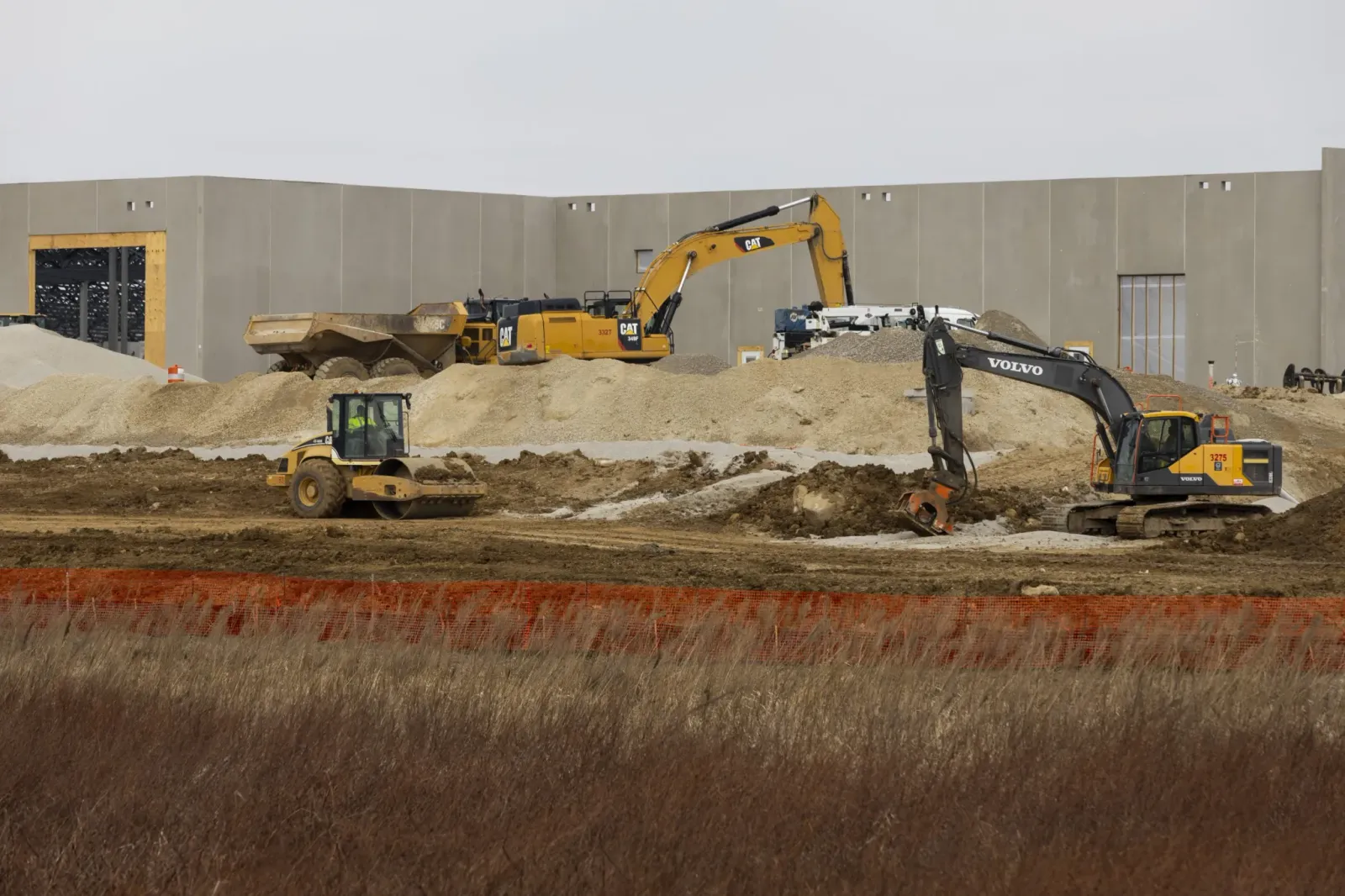
The academy is also structured to reduce friction. Meta did not respond to Fortune’s questions about how many people it plans to train, but it did lay out what participants get during the five-week run, and it is explicit that prior experience is not required. That matters because many training pipelines fold at the “can someone afford to take time off?” stage. Meta is underwriting costs “from tuition to housing to a daily training stipend,” meaning the program is built for people who would otherwise struggle to bridge that gap. The program will be piloted in Baton Rouge, Columbus, Indianapolis, and Houston, and the source gives a glimpse of what that kind of build-out can do locally: Richland Parish in Louisiana is home to Meta’s largest data center campus, where thousands of temporary workers have moved in. A small group of 500 is expected to remain in permanent roles at the 2,250-acre campus.
This comes during a moment when the country is debating the value of traditional four-year college and the future of white-collar work. The source situates that backdrop alongside the academy’s promise: graduates will earn an NCCER credential, and the average salary for a data center technician is listed as $54,031 according to ZipRecruiter. Meta did not provide salary ranges for the guaranteed positions with contractors building out its data network, and it also did not say in the release whether the program is limited to American citizens, but it repeatedly emphasized “American workers.” For executives, that is a clue about the political and narrative fit of the strategy, not just the operational one.
The timing also matters because Meta is moving quickly on multiple fronts at once. The source notes Meta has laid off 10% of its workforce, about 8,000 employees, and moved another 7,000 staffers to AI-focused roles as part of a major restructuring. Meanwhile, Meta currently operates or is building 27 data centers. In other words, workforce training is being deployed as part of the supply chain, not as a separate initiative. This is also not Meta’s first attempt to tackle technical labor pipelines: the initiative builds upon the LevelUp fiber technician training program Meta and CBRE announced in April. Over four weeks, participants receive free training, and the program reportedly drew 35,000 applications for 1,000 openings in the first seven days, with expected start in summer. For context, the source cites an average salary nationwide for a fiber technician of $57,818 according to ZipRecruiter, and it adds that about 180,000 additional fiber construction and technical workers are needed in the next 10 years to meet demand for planned federal and state projects, according to the Fiber Broadband Association.
There is also a regulatory and political storyline hovering over all of this. The source says the academy aligns with President Donald Trump’s America First agenda, aimed at a “blue-collar resurgence,” which includes training more than a million registered apprentices and investing more than $229 million in grants to support that goal. It also notes that Meta CEO Mark Zuckerberg has had a close relationship with Trump, including that Zuckerberg showed Trump a map of a data center campus at the World Economic Forum in January, and that Trump later signed a version of an AI regulation executive order with weaker government oversight. The academy is not a direct policy document, but it is a tangible “people-first” counterweight to concerns about data center growth and community impacts, especially since the source says Meta’s $27 billion development has received a mixed response locally, with residents fearing higher rent and negative environmental impacts.
For peers watching Meta, the second-order message is clear: if you are scaling infrastructure for AI, the limiting reagent may not be chips or power or capital. It may be the human systems engineering workforce that can physically build and keep the machine upright. Meta is also not alone. BlackRock is investing $100 million to train 50,000 plumbers, electricians, and HVAC technicians over the next five years, and CEO Larry Fink says capital alone is not enough, emphasizing that people are central to building the nation’s future. When the biggest players start guaranteeing job outcomes around trades training, it is a signal to boards and CFOs that labor risk is now part of the capital expenditure story, not an external inconvenience.
This story's Key Insights and Take-aways are locked.
Create a free account to unlock Executive Actions for one credit.
Register to UnlockAlways free for Executives Club members. Join the Club
More in Business

Anthropic’s Levant Alpöge cracks the Jacobian conjecture after 87 years
A Harvard valedictorian used Claude to hit a 1939 breakthrough, but the missing “why” is the real problem.

Uber buys Delivery Hero for nearly $15B, vaulting to top food delivery outside China
The deal doubles Uber's dual-services footprint and pushes a ride-and-eats bundling play into 50 more markets.

Epic and Google drop settlement bid, forcing rival Android app stores by July 22
Google told the court it is ready to carry third-party app stores starting Wednesday, July 22.