

Meta restores Modi video after MeitY demands a top-level explanation over takedown
A mistaken removal of a prime minister reel turned into days of regulatory heat and forced new moderation protocols.
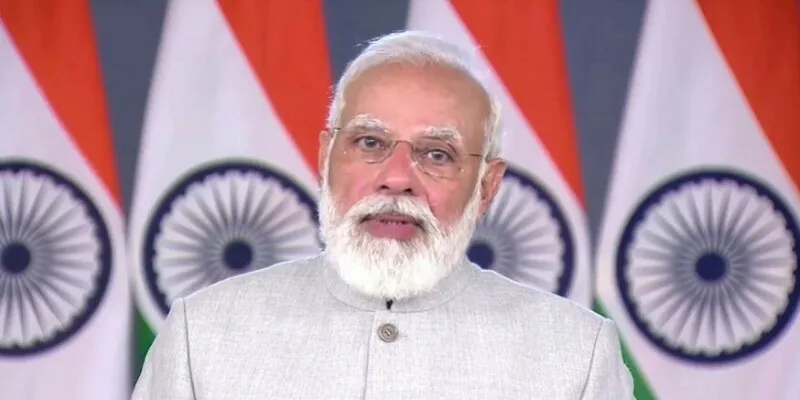
Meta briefly took down an Instagram reel posted by India’s prime minister Narendra Modi, then restored it after apologizing for the mistake. India’s MeitY escalated it to a “highest level” explanation demand from Meta, linking the incident to broader concerns about moderation of prominent accounts.
Meta’s mistake was small, public, and instantly expensive: last week it briefly took down an Instagram video posted by India’s prime minister Narendra Modi. The video itself was not especially exotic, but the context was. Modi was announcing a new task force aimed at reforming the exams used to secure places in many Indian universities, an area that has become a major trigger for youth protests in India following the cancellation of one test amid claims that questions had leaked.
The takedown did not last forever. Meta said it was a mistake, apologized, and restored the video. But the damage was real because Meta replaced the removed content with a placeholder message saying the video was the subject of a legal complaint. That detail gave India’s government an opening to pressure Meta publicly and formally, rather than handling it as a routine platform mishap.
According to S. Krishnan, secretary of India’s Ministry of Electronics and Information Technology (MeitY), he asked Meta “to come in at the highest level and explain what is happening and why.” Krishnan said Meta has agreed to come and explain, and that India wants “both a policy level understanding and a technical understanding of the issues, and also adaptation to the kind of concerns India has.” In other words, India is not only asking for accountability, it is demanding an operational understanding of how decisions were made, and what changes will be made so prominent political accounts do not get accidentally caught in the moderation machinery.
Krishnan also said Meta wrote to India’s government to express regret over the incident and established new protocols governing moderation of accounts run by prominent people. This is the second-order point executives should notice: even when a platform quickly restores content, governments can still turn the event into a governance test. The “fast revert” is not the end of the story when the error involves political messaging and sensitive domestic developments. For Meta, the incident is effectively a stress test of escalation pathways, review systems, and how quickly legal or policy flags translate into enforcement actions.
For companies operating at this scale, India is a uniquely high-stakes arena. The source highlights that India has a complex relationship with Big Tech companies: it sometimes celebrates their role in assisting the nation’s development, while also lamenting their monopolistic tendencies and role in spreading content the Modi government would rather netizens do not see. That tension matters because it changes how regulators interpret mistakes. A routine moderation error can become evidence of insufficient adaptation, especially when the content is posted by high-profile political leadership and relates to issues like education, exams, and protest dynamics.
And it is not just India. The broader Asia-in-Brief roundup shows regulators and governments everywhere tightening their grip, but using different levers. Australia has tweaked its plan to tax Big Tech unless they pay local media for the right to share links to their work, changing from a threatened 2.25 percent tax to a 2.5 percent levy on advertising revenue only, while expanding incentives to fund small and regional publications. At the same time, Meta has previously slammed Australia’s idea as “A discriminatory tax built on a false premise,” underscoring that platform firms are not just dealing with operational risk but with contested economic policy.
China’s AI market is also shifting with a pricing strategy that hits at specific hours: Chinese AI upstart DeepSeek released a beta API for its next model, deepseek-v4-flash, and revealed a new pricing policy that will double the cost of its services between 09:00 and 12:00, then again from 14:00 to 18:00, all in China’s single official timezone UTC+8. DeepSeek startled the AI market last year with claims that it trained without vast fleets of Nvidia accelerators, though those claims did not hold up under close scrutiny. The company is still viewed as a significant challenger to western AI outfits such as OpenAI and Anthropic, and deepseek-v4-flash is likely to reach general availability within weeks.
Meanwhile, Japan’s tech and space ambitions keep moving forward. Kioxia reported quarterly revenue grew 451 percent year over year to reach $11.1 billion, and profit rose to $5.3 billion after a $287,000 loss for the same quarter last year, with CFO Yoshihiko Kawamura saying demand for NAND storage is “still in the early stages.” On the space front, iSpace said its next mission will ride a Japanese rocket to the moon, using the H3 rocket built by Mitsubishi Heavy Industries instead of the SpaceX Falcon 9 that carried its first two missions. iSpace plans a third mission with a new lander design called ULTRA capable of carrying payloads weighing several hundred kilograms to Luna, after the first two moon lander missions failed.
Taken together, the message for executives is clear: platform moderation, platform monetization, and platform policy are becoming inseparable. In India, a brief takedown of a Modi reel turned into MeitY demanding a top-level explanation, and it triggered Meta to create new moderation protocols for prominent accounts. Leaders at social platforms and adjacent AI providers should assume that errors, even corrected quickly, can still become regulatory flashpoints that reshape governance, escalation, and operational policy. The question is no longer whether systems will make mistakes. The question is whether your systems, documentation, and regulator relationships can survive the spotlight when the content involves the most politically sensitive accounts on the internet.
This story's Key Insights and Take-aways are locked.
Create a free account to unlock Executive Actions for one credit.
Register to UnlockAlways free for Executives Club members. Join the Club
More in Business

Anthropic’s Levant Alpöge cracks the Jacobian conjecture after 87 years
A Harvard valedictorian used Claude to hit a 1939 breakthrough, but the missing “why” is the real problem.

Uber buys Delivery Hero for nearly $15B, vaulting to top food delivery outside China
The deal doubles Uber's dual-services footprint and pushes a ride-and-eats bundling play into 50 more markets.

Epic and Google drop settlement bid, forcing rival Android app stores by July 22
Google told the court it is ready to carry third-party app stores starting Wednesday, July 22.