
Meta says a bug in its AI chatbot helped hijack 20,225 Instagram accounts
A Maine notice says attackers used password resets via Meta’s AI support tool to bypass two-factor checks.
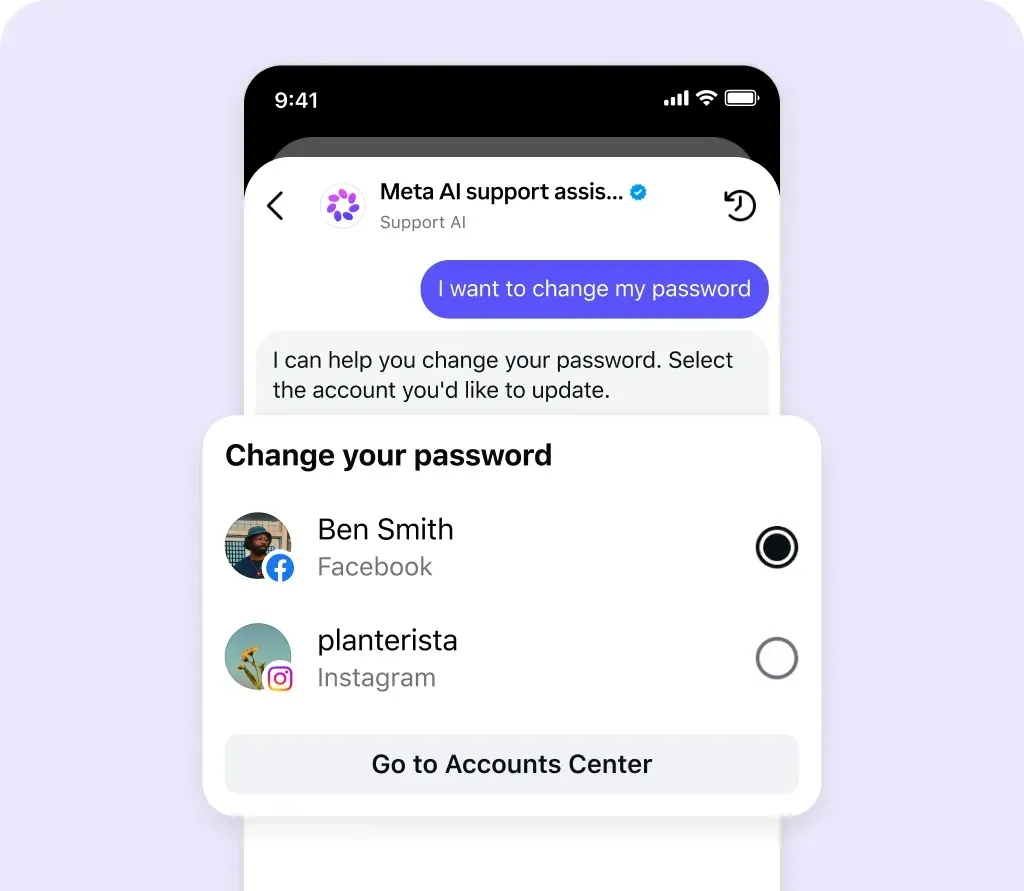
Meta confirmed in a notice filed with the state of Maine that hackers likely hijacked 20,225 Instagram accounts using Meta’s AI support chatbot. Meta blames a bug in a separate code path that failed to properly verify reset emails, enabling account takeovers without two-factor authentication.
Meta just acknowledged a security failure with a very specific headline number: 20,225 Instagram accounts were likely hijacked, and the pathway, according to a notice filed with the state of Maine, ran through Meta's AI support chatbot.
In the Maine filing, Meta says the tool itself worked properly and functioned as intended, but “due to a bug in a separate code path,” the system did not properly verify that the email address used to request a password reset matched the email address associated with that user’s Instagram account. The consequence, as described in the notice summarized by The Verge, is that attackers could use the chatbot to obtain password resets without two-factor authentication.
To understand why this matters beyond the incident itself, you have to map how account recovery usually works. When a platform needs to restore access, it typically relies on checks that tie a recovery request to the correct account holder. Two-factor authentication adds another layer by requiring a second proof of identity. Here, the core issue is not that attackers guessed passwords or broke encryption. Instead, they exploited a gap in the verification logic tied to password reset flows, and they did it through an AI-driven support interface that users may treat as “helpful” in the same way they treat standard support pages.
This is the part executives should zoom in on: even when the chatbot “works,” the surrounding plumbing can still fail. Meta’s explanation draws a line between the chatbot’s intended function and a separate code path responsible for verifying email ownership during password resets. That distinction is important, because it suggests a systemic risk pattern. Modern systems are rarely one monolith; they are a chain of components that each assume the previous one did its job. If one link assumes the email is correct but never confirms it properly, the chain can snap, and attackers only need to find the weakest verification step.
There is also a regulatory and reporting angle. The notice was filed with the state of Maine, and it was spotted earlier by Bleeping Computer before the broader story circulated. While state-level actions and notifications are not the same as federal enforcement, they matter because regulators and lawmakers increasingly expect companies to be transparent about material security events. Account takeovers involving large numbers of users, particularly when they allow bypassing two-factor authentication, are exactly the kind of events that trigger scrutiny of security controls, incident response, and product design decisions.
From a product incentives standpoint, this is a classic tension. AI support tools are meant to reduce friction. Password resets are one of the highest-volume “help” requests platforms handle. If an AI chatbot can translate user intent into account recovery actions quickly, it can lower support costs and improve user experience. But faster paths can also widen the attack surface when integration bugs slip through. In other words, the benefit is speed and convenience; the risk is that the same convenience becomes an interface for abuse if security assumptions are misapplied.
Second-order implications for boards and leadership teams are hard to ignore. When a company describes the exploit as relying on a bug in a separate code path, that raises questions about end-to-end testing, monitoring, and verification coverage across the full workflow. It is not just about whether the chatbot can answer questions. It is about whether every action the chatbot can trigger is protected by the same identity checks that a user would expect from traditional recovery screens. Executives should treat this as a reminder that AI features can become a new control plane. If that control plane can be used to initiate sensitive operations, the company needs robust guardrails, tight authorization, and clear validation at every step.
For peers building or deploying AI-driven customer support, the strategic stake is simple: if recovery flows are callable through new interfaces, they must meet the same, or higher, verification standards as the legacy paths. Meta’s filing is a concrete example that a security failure can live in integration logic, not in the headline feature itself. And when you are talking about 20,225 compromised accounts, “integration logic” is not a minor implementation detail. It is the difference between ordinary account issues and a breach that undermines trust in account access protections.
This story's Key Insights and Take-aways are locked.
Create a free account to unlock Executive Actions for one credit.
Register to UnlockAlways free for Executives Club members. Join the Club
More in Technology

OpenAI says 10,000 agents cracked a 90-year math problem in 88 hours
The company's claim is audacious, but one mathematician is pushing back. Here's what it means for AI-driven discovery.

Meta still serves child sexual abuse ads on Instagram in India - BBC report
A new report following the BBC Eye investigation says the ads are still there - what it signals for every platform with a self-serve ad engine.

White House yanks 'Build the Wall' game after Tetris Company copyright warning
The administration's arcade game vanished in hours - and the takedown playbook every brand can learn from.