

Meta smart glasses hit $299 as Zuckerberg doubles down on wearables and lens screens
The company positions lightweight AR glasses as the next rung toward fully in-lens displays, with near-term pricing clarity.
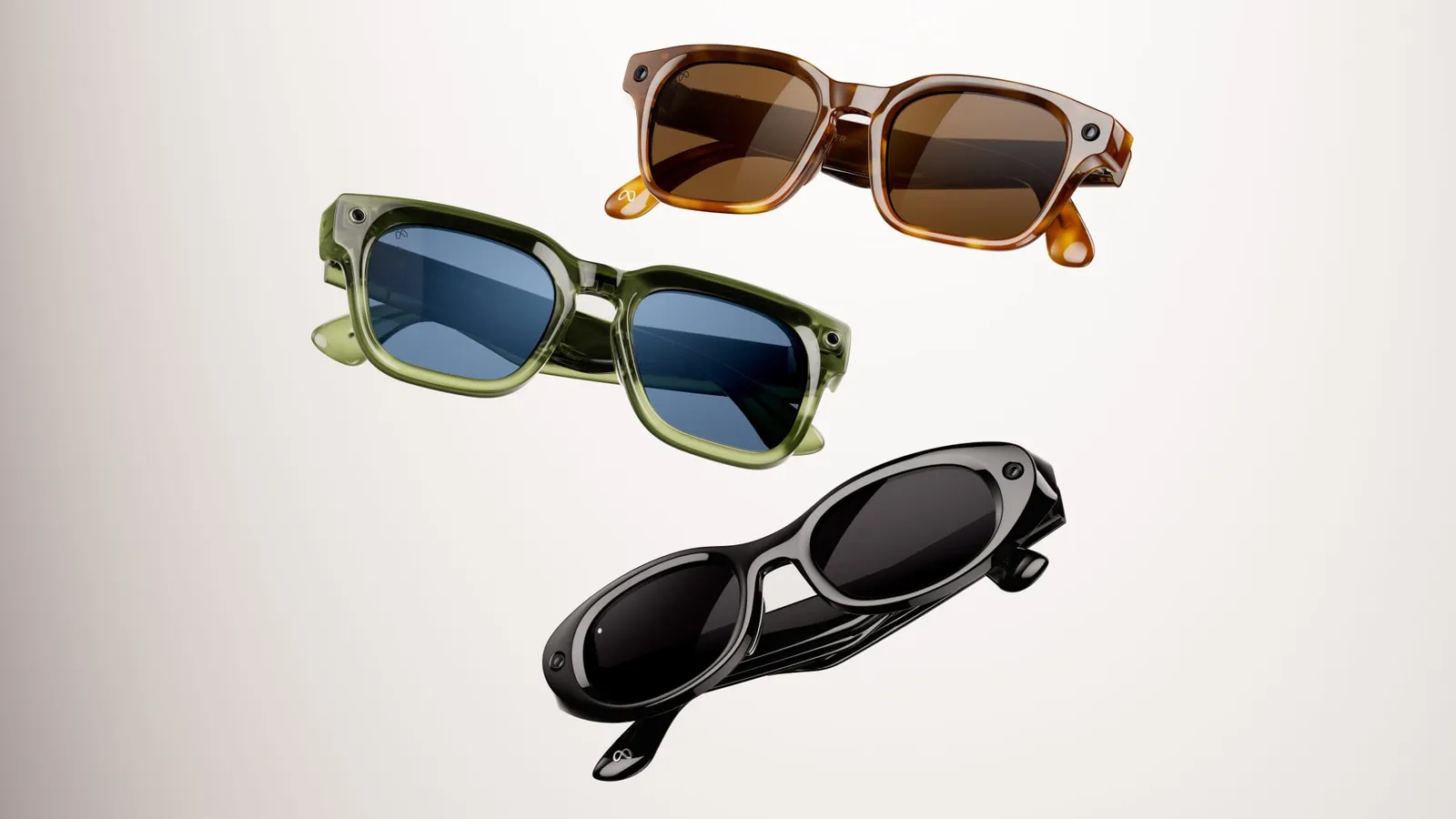
Meta announced new smart glasses starting at $299, and CEO Mark Zuckerberg continues pushing wearables as a product category. Meta executives frame the lightweight design as a bridge to a more advanced device that includes screens in the lenses, shaping the roadmap decision for leadership teams.
Meta is putting a price tag on the next step in wearables. The company announced new smart glasses starting at $299, and Meta executives described them as lightweight smart glasses meant to be a stepping stone. The key idea is not just that you can wear them, but that the form factor is intended to lead toward a more advanced device with screens in the lenses.
That is the promise embedded in the $299 entry point. In plain terms, Meta is using a more approachable, lighter AR-glasses version to move the category forward while it works toward a more ambitious end state: displays built directly into the lenses. For executives, this matters because it changes how you should think about timelines, investments, and adoption risk. Lightweight hardware lowers friction for first customers and developers, while the “screens in the lenses” concept signals that the real north star is a more immersive experience than today’s external display approaches.
Wearables are a rare hardware bet because the user experience lives or dies on comfort and daily usefulness. A big part of why smart glasses have historically struggled is that they ask too much from the wearer too early: you get novelty, but not necessarily routine value. Meta executives appear to be trying to solve that with a lighter take that can be worn more comfortably, then iterating toward in-lens screens. The business logic is straightforward: if you want a platform, you need enough people to try it, enough developers to build for it, and enough signal that demand exists before you spend the engineering effort to perfect the next generation.
From a decision-maker standpoint, the “stepping stone” framing also matters because it helps rationalize the product roadmap as a sequence rather than a gamble. Instead of pitching the fully realized in-lens display experience on day one, Meta is positioning the lightweight glasses as a bridge. That approach can reduce the pressure on a single launch to carry the entire narrative. It is also a useful internal governance move: if leadership expects eventual in-lens screens, executives can measure progress at each stage using adoption, retention, developer activity, and real-world feedback, rather than betting everything on one hardware breakthrough.
There is also a regulatory and public-sentiment angle hiding inside the tech. Smart glasses are not just consumer electronics anymore; they sit close to questions about privacy, recording, and how people behave when they are around someone wearing cameras or sensors. Even when a product is marketed as “AR” rather than “recording,” regulators and policymakers can still scrutinize how the devices collect and use data. A lighter, more wearable design can increase exposure in public spaces, which makes it even more important for leadership teams to anticipate compliance and perception risk. In other words, better comfort can mean broader adoption, and broader adoption can mean broader attention from regulators and the public.
Second-order implications show up for competitors and partners too. If Meta is serious about going from lightweight smart glasses toward lens screens, it signals that the company views wearables as a long runway platform, not a one-off gadget. That can influence how other players allocate research budgets, how suppliers prepare manufacturing capacity, and how software partners decide whether to prioritize AR experiences. It can also reshape investor expectations around the category. Executives at competing hardware firms will likely see this as both a threat and a validation: a threat because Meta has the distribution and the user base to scale, and validation because Meta is still investing in the category after years of false starts across the industry.
The most strategic stake for leadership teams is the roadmap discipline. The $299 starting price gives a near-term anchor, but the real strategic bet is the end goal described by Meta executives: a device that includes screens in the lenses. That is the kind of milestone that requires not only engineering progress but also a business model that can support it. If Meta successfully uses lightweight smart glasses to build user habits and developer momentum, it can accelerate learning cycles and improve the odds that the eventual in-lens screen vision becomes mainstream rather than remain a demo.
For peers watching closely, the lesson is that “lightweight” is not a retreat. It is a tactic in a longer campaign. Meta’s leadership is effectively saying: start with something you can wear comfortably, then march toward the more advanced, in-lens display experience. In a market where timing is everything, that matters, because the next generation of wearable computing will be won by whoever stacks adoption steps the fastest and keeps the narrative coherent while the technology catches up.
This story's Key Insights and Take-aways are locked.
Create a free account to unlock Executive Actions for one credit.
Register to UnlockAlways free for Executives Club members. Join the Club
More in Technology

Nvidia's $89B data center quarter: the 9 companies cashing in
The AI buildout is minting fortunes beyond GPUs, and memory, cloud, and cooling suppliers are riding the same wave.

Google quietly links your phone number to every Android account on your SIM
Adding a SIM now ties your phone number to all Google accounts - and future accounts inherit it. Here's the security and privacy stakes.

Hijacker AI 'Skynet mode' runs 100,000 attack steps against exposed models
Symantec caught a criminal AI agent that borrows other models, steals data, and mines crypto; the only relief is no confirmed victims yet.