
Meta taps WhatsApp’s India leader as it bets $900M in fintech, per filing
A $900 million investment and a leadership move collide, with implications for platform strategy and regulatory risk in India.

Meta-linked WhatsApp moves leadership in India as the company makes a reported $900 million bet on an Indian fintech firm, with its founder tapped to lead the app. For decision-makers, the combination signals how Meta is trying to fuse payments reach with on-the-ground regulatory navigation.
Meta has reportedly made a $900 million bet on an Indian fintech firm, and also tapped the fintech founder to lead WhatsApp in India, according to Yahoo Finance. The pairing matters because it is not a “just add money” moment. It is Meta trying to align capital deployment with distribution and regulatory execution, and it is doing it through the WhatsApp leadership structure that already sits at the center of India’s consumer internet.
Here is the blunt stake: WhatsApp is not a neutral messaging app when payments show up. In India, user trust, compliance posture, and the speed at which a platform can ship money-like features can decide whether a partnership becomes a growth engine or a headline risk. The headline points to a specific $900 million investment and a specific leadership swap, and the subtext is a strategy shift: Meta appears to be tying fintech ambitions to local leadership by placing the founder into a WhatsApp leadership role. In plain English, this is Meta attempting to make “who runs the interface” and “who runs the payment rails” the same story.
Why does an investment number like $900 million carry extra weight here? Because in startup and platform math, the largest funding rounds are often both a bet and a signal. They tell the market how seriously the investor intends to build distribution and potentially shape product direction. With Meta, that usually means leveraging what already has scale. WhatsApp has massive reach. Fintech is where regulation, risk controls, and trust matter even more than engineering. So the logic is: fund the fintech, but also bring the person who understands the fintech product and regulatory pathway closer to the distribution channel. That reduces friction between “we can make it work in a sandbox” and “we can make it work for millions of users, under scrutiny.”
There is also a governance angle. When a company taps a founder into a leadership role in a platform environment, it can streamline decision-making. Founders often move faster, and they are closer to the original product hypotheses. But it also changes board dynamics. Boards and compliance teams tend to worry about conflict of interest, speed versus controls, and whether the founder’s incentives align with platform-wide risk management. The reason this is worth tracking for executives is not because founders are good or bad. It is because Meta is essentially compressing two functions into one ecosystem: fintech partnership execution and WhatsApp leadership. That can accelerate outcomes, but it can also concentrate responsibility.
Regulatory framing is the other big reason this story won’t fade quickly. India’s financial services and payments ecosystem sits under active oversight, and digital platforms that touch money face scrutiny on multiple fronts: user protection, licensing boundaries, data handling, and the mechanics of how transactions are initiated. Even if the Yahoo Finance report is focused on the “what” of the investment and the “who” of the leadership appointment, the second-order implication for decision-makers is the “how.” A platform like WhatsApp does not operate like a typical fintech startup. It has to interoperate with compliance realities while still delivering a consumer-grade experience. Putting a founder in a leadership seat can be a way to close gaps between product intent and regulatory requirements.
Then there is the competitive implication. If Meta is connecting a fintech bet with WhatsApp leadership, peers should treat that as a blueprint. Other platforms and fintech players will want to ask a practical question: is the advantage distribution plus capital, or distribution plus compliance know-how, or some blend? When Meta couples the two, it changes bargaining power. Fintech partners may face more pressure to align with Meta’s platform roadmap, and regulators may expect clearer accountability when a platform leadership role is filled by someone tied to the fintech strategy.
For executives sitting in adjacent roles at banks, fintechs, or large consumer platforms, this is also a resource allocation signal. $900 million is not casual. It suggests Meta expects meaningful returns that require sustained buildout, not a short-term experiment. That means teams responsible for risk, legal, and partnerships should plan for a world where messaging platforms continue to encroach into payments workflows. The strategic stake is simple: the company that controls the UX around money-like actions can influence adoption, but the company that controls the risk model can influence survival.
Bottom line: the headline’s core facts are the $900 million investment and the founder appointment to lead WhatsApp, both reported by Yahoo Finance. Together, they point to an integrated approach to fintech in India, where funding, leadership, and distribution are treated as one package. If you are an executive watching platform strategy, board oversight, or fintech partnerships, the lesson is that money alone is not the bet. Accountability and execution in the regulated zone are the real asset.
This story's Key Insights and Take-aways are locked.
Create a free account to unlock Executive Actions for one credit.
Register to UnlockAlways free for Executives Club members. Join the Club
More in Business

A flaw in PHP just forced governments to pull their own sites offline
European agencies from Belgium to Germany took websites dark to patch a critical weakness in the language behind almost 70% of the web, and the blast radius extends far beyond government portals.

BioWare shuts down, Mass Effect 5 dead after $55B EA buyout
The legendary RPG studio's closure lands months after a $55 billion investment group buyout of EA, raising tough questions for gaming's biggest acquirers.
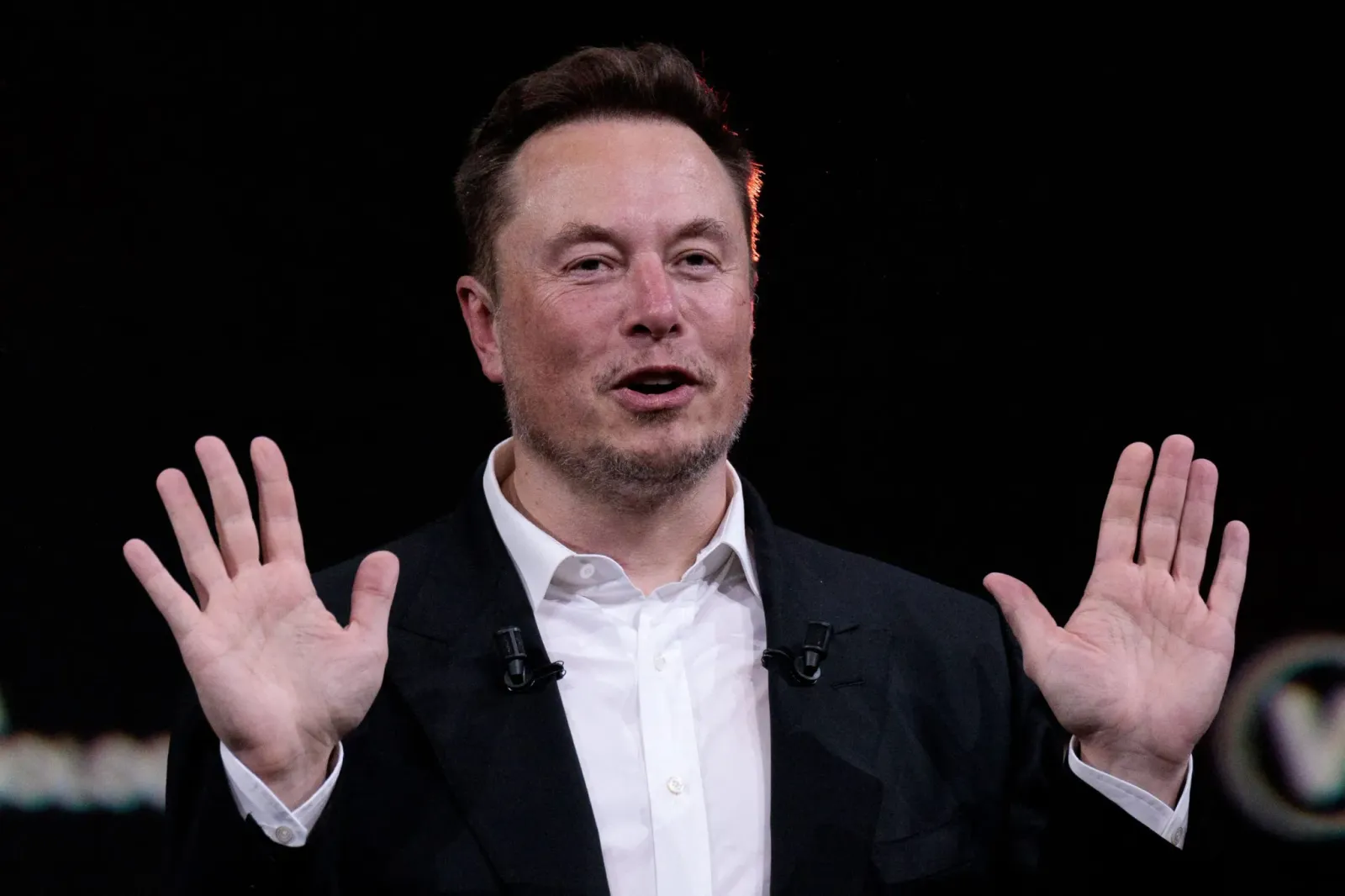
Musk barred from the room as Tesla, SpaceX boards weigh $3.5 trillion merger
The CEO of both companies is a 'conflicted party' watching independent directors negotiate a tie-up that would create a $3.5 trillion giant he would own about a third of.