
Michael Dell’s $216B net worth vaults him past Jensen, Zuckerberg, Ellison this year
Dell’s stock tripled on AI server demand, making its founder the world’s fifth-richest and reshuffling the billionaire leaderboard.
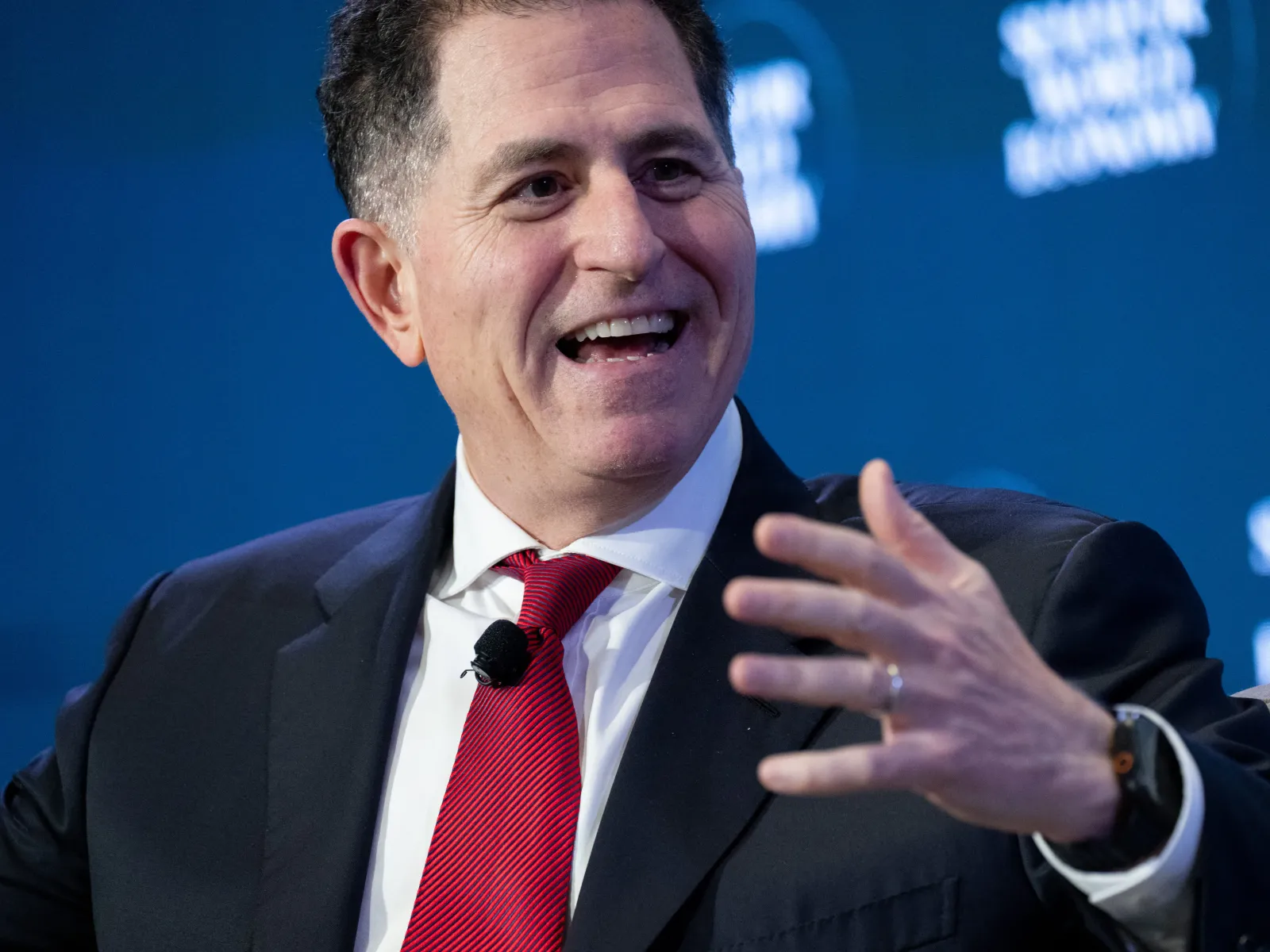
Michael Dell, founder and CEO of Dell Technologies, has reached $216 billion in net worth and now ranks fifth on the Bloomberg Billionaires Index. Dell’s wealth surge comes from a 225% jump in its stock price this year, driven by a major AI computing equipment ramp, including AI-optimized servers.
Michael Dell is now worth $216 billion, and it is not a slow climb. According to the Bloomberg Billionaires Index, Dell has become the world’s fifth-richest person, passing Warren Buffett, Jensen Huang, Steve Ballmer, Mark Zuckerberg, and Larry Ellison this year. The timing matters because this is not just another “rich got richer” headline. His net worth has surged by around $77 billion since the start of January, and only Elon Musk has gained more in that timeframe.
How did Dell get from “PC pioneer” to “name near the top of the richest list” this quickly? The core driver is plain in the market numbers: Dell’s stock has tripled this year, up 225% year-to-date, lifting the company’s market value to $281 billion. That market value is larger than Wells Fargo, Palantir, or IBM are worth. For decision-makers, that is the signal: the AI cycle has shifted from prototypes and headlines to balance-sheet impact, and Dell is getting paid right in the middle of it.
To understand why that matters, you have to look at what Dell is actually selling, not just what people call it. Dell owns about 41% of Dell Technologies, which means the company’s re-rating feeds directly into the founder’s personal wealth. Dell’s push into AI infrastructure is described as a “full stack” of computing infrastructure to run AI models, including workstations, servers, storage, networking, and services. In other words, Dell is positioning itself as the supplier of the pipeline, not just the endpoint.
The company’s most recent reported quarter reinforces that positioning. Dell’s first-quarter earnings show strong customer demand, with net revenue up 88% year-over-year to a record $44 billion. Within that, net sales of AI-optimized servers rocketed 757% to over $16 billion. Operating income also moved sharply, more than tripling to $3.7 billion. When you see that kind of growth in a segment explicitly tied to AI workloads, it is a powerful reminder that “AI” is still fundamentally a compute and infrastructure story for most enterprises and cloud environments.
There is also a broader market dynamic hiding inside these results. The AI buildout has been lifting winners across the tech stack, and Dell’s surge places it among a small set of businesses that are benefiting from both demand and investor appetite. The Bloomberg Billionaires Index context adds another layer. Dell’s $216 billion puts him one of six people with $200 billion-plus fortunes, alongside Musk, Larry Page, Sergey Brin, Jeff Bezos, and Ellison. That group is increasingly defined by companies whose core products are being pulled into AI supply chains, either as platforms, compute providers, or application layers.
And while Dell is climbing, not everyone is. The source notes that other centibillionaires have fared much worse as some tech and luxury names have soured. Ellison, Zuckerberg, Ballmer, and Arnault have seen roughly $40 billion wiped off each of their fortunes as investors have adjusted risk. That contrast is the point executives cannot ignore: in a year where stock prices swing with narrative and earnings, being “on the right side of the spend cycle” can rewrite wealth outcomes quickly, while being on the wrong side can erase years of compounding.
Finally, there is the regulatory and governance angle that often gets overlooked when people focus only on stock charts. Ownership stakes, board-level strategy, and capital structure shape how quickly a company can monetize a thematic wave like AI. Dell’s 41% stake means founder wealth is tightly coupled to execution. Meanwhile, the company’s AI server and infrastructure growth implies that supply, procurement, and customer contracting cycles are aligning with AI demand now, not later. That alignment is the second-order effect: when infrastructure vendors prove they can scale revenue and profitability during a hype-driven cycle, they tend to lock in more contracts and support a stronger market multiple, which then feeds back into both corporate valuation and founder wealth.
For peers, the strategic stake is simple: Dell’s year suggests that AI leadership is not only about building models or owning platforms. It can also be about being the dependable “plumbing” for AI workloads, and delivering it at scale fast enough to show up in revenue, operating income, and investor expectations. In a market where fortunes can move by tens of billions in a few months, that is the difference between watching the AI wave roll in and selling into it.
This story's Key Insights and Take-aways are locked.
Create a free account to unlock Executive Actions for one credit.
Register to UnlockAlways free for Executives Club members. Join the Club
More in Business

Bungie cuts most Destiny 2 staff as Sony says Marathon still matters
Herman Hulst confirms layoffs affecting most Destiny and some Marathon teams after Bungie admits Destiny fell short.

SK Hynix jumps 11% after seeking up to $29.4B in Nasdaq listing
The chip giant filed for a Nasdaq listing plan that could raise $29.4 billion, instantly reshaping investor expectations.

Micron revenue hits nearly $42B as AI memory lifts gross margins above 81%
Fiscal Q3 results crush estimates, prove AI memory is rewriting Micron's margins, and change the momentum math for the whole chip stack.