
“Michael” hits $1.016B worldwide, outpacing “Bohemian Rhapsody” and “Oppenheimer”
As of Aug. 2, the MJ biopic becomes the top-grossing music biopic and the top-grossing biopic overall.
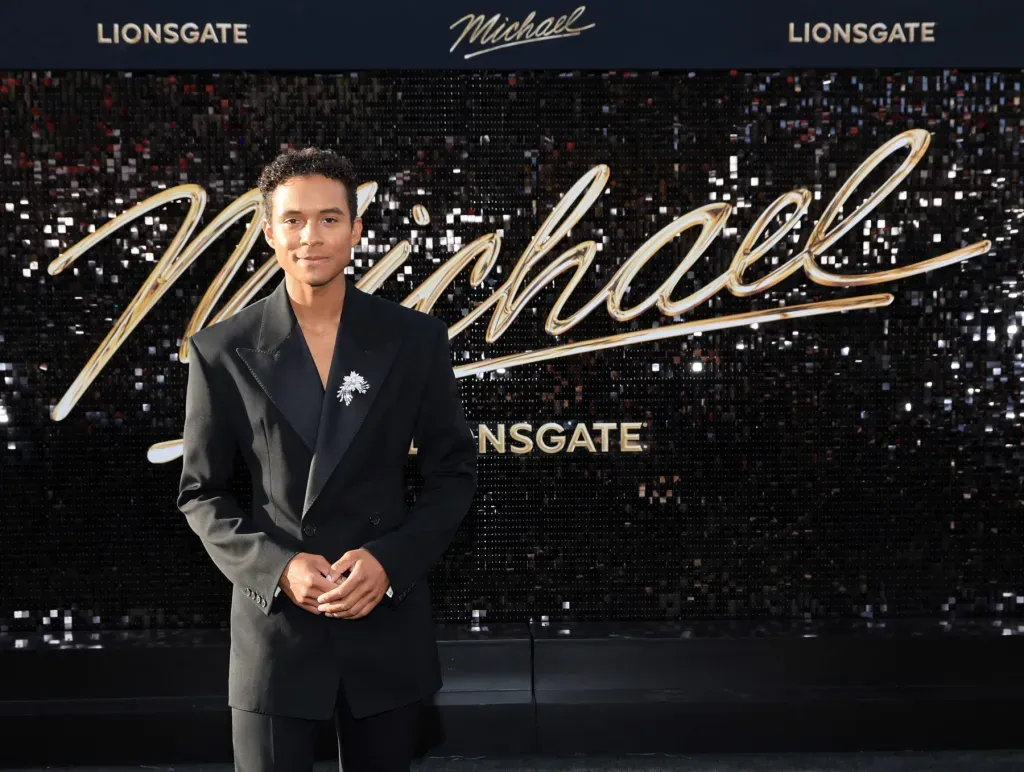
The Michael Jackson biopic Michael, co-produced by Graham King with John Branca and John McClain, has grossed $1.016 billion worldwide as of Aug. 2. That puts it ahead of Bohemian Rhapsody ($911 million) and Oppenheimer ($975.8 million), reshaping how investors and studios benchmark “biopic” profitability.
As of Sunday, Aug. 2, the Michael Jackson biopic Michael has grossed $1.016 billion worldwide. It is no longer just the top-grossing musician biopic. It is now the top-grossing biopic of all time, overtaking Oppenheimer, which grossed $975.8 million worldwide.
The gap is big enough to matter, not just to brag. Bohemian Rhapsody, the long-running champ among musician biopics, has grossed $911 million worldwide, leaving Michael ahead by $105 million. And this matters for decision-makers because the industry often treats “biopic economics” like a niche category. The numbers suggest it is more like a repeatable mega-platform, with global ticket sales doing most of the heavy lifting.
Per Box Office Mojo, international ticket sales make up 63.4% of Michael's worldwide box office total to date. The remainder is from the U.S. and Canada. For comparison, international ticket sales accounted for 76.2% of Bohemian Rhapsody's worldwide box office total. In other words, Michael is winning overall, but Bohemian Rhapsody leaned harder into international pull. That difference is the kind of nuance studios and distributors watch when they decide how to market, localize, and release future tentpoles.
There is also a positioning story behind why these two titles keep colliding at the top. The source points to major parallels between Jackson and Freddie Mercury: both rose to fame in groups, The Jackson 5 and Queen, respectively; both are widely regarded as two of the greatest showmen of all time; and both died years before their time. Mercury died in 1991 at age 45 due to complications from AIDS. Jackson died in 2009 at age 50 from cardiac arrest caused by acute propofol intoxication. Those shared biographical arcs translate into a particular kind of audience behavior: people do not just watch the film. They come for the artist myth, the rise, and the timeline that makes the legend feel inevitable.
The overlap extends beyond screen stories and into live performance. Jackson attended Queen concerts in Los Angeles in the early 1980s. They also met for dinner and even recorded three demo tracks together that went unfinished. And both artists’ music has been adapted for the theater in major, long-running ways. We Will Rock You opened on London’s West End in 2002. MJ: The Musical has been a fixture on Broadway since Dec. 6, 2021. That kind of multi-format footprint tends to reinforce cultural staying power, which can help a film’s demand hold up as it moves from initial buzz to sustained mainstream appeal.
Behind the scenes, the producer web matters too, because it shows how certain creative teams keep resurfacing at the top. The source names Graham King as a co-producer of Michael, along with longtime Jackson associates John Branca and John McClain, who died on May 26 at age 71. Graham King also co-produced Bohemian Rhapsody and a third music biopic on Billboard’s list, Jersey Boys, the story of the Four Seasons. The pattern for executives is straightforward: certain producers become trusted operators in the “music legend biopic” lane, and that trust can reduce uncertainty for boards, distributors, and investors deciding where to allocate risk.
Billboard’s broader context is also telling. The outlet compiled a list of the 25 biopics of music stars with the highest worldwide grosses, using Box Office Mojo figures. It explicitly notes what is not included: it excludes some high-grossing films about real-life music personalities where the subjects are not well-known music stars in their own right. Examples given include The Sound of Music, Green Book, Florence Foster Jenkins, and Music of the Heart. Meryl Streep starred in the latter two. That selection rule matters because it keeps the leaderboard anchored to recognizable music icons, not just famous real people with famous soundtracks.
Finally, there is an industry implication hiding in plain sight. Michael has topped both a music-biopic leaderboard and an overall biopic benchmark that includes a prestige, non-music drama like Oppenheimer. When that happens, it changes how executives model audience reach. The “biopic” category stops being a genre label and becomes a distribution strategy question: can you combine global brand recognition, a cinematic narrative arc, and international ticket share that sticks beyond opening-week curiosity?
For boards and studio leaders, the strategic stakes are simple: if the biggest biopics can clear $1 billion worldwide, then the debate shifts from “will it work?” to “how do we replicate the winning setup?” That includes understanding audience geography, aligning marketing to international demand, and leaning into the production talent that already knows how to turn a real-life legend into a global box office event. Michael has answered that question loudly, and Bohemian Rhapsody is still close enough to prove the appetite is real.
This story's Key Insights and Take-aways are locked.
Create a free account to unlock Executive Actions for one credit.
Register to UnlockAlways free for Executives Club members. Join the Club
More in Entertainment

'It's a Magic Trick': Ballet Experts Say Rosalía's SNL Pose Is Impossible
Three ballet experts tell Rolling Stone Rosalía's gravity-defying SNL stillness shouldn't be possible - and why the debate is now part of the show.

Activision CMO: GTA 6 Will Boost Call of Duty, Not Bury It
Activision's top marketer says Rockstar's blockbuster will drive players back to consoles and into Modern Warfare 4, even as the company admits its recent strategy failed.
Justice to Score GTA 6, Share New Song with Tame Impala, SZA, King Gizzard
Rockstar taps the French duo for the GTA VI score, and the first taste is a genre-melting collab with Tame Impala, SZA, and King Gizzard & The Lizard Wizard.