

Michael Mann starts Heat 2 production this fall with Bale and DiCaprio leading
Stephen Graham and Adam Driver join as the 1995 crime heist franchise gets a new chapter.
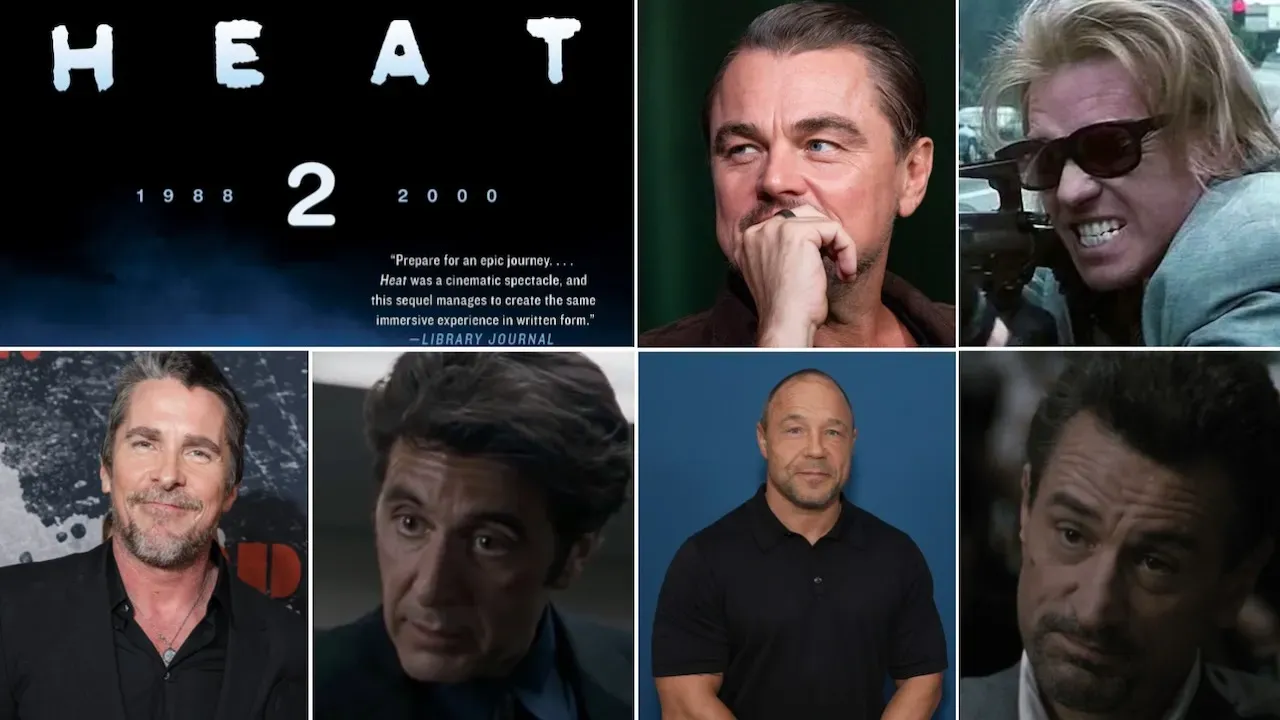
Michael Mann is set to begin production on Heat 2 this fall, led by Christian Bale as Vincent Hanna and Leonardo DiCaprio in lead roles. For producers, investors, and talent-facing executives, the casting signals what kind of scale and risk appetite the sequel is aiming for.
Michael Mann is finally set to begin production on Heat 2 this fall, and the opening move is not subtle. The film will be led by Christian Bale and Leonardo DiCaprio, with the project also adding Stephen Graham and Adam Driver to prominent roles, according to a report from TheWrap as summarized by Consequence.
The casting detail matters immediately because Bale is not just “in the movie.” He is set to star as Vincent Hanna, taking over the role Al Pacino played in Mann’s 1995 crime heist classic, Heat. That is a specific handoff in a story and in a brand. Hanna is the face of the film’s tension, the professional intensity, the cat-and-mouse structure. Replacing a cultural reference point with a different star changes how audiences will read the character on sight, and it changes what the production must deliver to make that substitution feel earned.
For decision-makers watching from the outside, Heat 2 is a reminder of how Hollywood properties manage credibility. When a filmmaker like Mann returns to the same universe, the sequel is not just content. It becomes an exercise in continuity, and continuity has economics. The audience expectation is that the tone, the craft, and the cat-and-mouse energy remain recognizable. That expectation then informs budgeting choices, timeline planning, and the kind of talent the production can attract.
TheWrap’s report, as relayed here, also frames another dynamic executives will recognize: the sequel as both prequel and sequel energy. The mention of “prequel/sequel to Michael Mann’s classic 1995 crime heist” signals the production is trying to serve multiple kinds of viewers. Some come for the original’s mythology. Others come for a new storyline that still feels like it belongs in the same world. That duality can be attractive commercially, but it also increases execution pressure. You cannot rely on nostalgia alone if you are asking the story to move in at least one new direction.
Now zoom out to why this matters beyond film Twitter. Casting is a market signal, and market signals drive boardroom questions. Bale and DiCaprio are not fringe names. They are high-visibility performers with proven audience pull, and that visibility typically affects distribution strategy, international marketing plans, and negotiating leverage with partners. Even without any new financial figures in this source, the logic is straightforward: higher-profile leading roles often correlate with higher production spend and more complex scheduling, which in turn raises the stakes of starting on time “this fall” rather than slipping.
There is also the talent calculus. Stephen Graham and Adam Driver are described as having prominent roles. For executives, “prominent” is a soft word that usually has a hard meaning: these are actors who can carry scenes, draw press, and sustain audience attention even when the plot requires silence or tension. In a franchise like Heat, where the original is remembered for its atmosphere and character-driven precision, ensemble strength is not decoration. It is how the movie stays coherent when it switches between perspectives.
Regulatory and risk context is less about formal approvals in a way audiences would notice, and more about the broader category of risk management that studios and producers treat as business-critical. Big productions have to plan for labor, location logistics, and scheduling constraints, and those constraints get tighter when leading talent is involved. The source does not mention any specific regulator or policy. Still, executives know that the bigger the scale and the longer the production window, the more downstream issues can emerge, from permitting to insurance to stakeholder alignment. Locking major leads and signaling a concrete production start date this fall is a way to de-risk the planning process, even if the broader environment remains unpredictable.
Second-order implications follow. If Heat 2 truly launches production with this kind of top-tier casting, peers in the premium crime, prestige drama, and filmmaker-led sequel space will take note. Studios constantly benchmark: “Can we keep the original’s identity while adding current star power?” This casting handoff from Pacino’s Vincent Hanna to Bale is the most direct version of that question. If the sequel can make the transfer feel seamless, it strengthens the business case for reviving dormant franchises. If it does not, it becomes a cautionary tale about how hard it is to replicate magic when the faces change.
In other words, the story here is not just that Michael Mann is back. It is that Mann is back with a new leading combination, an explicit Hanna recast, and a schedule starting “this fall.” For executives and investors, that means the project is moving from announcement into operational reality. The next milestone is not press coverage. It is whether production execution can match the confidence implied by the talent attached, and whether the sequel can convert audience memory into demand for what comes next.
This story's Key Insights and Take-aways are locked.
Create a free account to unlock Executive Actions for one credit.
Register to UnlockAlways free for Executives Club members. Join the Club
More in Entertainment

Russell Brand's accuser 'bewildered and confused' as he denies 7 sex charges
The criminal case against the comedian is a live test of how media companies manage talent risk when serious allegations go public.

'It's a Magic Trick': Ballet Experts Say Rosalía's SNL Pose Is Impossible
Three ballet experts tell Rolling Stone Rosalía's gravity-defying SNL stillness shouldn't be possible - and why the debate is now part of the show.

Activision CMO: GTA 6 Will Boost Call of Duty, Not Bury It
Activision's top marketer says Rockstar's blockbuster will drive players back to consoles and into Modern Warfare 4, even as the company admits its recent strategy failed.