
Michael Wong pushes HKEX reforms on weighted voting, overseas secondary listings, and new products
Hong Kong signals faster, more flexible market access as it revisits listing rules and expands exchange product plans.
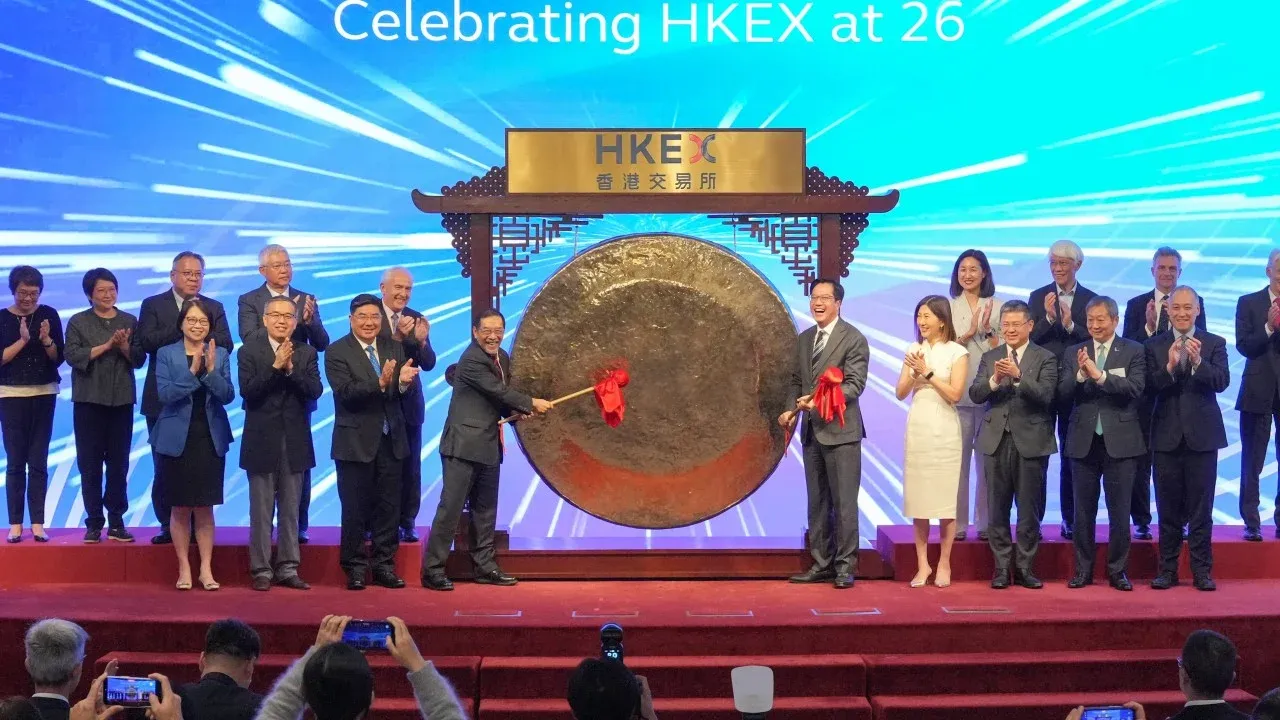
Hong Kong Deputy Financial Secretary Michael Wong Wai-lun used HKEX's 26th anniversary as a publicly traded company to lay out reforms and new initiatives under review. For exchange executives and market-facing boards, the agenda matters because it targets how companies get listed, how control is structured, and what investors can trade next.
Hong Kong is pushing ahead with an overhaul of listing rules and a fresh set of product initiatives, and Deputy Financial Secretary Michael Wong Wai-lun made the case directly at HKEX's 26th anniversary ceremony. Speaking at the event Friday, Wong Wai-lun outlined reforms under review at Hong Kong Exchanges and Clearing (HKEX), the city’s bourse operator.
The headline decision for market watchers is the specific direction of travel. Wong’s reform outline includes optimizing weighted voting rights, easing secondary listings by overseas issuers, and expanding flexibility on how the exchange and its rules can support new market activity. In other words, this is not a vague “support capital markets” moment. It is a targeted attempt to change the mechanics that determine who can list in Hong Kong, how control can be maintained after listing, and how easily non-local companies can tap the local market.
To understand why these particular levers matter, you have to zoom out to how listing rules shape capital formation. A public exchange is not just a platform for trading. It is also a gatekeeper for capital, and the gate gets swung open or shut by rule design. Weighted voting rights are a good example. They affect how founder-led businesses can preserve decision power even when public shareholders buy in. Optimizing that framework signals that Hong Kong is trying to balance two competing needs: investor protections and market attractiveness for companies where founders, classes of shares, or control structures are central to the business story.
Secondary listings by overseas issuers are the other big hinge. “Easing” that pathway, as Wong said, is essentially about friction. For companies outside Hong Kong, a secondary listing can be a way to broaden the investor base, improve liquidity, or increase visibility without starting from scratch. But if the rule path is too complex, expensive, or uncertain, issuers stay away. By revisiting how overseas secondary listings work, Hong Kong is effectively trying to reduce the time and uncertainty that can stop deals before they begin.
The third strand in Wong’s outline is expanding flexibility, which matters because exchanges typically get measured by how quickly they can bring credible new products to market while still managing regulatory and market integrity concerns. HKEX’s anniversary framing is doing something subtle here. By connecting “growth agenda” reforms with a milestone as a publicly traded company, the message is that HKEX is still in growth mode, but it is now competing for relevance in an environment where exchanges around the world are continuously adjusting their rules and product shelves.
There is also a broader governance implication. Reforms involving weighted voting rights are rarely just technical. They usually trigger debates about control, minority shareholder protection, and what kind of corporate behavior the exchange wants to encourage. When a deputy finance chief puts these topics on the record, it raises the probability of meaningful consultations and a real policy direction rather than incremental tweaks. Boards and investor-relations teams at companies that may list, or that already have cross-border ambitions, would be right to treat this as more than background noise.
Second-order effects can show up fast in how management teams plan their capital strategy. If weighted voting rights rules become more “optimized” in Hong Kong, founders and controlling shareholders who have historically favored markets with flexible control structures may take another look. If overseas secondary listings become easier, international issuers with established trading footprints elsewhere may allocate more time to Hong Kong as a liquidity and investor-access option. And if HKEX expands flexibility and new product initiatives, investors who track exchange launches may also adjust what they expect to trade, hedge, and allocate capital to over the coming cycles.
For decision-makers at other exchanges, regulators, and capital market ecosystems, Wong’s agenda is a signal that Hong Kong intends to be a more proactive participant in market development. The stakes are simple: rule design influences listing pipelines, product initiatives influence investor demand, and both together influence liquidity. When Hong Kong leans into weighted voting rights, overseas secondary listings, and expanded flexibility, it is trying to change the incentives for issuers and traders at the same time. That is the kind of “quiet” policy shift that can end up moving volumes, valuations, and corporate choices long after the ceremony lights dim.
This story's Key Insights and Take-aways are locked.
Create a free account to unlock Executive Actions for one credit.
Register to UnlockAlways free for Executives Club members. Join the Club
More in Business

Bungie cuts most Destiny 2 staff as Sony says Marathon still matters
Herman Hulst confirms layoffs affecting most Destiny and some Marathon teams after Bungie admits Destiny fell short.

SK Hynix jumps 11% after seeking up to $29.4B in Nasdaq listing
The chip giant filed for a Nasdaq listing plan that could raise $29.4 billion, instantly reshaping investor expectations.

Micron revenue hits nearly $42B as AI memory lifts gross margins above 81%
Fiscal Q3 results crush estimates, prove AI memory is rewriting Micron's margins, and change the momentum math for the whole chip stack.