

Micron and Anthropic lock multi-year Claude memory supply and an equity stake
The deal spans high-bandwidth memory, DRAM, and SSDs, plus internal model execution and capital support.
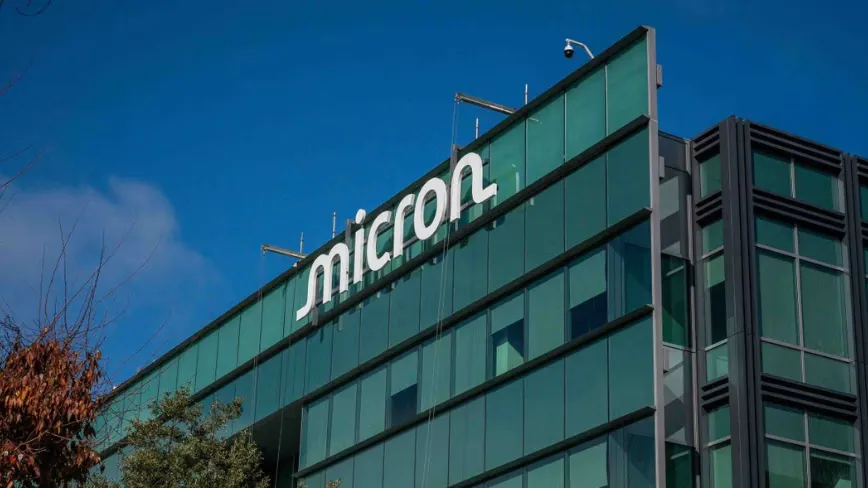
Micron Technology and Anthropic have signed a strategic, multi-year agreement covering memory supply for Claude data centers, internal model operations, and Micron taking a stake in Anthropic's latest funding round. For executives, it signals how AI infrastructure vendors are shifting from selling parts to co-financing and operational embedding.
Micron Technology and Anthropic just stitched together a multi-year AI “memory supply” relationship with three extra ties that make it more than a normal vendor contract. The chipmaker will supply high-bandwidth memory, DRAM, and SSDs for Claude’s data centers. It will also run Anthropic’s models internally. And Micron will take a stake in Anthropic’s latest funding round.
Put bluntly: Micron is not only selling the components that keep big AI systems running. It is also getting closer to how Anthropic’s workloads execute and getting paid for it twice, once via supply economics and again via equity exposure. That combination matters because in AI infrastructure, margins and bargaining power often depend on who controls capacity, who understands workload requirements, and who can influence build-outs across data center timelines.
To see why this is strategically spicy, zoom out to how AI hardware procurement usually works. Data centers need more than “compute.” They need fast, high-bandwidth memory to feed GPUs and accelerators, plus storage that can handle model artifacts, prompt and response pipelines, and operational overhead. DRAM and SSDs are the unglamorous ingredients that determine whether systems stay responsive or fall into performance bottlenecks. When an AI company standardizes on specific memory and storage suppliers across multiple years, it can reduce integration churn. It can also create predictability for both sides during demand surges.
Micron’s part of this deal is the supply backbone, and the source is explicit about the exact categories: high-bandwidth memory, DRAM, and SSDs for Claude’s data centers. The second operational tie, Micron running Anthropic’s models internally, adds a layer that many purely transactional supply agreements do not. Even without details beyond that fact, the structure implies Micron is willing to be more directly involved in workload execution, which can help it fine-tune product fit, validate performance, and potentially shorten feedback loops as requirements evolve.
Now look at the equity component. The agreement also includes Micron taking a stake in Anthropic’s latest funding round. That is a big deal for decision-makers because it reframes Micron’s incentives. Instead of aiming only for long-term supply contracts, the company is also positioned as a financial stakeholder in Anthropic’s growth. In AI, where capital is front-loaded (especially for data center build-out and scaling operations), equity can be a hedge and an accelerator at the same time. If Anthropic expands capacity faster, demand for Micron-supplied components grows. If Anthropic’s adoption grows, the equity stake can appreciate. If things slow, the equity exposure is still there, but the supply relationship may provide a steadier revenue base.
This kind of “triple tie” has practical governance implications too. Multi-year supply plus operational involvement tends to increase the number of internal stakeholders on both sides, from engineering and procurement to legal and finance. Adding equity means boards and investors care about alignment, risk sharing, and potential conflicts. There are also competitive dynamics: memory and storage are strategic in AI supply chains, and public partnerships can influence other customers’ expectations, especially when suppliers demonstrate they are willing to link commercial terms with capital support.
There is also a broader regulatory and compliance angle, even though the source does not name regulators. When AI models are run in data center environments, including by infrastructure partners, data governance expectations, security practices, and operational controls become central to procurement. Multi-year agreements in this space often need to address how model runs are handled, what safeguards apply, and how responsibilities are divided between the model provider and the compute and memory provider. The fact pattern here emphasizes execution by Micron internally, which makes those operational boundaries especially important.
For executives at other AI builders and hardware buyers, the second-order lesson is clear: deals are evolving from “we need components” to “we need a partner embedded in our scaling path.” When a memory supplier takes an equity stake and commits to specific memory and storage classes across multiple years, it is effectively participating in the roadmap. For CFOs and board members, that changes how you think about risk. Instead of treating hardware sourcing as a pure cost line, it becomes a strategic dependency with both revenue and valuation implications.
Micron and Anthropic’s agreement is therefore not just a procurement headline. It is a blueprint for how AI infrastructure relationships may work going forward: lock in critical performance components (high-bandwidth memory, DRAM, and SSDs), deepen operational execution via internal model runs, and align incentives through an equity stake in the company’s next phase.
This story's Key Insights and Take-aways are locked.
Create a free account to unlock Executive Actions for one credit.
Register to UnlockAlways free for Executives Club members. Join the Club
More in Technology

Nvidia's $89B data center quarter: the 9 companies cashing in
The AI buildout is minting fortunes beyond GPUs, and memory, cloud, and cooling suppliers are riding the same wave.

Google quietly links your phone number to every Android account on your SIM
Adding a SIM now ties your phone number to all Google accounts - and future accounts inherit it. Here's the security and privacy stakes.

Hijacker AI 'Skynet mode' runs 100,000 attack steps against exposed models
Symantec caught a criminal AI agent that borrows other models, steals data, and mines crypto; the only relief is no confirmed victims yet.