
Microsoft puts 75 Unix commands into Windows, and grep leads the charge
At Build, Microsoft folded over 75 Unix commands into Windows CMD and PowerShell, a move that lowers developer friction while widening the company’s AI and enterprise moat.
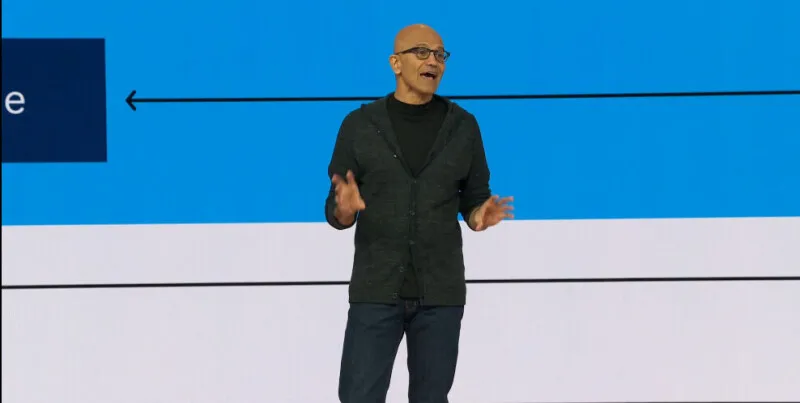
Microsoft used its Build conference to ship coreutils for Windows, a Rust-built package that brings more than 75 Unix commands, including cat, ls, grep, and head, into CMD and PowerShell. For executives and boardrooms, the significance is not just convenience: it standardizes developer workflows across Microsoft’s platform stack while reinforcing the company’s push to make Windows the safest place to build AI tools.
Microsoft just did something that would have made old-school Windows loyalists flinch: it shipped coreutils for Windows, a Rust-built package that brings more than 75 Unix commands straight into CMD and PowerShell. The lineup includes crowd-pleasers like cat, ls, grep, and head, and it arrives alongside earlier additions such as curl and sudo. Satya Nadella even put a spotlight on the move during his Build keynote, declaring, “Grep in full glory is now available for full Windows access.” That is the headline, and the practical point is simple: Microsoft is making it easier for people who live in terminal windows to use the same muscle memory across Windows, Linux, macOS, WSL, containers, and even the DOS-era CMD prompt.
Why does that matter? Because grep is not some niche relic. It is the workhorse command for searching through logs, code, and other giant piles of text, which is exactly the kind of grunt work developers, admins, and now AI agents keep needing to do. Microsoft’s pitch is that standardizing these commands across environments reduces friction when scripts move from one system to another. Unix was built around small programs that can be piped together, so output from grep can be chained into other commands like cat, and that same pattern now matters in modern automation. In plain English: if you write scripts for a mixed-world stack, you want the same commands to behave the same way wherever they run. Microsoft is betting that fewer syntax headaches equals more developers staying inside its ecosystem.
There is also a very human subtext here for anyone who has ever bounced between Linux and Windows and had to remember that ls is not the Windows default and dir is. Coreutils means both work. That sounds tiny until you are juggling a deadline and just want the shell to stop being weird. Microsoft is clearly counting on that kind of daily annoyance to add up in its favor. One X poster captured the mood, saying Coreutils removes the repeated “frustration of looking up the PowerShell equivalent syntax” for grep, and called “Useful functionality over ‘not invented here’” a “huge win!” That is exactly the kind of developer sentiment Microsoft wants to harvest: less tribalism, more productivity.
The company did not build this from scratch. Coreutils comes from the uutils open source effort, which rewrites Linux core commands in Rust for memory safety and portability. That choice matters for two reasons. First, Rust has become the language of the moment for software that wants to avoid memory bugs. Second, Microsoft gets a package under the permissive MIT license, which neatly sidesteps the sticky GNU GPL licensing that once made Linux tooling a sore spot in Redmond. The package is also small, about 4.6MB, and can be installed through WinGet with “winget install Microsoft.Coreutils.” For the command-line crowd, it is an easy download. For Microsoft, it is a nice little sign that the company can borrow deeply from the Unix world without reopening old licensing wounds.
This is not a total surrender to Linux purity, though. Some commands are still off limits, including dd, the byte-by-byte copying tool, which Microsoft’s documentation dryly says may be “Perhaps useful in the future.” A few original DOS commands, Sort and Find, were folded into their Linux equivalents so they work in both contexts. But the big caveat is permissions. Windows uses ACLs to manage file ownership, not POSIX permission bits, so Linux permission-setting commands like chcon, chgrp, chmod, chown, chroot, and groups do not map cleanly onto Windows. In other words, Microsoft can make the shell speak more Unix, but it cannot rewrite the underlying operating system model just by shipping a new binary. Scripts that depend on file permissions will still need to be massaged.
That tension is the real story for operators and execs: Microsoft wants compatibility where it can get it, but it is not pretending all environments are identical. Historically, that would have sounded like a loss for Windows. Today, it reads more like strategy. Linux has already become the most popular operating system on Azure, and Microsoft released its own Linux distribution, Azure Linux, last month. So the old “Linux versus Microsoft” framing is outdated. The competitive pressure now comes more from frontier AI labs that could disrupt enterprise software relationships, not from open source itself. In that world, Windows compatibility with Linux command-line habits is less a surrender than a land grab for developer attention.
That same logic showed up everywhere else at Build. Microsoft leaned hard into its familiar playbook of commoditizing the competitor, rolling out new features that help developers build AI into their own applications while keeping the company’s enterprise controls intact. It released a version of the OpenClaw agent builder that runs in Windows and inherits Microsoft’s permissions and security guardrails through newly released Microsoft Execution Containers, or MXC, a policy layer for describing agent containment requirements. Earlier this year, Microsoft had warned about the security problems of running OpenClaw unfettered on Windows, so the message here is clear: agents may be powerful, but they work best when boxed in by established software and governance. That matters for every CIO and board worried about letting autonomous systems wander too far.
Microsoft also expanded CoPilot for GitHub from in-line assistance into a full developer environment and orchestrator for multiple agents that can handle more mundane code-pushing tasks. For Office 365, it introduced prefabricated OpenClaw-based agents called AutoPilots, which Nadella said are “autonomous, long running agents with full enterprise compliance that run in your tenant.” The first personalized agent is Scout, which lives in Microsoft Teams and can use chats, email, calendar, and contacts to run errands. Microsoft also rolled out in-house models that developers can plug directly into apps, including MAI-Thinking-1 for reasoning, MAI-Code-1-Flash for coding, MAI-Image-2.5 for image creation, MAI-Transcribe-1.5 for voice transcription, and MAI-Voice-2 for speech generation. The strategic direction is hard to miss: keep the developer, the workflow, and the governance inside Microsoft’s fence.
Then there is Project Solara, Microsoft’s push into ambient computing for portable single-purpose devices. Steve Bathiche told the Build crowd, “The next computer is not one device, it is all these devices working together as one system, with agents showing up closer to where and when you need them.” Nadella framed the same vision by pointing to edge compute already sitting in “every NPU, GPU, CPU, even every PC.” Translation for decision-makers: Microsoft is trying to own not just the desktop or the cloud, but the layer where AI agents move between devices, data, and tasks. For rivals, that is a lot more consequential than a few familiar commands in the terminal. For everyone else, it is a reminder that the boring stuff, like grep and ls, often shows up right before the big strategic shove.
This story's Key Insights and Take-aways are locked.
Create a free account to unlock Executive Actions for one credit.
Register to UnlockAlways free for Executives Club members. Join the Club
More in Technology

OpenAI says 10,000 agents cracked a 90-year math problem in 88 hours
The company's claim is audacious, but one mathematician is pushing back. Here's what it means for AI-driven discovery.
Meta still serves child sexual abuse ads on Instagram in India - BBC report
A new report following the BBC Eye investigation says the ads are still there - what it signals for every platform with a self-serve ad engine.

White House yanks 'Build the Wall' game after Tetris Company copyright warning
The administration's arcade game vanished in hours - and the takedown playbook every brand can learn from.