
Microsoft trades Nvidia for homegrown AI chips to boost margins
The software giant is shifting more AI compute to its own silicon, a move that could reshape its cost structure and loosen Nvidia's grip.
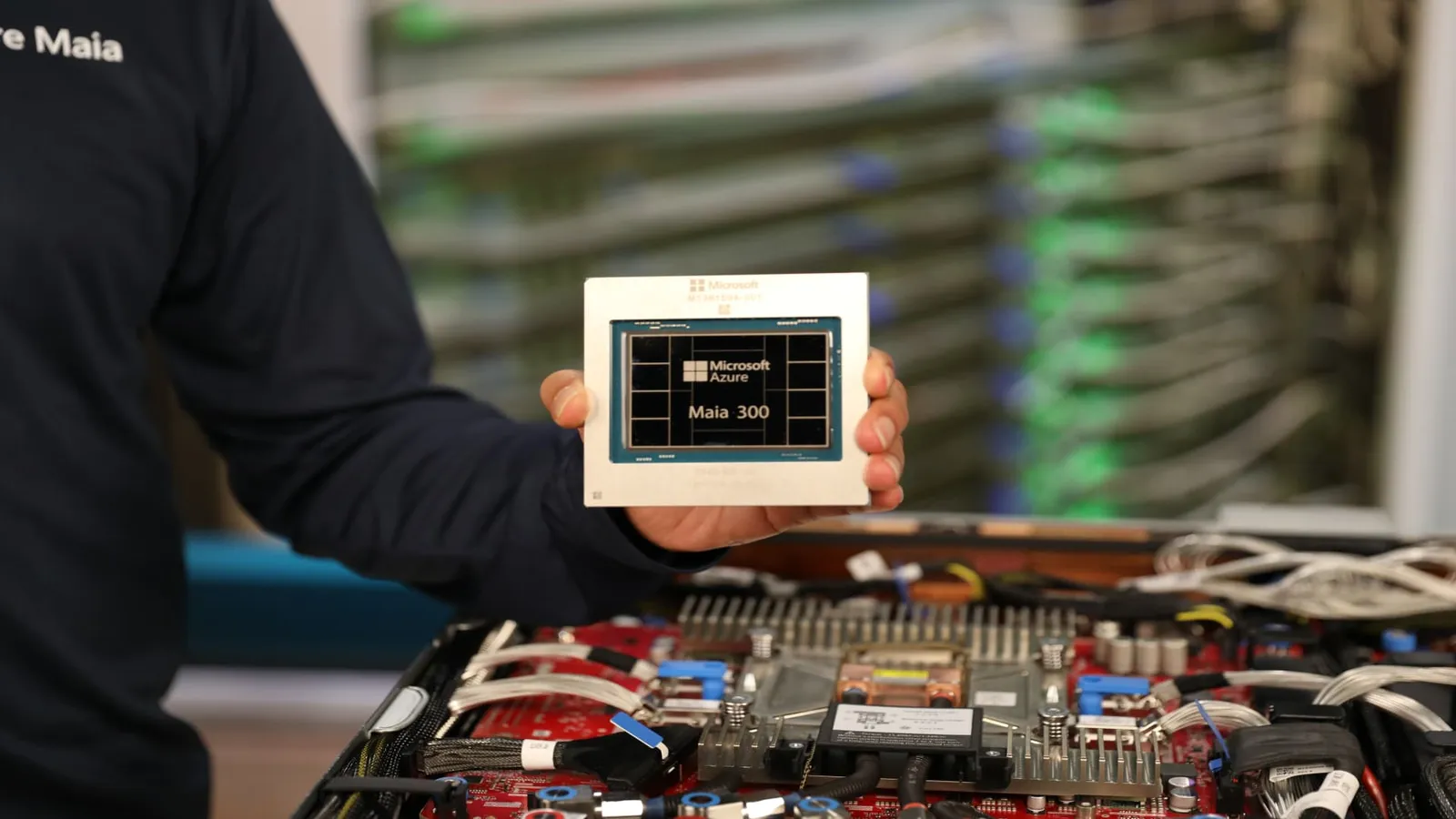
Microsoft is increasingly relying on its own AI chips, reducing its dependence on Nvidia. The shift stands to expand Microsoft's margins and strengthen its AI stack, a signal for CFOs watching AI capex.
Microsoft is increasingly running its AI workloads on homegrown chips, a strategic shift that directly reduces its reliance on Nvidia. The company says the move stands to expand its margins and strengthen its AI stack, according to a CNBC report. For a business spending billions on AI infrastructure, that is not a small footnote; it is a quiet but consequential pivot in the economics of artificial intelligence.
The headline number here is not a dollar figure but a dependency ratio. Microsoft has not disclosed exactly how much of its AI compute now runs on its own silicon, but the direction is clear: more in-house, less Nvidia. That matters because Nvidia has commanded the vast majority of the AI accelerator market, giving it enormous pricing power. Every workload Microsoft shifts to its own chips is a workload that no longer carries Nvidia's premium. For a company running one of the world's largest cloud networks, that resilience is strategic, not just financial.
The logic is straightforward. Custom silicon can lower the cost per inference, reduce power consumption, and give Microsoft tighter integration between hardware and software. In the AI stack, the chip is where a large share of the cost lives. By owning that layer, Microsoft can improve gross margins on Azure AI services and offer competitive pricing without sacrificing profitability. Historically, custom silicon has been a powerful margin lever for companies like Apple, which designs its own chips for iPhones and Macs, and the same playbook is now moving into the data center.
This is also a supply-chain play. Relying on a single dominant vendor for critical components is a risk, especially when demand outstrips supply. Microsoft's homegrown chips give it negotiating leverage with Nvidia and a fallback when allocations are tight. The AI boom has created chronic shortages of Nvidia GPUs, and any company that can reduce its dependence on that constrained supply chain gains a meaningful operational advantage. For Microsoft, that means fewer delays in rolling out AI features and more predictability in capital planning.
Microsoft is not alone in this direction. Amazon has developed its own Graviton and Trainium chips, and Google has long used TPUs for AI workloads. The broader trend among hyperscalers is to design silicon tailored to their specific workloads rather than buying generic GPUs. Microsoft's move fits that pattern, but it carries extra weight because of the company's central role in the AI boom through its partnership with OpenAI. As the primary cloud provider for OpenAI, Microsoft needs massive compute capacity, and controlling the silicon gives it a direct line to improving the economics of that relationship.
For CFOs and boards, the margin story is the one to watch. AI infrastructure spending has become a major line item for every large tech company, and investors are increasingly asking when that spending will translate into profits. Custom chips are one of the few levers that can directly improve the unit economics of AI. If Microsoft's homegrown silicon delivers on its promise, it could set a new benchmark for how efficiently AI services can be run. That would put pressure on competitors to follow suit, potentially reshaping the cost structure of the entire cloud industry.
There are real challenges. Building a competitive AI chip requires years of engineering, deep software tooling, and an ecosystem of developers. Nvidia's CUDA platform remains a powerful moat, and many AI frameworks are optimized for Nvidia hardware. Microsoft will need to invest heavily in software support to make its chips a true alternative, not just a fallback. The company has deep pockets and a strong software team, but the road to silicon success is littered with failed attempts, and the payoff may take longer than investors hope.
The strategic takeaway for executives is that AI advantage is no longer just about models and data; it is about infrastructure economics. Microsoft's decision to lean on homegrown chips is a bet that owning the silicon layer will pay off in both margins and strategic independence. For peers in similar roles, the question is not whether to explore custom silicon, but how quickly they can move before the cost gap widens. The companies that crack the unit economics of AI will be the ones that define the next decade of computing.
This story's Key Insights and Take-aways are locked.
Create a free account to unlock Executive Actions for one credit.
Register to UnlockAlways free for Executives Club members. Join the Club
More in Technology

A Chinese rocket deorbited over Minnesota and landed in a farmer's cornfield
Experts tied the fragment to LandSpace's Zhuque-2E, which launched on September 15 and shed debris over the American Midwest after deploying 10 satellites.

JPMorgan Chase deploys first $5B into defense tech and hypersonic missiles
The bank is moving off its balance sheet to back robot factories, hypersonic missiles, and supply chains, signaling a new era of bank-backed military innovation.

Cop fired after sharing Flock login with ICE husband: 983 searches
A Savannah officer's shared credential let an ICE agent run hundreds of plate searches on Hispanic drivers, exposing a surveillance backdoor.