
Midjourney shows a 'dunk-tank' ultrasound scanner, but proof still lags the hype
The behind-the-scenes tour explains how the system works, yet leaves big clinical and validation questions unanswered.
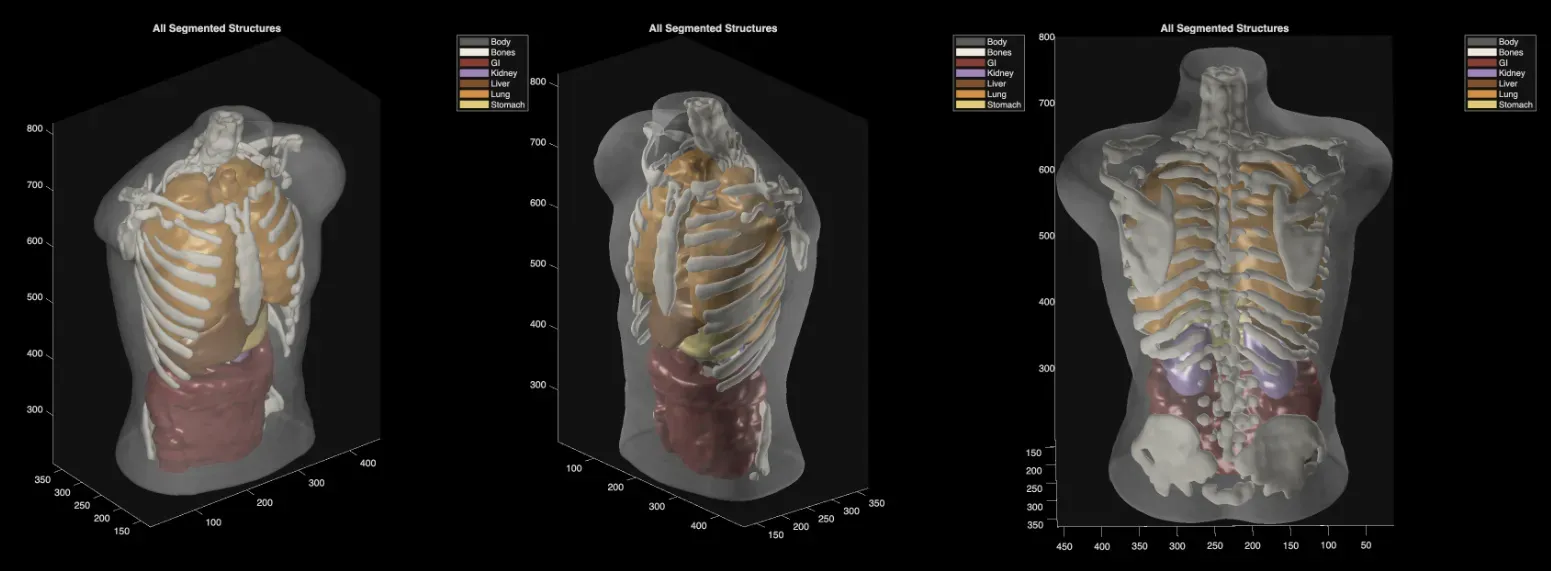
Midjourney, the AI startup best known for generating images, released a nearly 20-minute behind-the-scenes video of its “dunk-tank” ultrasound scanner. For decision-makers, the update clarifies the engineering pitch but still does not supply enough evidence of real-world medical imaging performance.
Midjourney has been pitching a futuristic medical scanner, but the company still hasn’t shown the kind of clinical proof most healthcare buyers and regulators will demand. In a behind-the-scenes video, tech YouTuber Marcin Plaza, who is also an engineer at Midjourney, walks viewers through the scanner’s build. The tour clocks in at nearly 20 minutes and focuses on an ultrasound setup that is, in his words, made from “scores of ultrasound probes” “hacked apart and slapped on a glorified hot tub with an elevator in it,” connected to off-the-shelf computers and Raspberry Pi-style components.
So what exactly did Midjourney show? The segment we can verify from the reporting describes the company scanning an imaging phantom, then segmenting the results to validate how cleanly structures separate under controlled conditions. In other words, the video offers a controlled demo and some engineering rationale, but it does not amount to a clear, publicly evidenced step-by-step case for clinical reliability, accuracy, or diagnostic performance. Midjourney’s goal, according to the coverage, is to deploy the scanner in spas and to make imaging cheap, detailed, and radiation-free.
That combination matters because ultrasound is already a mature modality in healthcare, but the burden of proof for any new system is still high. In plain English, it is not enough to show that you can “make an image.” You have to show that the image is consistent enough across patients, positions, tissue types, and operator usage to support decisions. A phantom can help establish whether the system separates structures cleanly under controlled conditions, but real biology is messy. That is the difference between a lab demonstration and a clinical tool that people trust with outcomes.
Midjourney’s “dunk-tank” metaphor is also revealing, and not just for internet amusement. The approach implies a mechanical and sensing architecture that differs from conventional ultrasound workflows, where probe placement and imaging parameters are typically designed around clinical use. By assembling many probes into a single, elevated bath-like setup and wiring them to commodity computers, the company is clearly trying to reduce cost and complexity while increasing imaging resolution. The pitch is that you can get high-detail imaging without the heavy infrastructure and radiation exposure associated with other modalities.
But the regulatory framing for healthcare devices is unforgiving in exactly this area: validation. The source does not cite specific regulatory submissions or approvals, and it also does not provide the kind of evidence that typically convinces regulators and hospitals. For executives thinking about partnerships, procurement, or risk, that gap is more than academic. If a system is positioned for spa deployment, the buyer is likely not a radiology department, which changes how evidence might be evaluated operationally. Still, even “wellness” imaging claims can trigger scrutiny if customers treat outputs as medically meaningful.
There is also a business incentive behind what Midjourney chose to show. The company is widely known for generating images with AI, not for shipping medical hardware. Releasing a behind-the-scenes tour that demystifies the engineering is a marketing move and a credibility move at once. It says, “We built it, here is how it is wired, here is what it does in a test.” That may be persuasive for early adopters and for technologists, but healthcare buyers and boards typically look for performance metrics, study design details, and external validation. In a sector where failures can be expensive and public, ambiguity is a capital allocation problem, not a vibe problem.
If you are sitting on a board or in an operator role at an AI or health-tech company, the second-order signal here is straightforward: demonstration content is not the same as decision-grade evidence. A nearly 20-minute tour can show ambition, ingenuity, and an engineering path. It can also leave unanswered the questions that drive adoption, coverage decisions, and long-term liability. The source makes clear that many questions remain. The strategic stakes are that if the gap between “cool system” and “proven imaging performance” stays wide, adoption could stall, partnerships could hesitate, and regulatory timelines could become slower and more complicated than an optimistic product roadmap expects.
Midjourney’s scanner concept is trying to bend the economics of imaging. The company’s specific bet, as described in the coverage, is cheap, detailed, radiation-free imaging delivered through a spa-style deployment model. The engineering tour, led by Plaza and supported by a phantom segmentation demo, is a start. But for anyone deciding whether to invest, partner, or build similar systems, the message is clear: the video gives you the mechanics. It still does not give you the proof.
This story's Key Insights and Take-aways are locked.
Create a free account to unlock Executive Actions for one credit.
Register to UnlockAlways free for Executives Club members. Join the Club
More in Technology

Nvidia's $89B data center quarter: the 9 companies cashing in
The AI buildout is minting fortunes beyond GPUs, and memory, cloud, and cooling suppliers are riding the same wave.

Google quietly links your phone number to every Android account on your SIM
Adding a SIM now ties your phone number to all Google accounts - and future accounts inherit it. Here's the security and privacy stakes.

Hijacker AI 'Skynet mode' runs 100,000 attack steps against exposed models
Symantec caught a criminal AI agent that borrows other models, steals data, and mines crypto; the only relief is no confirmed victims yet.