
Mike Flanagan’s Carrie refuses a “straight adaptation,” swaps prom chaos and expands a TK sorority
Prime Video’s eight-episode Carrie reimagining skips fidelity on purpose, modernizes teen tech bullying, and changes the prom.
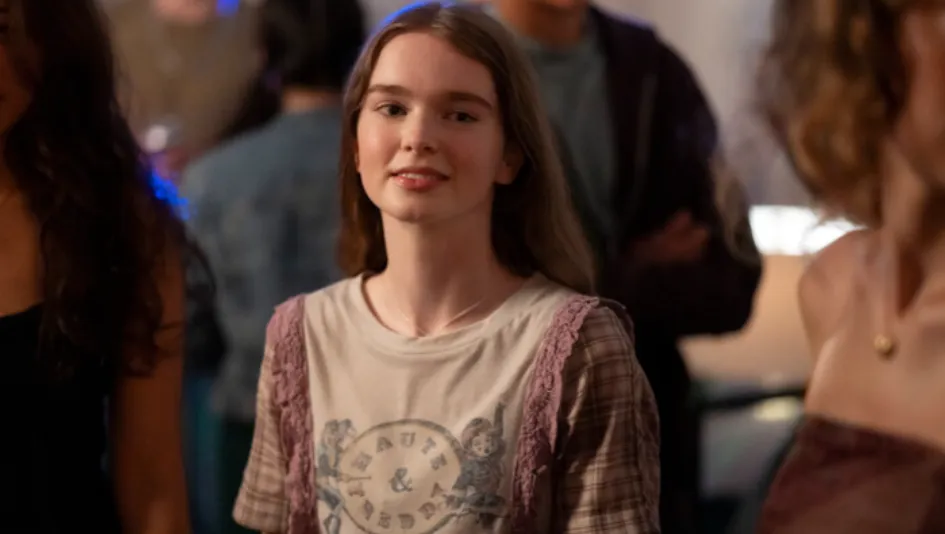
Mike Flanagan’s new Prime Video Carrie series (eight episodes) is set for this fall and will modernize Stephen King’s horror story for social media-era teens. Flanagan says it was never meant to be a “straight adaptation,” and Entertainment Weekly hears why that choice matters for the show’s structure and lore.
Mike Flanagan just gave Carrie fans a very loud answer: this eight-episode Prime Video series will not be a straightforward remake of Stephen King’s novel, and the prom scene in particular will play out completely differently than Brian De Palma’s 1976 film. The premise is already a fork in the road. The show, described in Prime Video material, modernizes Carrie White’s world and centers the relentless pressure and casual cruelty of the social media age, plus the awakening of “mysterious telekinetic powers” that rise alongside her adolescence.
In other words, the iconic image people remember from De Palma is not the anchor here. Flanagan told Entertainment Weekly that “De Palma adapted it faithfully and beautifully 50 years ago,” and that because Carrie has been adapted “twice after that” and “imitated scores of times,” this project could not survive on retreading old ground. His explanation is blunt, and it sets the expectation that decision-makers and audiences should treat this as an original TV build using Carrie’s ingredients, not a faithful rerun.
Here is what the show’s official blurb makes clear. Misfit high-schooler Carrie White (Summer Howell) has spent her life hidden away inside the walls of her home with her fiercely protective mother, Margaret (Samantha Sloyan). Then her father’s sudden, untimely death thrusts her into public high school, where she is forced to navigate a viral bullying scandal that tears through her community. The pitch matters because it updates the mechanism of cruelty. In 1976, it was a locked-in, visual horror set piece; in 2020s teen culture, it is the speed and permanence of going viral. And that naturally changes how tension is distributed across episodes.
The adaptation strategy shows up in episode structure too. The series is built so that each episode from the second onwards opens with a unique story of a different woman somewhere else in the world who explores their awakening powers. That means Carrie is not just a single-protagonist tragedy. Flanagan is positioning her within a bigger ecosystem of gifted people, specifically teasing a “TK gene” and a “sorority of very gifted women.” He explains, “She’s part of a sorority of very gifted women and just doesn’t know it,” and adds that the book “absolutely points at that,” which became an area the show could “pick up and run with.”
This is also where “refusing fidelity” becomes a business and creative lever. When a brand like Carrie has been reinterpreted so many times, the real risk is not just audience disappointment. It is creative stagnation that leaves you with a product that feels like a museum exhibit. Flanagan is explicitly trying to avoid that by expanding the lore and, crucially, changing the way signature events land emotionally. He says the TV series includes “familiar characters and core events from the novel,” including the high school bathroom period scene and, of course, the prom. But then he underlines the divergence: “we’re getting there a completely different way and the events of that prom are going to be completely different.” His framing turns what could be fan backlash into a selling point, calling it “a wonderfully delicious and irresistible opportunity for someone who loves adapting things.”
If you are a founder, investor, or operator watching the media market, this is a useful blueprint. Platforms and studios are increasingly competing on differentiation, not just distribution. Modernizing a premise is easy. Modernizing the reason people care is harder, because it requires rethinking how systems operate. Here, the system is social hierarchy amplified by technology. The blurb explicitly ties Carrie’s suffering to “the social-media age,” and that likely informs how the show builds suspense, escalation, and audience attention cycles across the season.
There is also a “future-proofing” angle. A TV series can evolve its world-building across episodes and seasons, while a movie has one shot to land the iconic beat. Flanagan’s “different woman” prologues after the first episode suggest an anthology-like framework inside a single narrative arc. That format can reduce reliance on a single set piece, distribute thrills across the cast, and create more pathways for viewers to share specific moments. Even without inventing any plot details, the design choice signals the show is aiming to be more than “the Carrie version you already know.”
For peers in entertainment, the strategic stakes are obvious: Carrie is not a new intellectual property, and the De Palma film is widely treated as a gold standard. The article puts it directly, calling De Palma’s Carrie “one of the greatest horror films of all time,” and noting that “no Carrie adaptation or follow-up since has managed to better it.” That is a competitive reality. It means the show cannot win by matching the past. It has to win by offering viewers a compelling new experience inside a familiar silhouette.
So the question for decision-makers is not whether this Carrie will be recognizable. It will be. The question is whether audiences will feel the difference as an upgrade rather than a violation. Flanagan’s own rationale, and his emphasis on building something new “out of the ingredients of Carrie,” answers the creative challenge before it becomes a product problem. If the show executes, it could show how to modernize legacy horror without turning it into costume history. If it misses, it will be because it chased novelty without delivering the emotional payoffs fans came for. Either way, this isn’t a straight adaptation. It’s a remake of the adaptation itself.
This story's Key Insights and Take-aways are locked.
Create a free account to unlock Executive Actions for one credit.
Register to UnlockAlways free for Executives Club members. Join the Club
More in Entertainment

12TB Steam 'teraleak' goes beyond Valve: GTA 3, Mafia 2 prototypes exposed
A 12-terabyte dump of Steam data reveals prototypes and builds of third-party classics like GTA 3 and Mafia 2, plus unreleased Valve content, rewriting game history.

LinkedIn's romance problem: 1 in 4 workers say dating on it is fair game
A new survey shows a quarter of U.S. employees treat the professional network as fair game for romance, even as LinkedIn bans it and removes hundreds of thousands of offending posts.

Enhypen's first No. 1 album breaks K-pop's Billboard 200 streak
The K-pop group's 98,000-unit debut tops the chart while Dolly Parton's catalog reentry shows how death reshapes streaming.