
Mina the Hollower’s secret ending requires avoiding Lionel accusations all game
Unlock the hidden ending by doing almost everything wrong, and a completionist will feel the pain instantly.
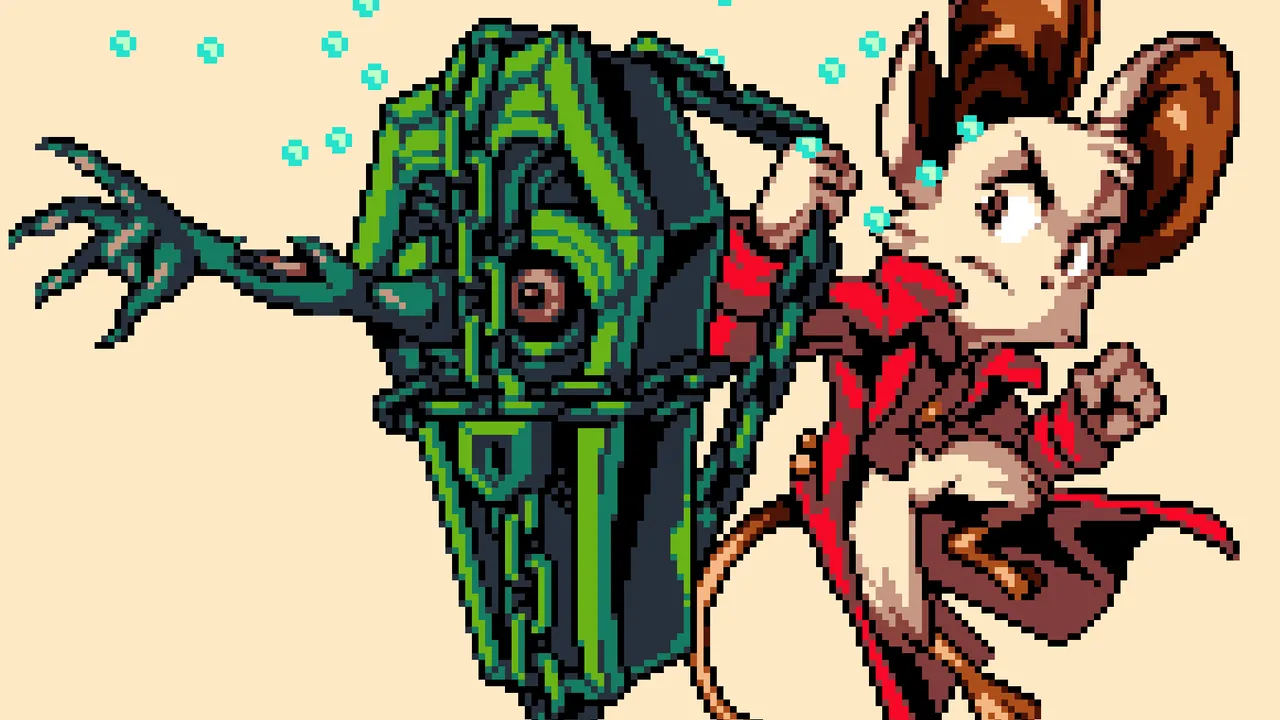
Yacht Club Games’ Mina the Hollower hides a secret ending behind a highly restrictive, spoiler-prone unlock method documented by YouTuber ChickenSoup via Polygon. The consequence is clear for decision-makers and operators alike: the path to “complete” content becomes self-contradictory and punishing by design.
Mina the Hollower has a secret ending, but it is not unlocked by finding a single key or solving one neat puzzle. According to YouTuber ChickenSoup, the method is about what you do not do, over the course of the entire game, because Lionel, the game’s final boss, must be unable to accuse Mina of specific actions.
That means the “ordeal” is not just grinding. It is a long list of exclusions, and the list rules out much of what most players do when they are trying to finish everything. ChickenSoup’s catalog says the conditions include avoiding sealing the Duke in the crypt, avoiding defeating the Mock Moon boss, not using the train except when you first visit Coltrane Peak, and not doing anything that harms another character. Even environmental “help” becomes off-limits: you cannot destroy lamps or candles, with the latter called out because they often contain useful items, and Lionel considers damaging the island.
In other words, the secret ending is engineered as a completion tax. Normally, action-adventure design rewards curiosity and thoroughness. Here, thoroughness can literally sabotage the unlock criteria. The method also includes additional explicit restraints: you cannot restore the Hollower Guild, you cannot view the ribbon cutting ceremony at the start of the game, and you cannot get the fishing rod. On top of that, you cannot take certain routes through side content because the conditions eliminate most side quests and the rewards you would otherwise get from them.
But the unlock is not only negative. Alongside the activities you must avoid, there is also a set of requirements you must do. The list ChickenSoup reports says you must ask Cappy to accompany you after the opening ship crash, you must rescue the three children in Septemburg, and you must give bones to all the beggars who ask for help. This matters because it creates a bizarre, high-attention play pattern: you have to track what you already did, remember what you were forced to skip, and still execute the mandatory tasks correctly. If you miss a single “don’t,” you may still beat the game, but you do not get the hidden ending.
This is also why the advice in the PC Gamer piece lands: you probably should not try for the secret ending on your first run. Not because it is merely hard, but because it blocks some of the best side quests in any game from this year. That is a design tradeoff that is easy to miss when you look at hidden endings as pure optional flavor. For a player, it is a forced choice between exploration payoff and meta-reward. For a studio, it is a way to create a “second game” inside the main game, one that completionists will chase, and most others will never touch.
From an industry lens, this is the kind of content system that can amplify community behavior and guide discovery. The method was catalogued by ChickenSoup and referenced via Polygon, which means the unlock logic becomes social knowledge. Players do not just learn the game, they learn how to manage information: spoiler timing, strategy guides, and “rules of the run.” When the path is defined by omissions, guides become less like walkthroughs and more like compliance checklists. That can pull audiences into repeat play, but it also raises the frustration ceiling because the failure points are spread across the entire run.
The strategic stakes are not limited to entertainment. Teams building games, platforms, and engagement systems should notice how the design turns completion into a constraint satisfaction problem. The hidden ending triggers only if Lionel will ask Mina to join him on his own quest, and “doing it wrong” can foreclose that moment. So the second-order effect is a shift in how players allocate time and cognitive load: rather than “maximize,” the optimal behavior becomes “optimize for eligibility.” And that is exactly the kind of tension that keeps communities talking long after launch, because the secret is not a shortcut. It is a rulebook.
Finally, the article frames expectations for Mina the Hollower’s quality, pointing to Kerry Brunskill’s Mina the Hollower Review and describing it as one of the best games of 2026 so far. If that holds, the secret ending’s convoluted process is not just a gimmick. It is a continuation of the game’s identity: exploration with consequence, discovery with guardrails, and a hidden payoff that is so conditional it effectively demands a dedicated run.
This story's Key Insights and Take-aways are locked.
Create a free account to unlock Executive Actions for one credit.
Register to UnlockAlways free for Executives Club members. Join the Club
More in Entertainment

Russell Brand's accuser 'bewildered and confused' as he denies 7 sex charges
The criminal case against the comedian is a live test of how media companies manage talent risk when serious allegations go public.

'It's a Magic Trick': Ballet Experts Say Rosalía's SNL Pose Is Impossible
Three ballet experts tell Rolling Stone Rosalía's gravity-defying SNL stillness shouldn't be possible - and why the debate is now part of the show.

Activision CMO: GTA 6 Will Boost Call of Duty, Not Bury It
Activision's top marketer says Rockstar's blockbuster will drive players back to consoles and into Modern Warfare 4, even as the company admits its recent strategy failed.