

Momenta kicks off HK$5.89b, aiming US$751m in IPO as China auto sales slump
The self-driving firm starts bookbuilding for a HK$5.89 billion Hong Kong listing, testing investor appetite during China’s car slowdown.
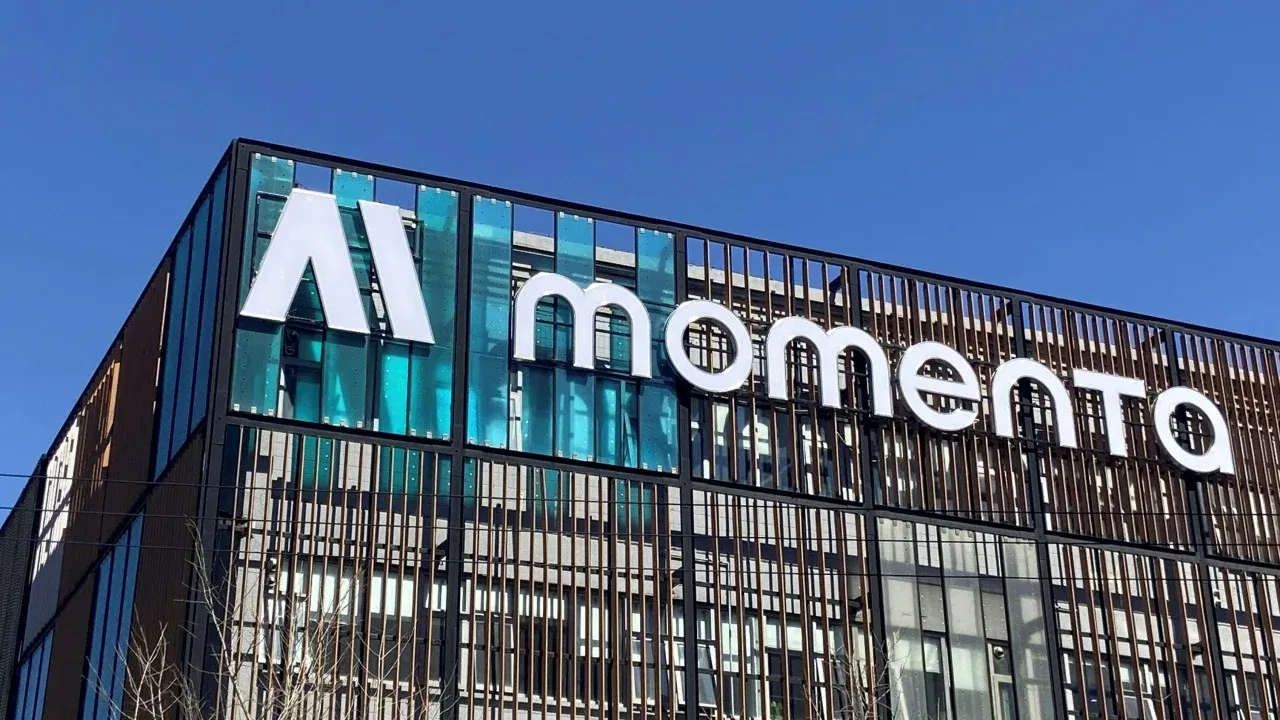
Momenta, a Chinese self-driving technology start-up, kicked off bookbuilding on Monday for a HK$5.89 billion (US$751 million) share listing on the Hong Kong stock exchange. The offer and timing are a real sentiment test for capital raising in a China auto market that is currently weak.
Momenta, the Chinese self-driving technology start-up, kicked off bookbuilding on Monday for a HK$5.89 billion (US$751 million) share listing on the Hong Kong stock exchange. In practical terms, this is an investor sentiment stress test wrapped inside a specific number: the company is trying to sell nearly 19.94 million shares at HK$295.60 per share, pricing the bet on how much public-market risk appetite still exists for autonomous driving stories.
The “how much can they raise” question is made even sharper by the offer structure. Momenta is offering nearly 19.94 million shares at HK$295.60 per share, and with 20 shares as the minimum board lot, the minimum investment is HK$5,971.62. That minimum lot size matters to boards and allocators because it shapes who can participate, how quickly demand can build, and how broad the shareholder base can realistically become at launch.
This IPO is also happening in a tough macro corner of the market. The source frames the offering as occurring “amid a sales slump in China’s car industry,” meaning the underlying demand environment for vehicles and, by extension, the near-term commercialization runway for vehicle-adjacent tech is not rosy. Self-driving and driver-assistance narratives can be durable, but investors still anchor to timing. When car sales slow, automakers tend to scrutinize spending, and autonomous supply chains feel the downstream pressure. A fundraise at this moment is less about a single product demonstration and more about capital discipline and survivability through a weaker demand cycle.
For Hong Kong, the listing venue adds another layer. Hong Kong has often acted as a bridge market for Chinese growth and tech firms, with global capital seeking exposure while local and regional investors weigh regulatory, geopolitical, and currency considerations. Even without extra details from the source on approvals or regulatory milestones, the basic mechanism is clear: Momenta’s bookbuilding process is the gateway step that precedes a scheduled trading debut. The bookbuilding period, therefore, is not just a formality. It is the moment where underwriting momentum is confirmed or challenged by actual orders.
The timeline is concrete. Bookbuilding closes on Friday, ahead of a scheduled trading debut. That means the market only has a short window to decide whether the offer price and size are compelling. For executives and boards, this creates a tight feedback loop. If demand is strong, the process can help validate valuation expectations for later-stage fundraising and partnerships. If demand is lukewarm, the impact can ripple into how management approaches future capital, potentially affecting the pace of R&D, hiring, or scaling efforts tied to deployment timelines.
There is also the question of sponsorship and how it signals execution. Momenta’s bookbuilding is sponsored by CICC and Deutsche Bank, two names that function as intermediaries for the issuer and help coordinate distribution to investors. In IPO mechanics, sponsors are not just paperwork. They reflect the underwriting and marketing effort that underpins order collection, which can be especially important when external conditions, like the China car sales slump referenced in the source, are pressuring investor confidence.
Strategically, the second-order effect for companies in similar categories is straightforward: public-market access can close or open quickly depending on sentiment, and this IPO is happening right when the domestic vehicle market is under stress. If Momenta can price and place this size of offer, it suggests that investors may still be willing to underwrite autonomous driving with a longer horizon, even when near-term automotive volumes are soft. If it struggles, boards at other mobility and AI-adjacent firms should read it as a warning that “category growth” is not enough without timing clarity and a credible path through weaker demand cycles. Either way, Momenta’s HK$5.89 billion attempt is not happening in a vacuum. It is a live signal about how the market is valuing risk right now, and how quickly that valuation can change when the auto backdrop cools.
This story's Key Insights and Take-aways are locked.
Create a free account to unlock Executive Actions for one credit.
Register to UnlockAlways free for Executives Club members. Join the Club
More in Business

Bungie cuts most Destiny 2 staff as Sony says Marathon still matters
Herman Hulst confirms layoffs affecting most Destiny and some Marathon teams after Bungie admits Destiny fell short.

SK Hynix jumps 11% after seeking up to $29.4B in Nasdaq listing
The chip giant filed for a Nasdaq listing plan that could raise $29.4 billion, instantly reshaping investor expectations.

Micron revenue hits nearly $42B as AI memory lifts gross margins above 81%
Fiscal Q3 results crush estimates, prove AI memory is rewriting Micron's margins, and change the momentum math for the whole chip stack.