
Morgan Stanley doubles China humanoid robot shipment forecast as commercialization speeds up
A more aggressive forecast changes how investors, suppliers, and boards should price the pace of real-world deployment in China.
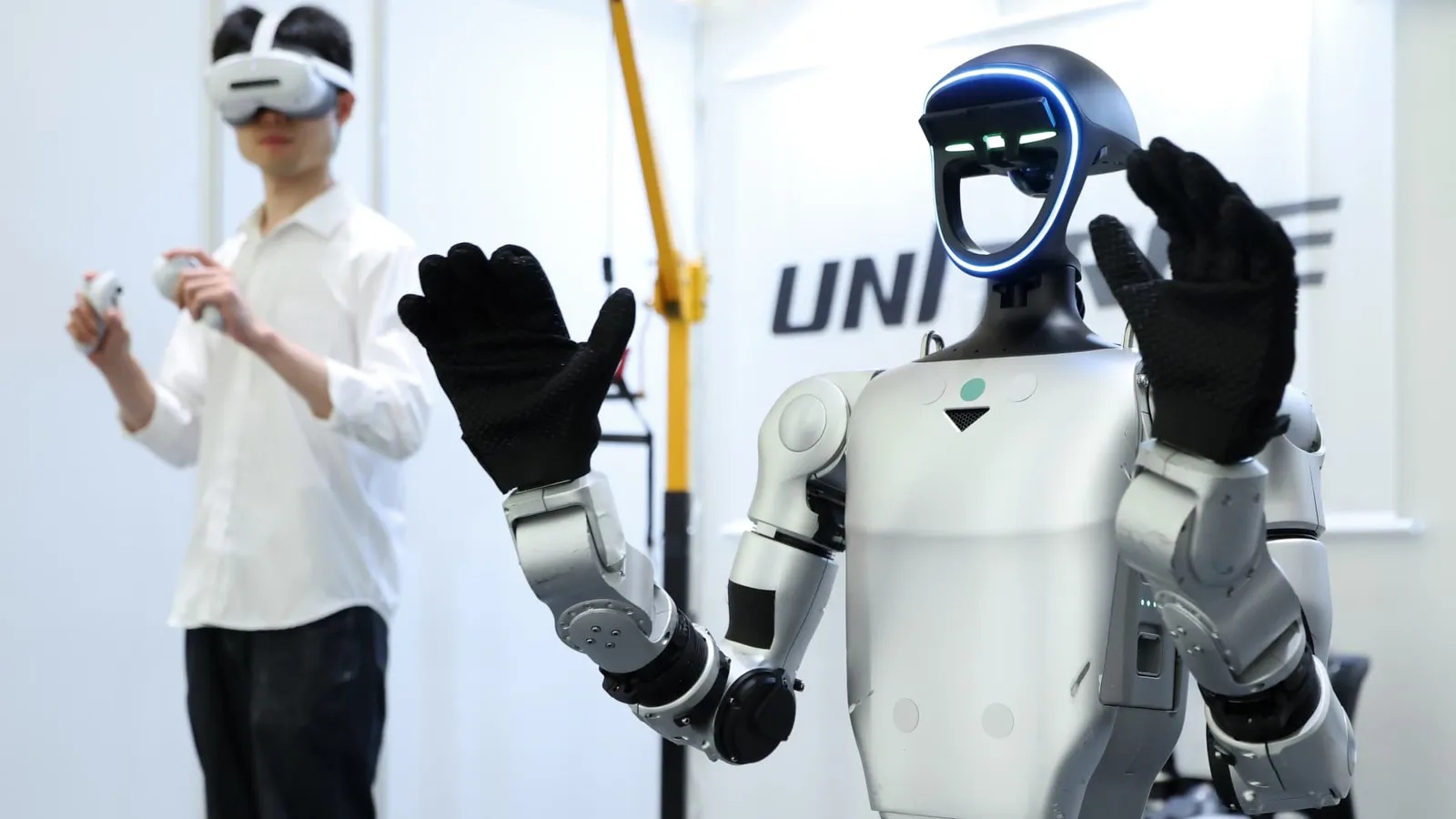
Morgan Stanley doubled its outlook for China's humanoid robotics market as early commercial deployment in real-world scenarios accelerated. For decision-makers, the upgraded forecast signals faster-than-expected commercialization risk, shifting what timelines, budgets, and supplier commitments should assume.
Morgan Stanley has doubled its forecast for China humanoid robot shipments, arguing that commercialization is accelerating as early deployments move from demonstrations into real-world scenarios.
That single forecast revision matters because shipment expectations are where a lot of downstream decisions get made. When an investment bank raises the expected volume trajectory, it tends to ripple outward into how boards evaluate automation capex, how suppliers plan capacity, and how investors underwrite timelines for adoption. In this case, Morgan Stanley’s sharper outlook is tied to a straightforward driver: early commercial deployment is happening in settings that look more like day-to-day operations than lab benchmarks. The market signal is not subtle. If deployments are scaling in the real world, then the “will it work” phase compresses, and the “how fast does it spread” phase starts to dominate.
To understand why this forecast change is a big deal, it helps to separate two overlapping conversations executives often have about robotics. One is technical performance: can the robot see, navigate, and manipulate objects reliably enough to be useful. The other is operational performance: can it keep working in messy environments, with tolerances that matter, service processes that hold up, and integration efforts that don’t swallow the project budget. Morgan Stanley’s framing explicitly points to the second category. “Early commercial deployment” suggests that customers are already testing and using humanoid systems outside controlled trials, where downtime, maintenance, and workflow fit become the real evaluation criteria.
This is also why the word “commercialization” is so loaded in robotics. In many tech categories, commercialization can lag capability for a long time. But robotics tends to punish companies that assume the path will be smooth. Field deployments require tooling, training, safety processes, and often a partner ecosystem. When an analyst house like Morgan Stanley says commercialization is accelerating, it implies that at least some of those frictions are getting resolved fast enough to support scaling.
China’s robotics market adds another layer of urgency. For years, the region has been a hotbed of industrial robotics expansion, and humanoids represent a different frontier because they target general-purpose tasks and human-like mobility rather than tightly constrained industrial lines. That means adoption depends not just on industrial demand but also on the pace at which companies can integrate robots into varied workplaces. A shipment forecast doubling is effectively a bet that customers are moving past pilot stage and into recurring purchasing behavior, or at least that the supply chain is preparing for that jump.
There is also a governance and risk angle that boards should pay attention to, even if Morgan Stanley’s note is market-focused. Larger shipment expectations can increase both opportunity and exposure. Opportunity comes from capacity planning and revenue scaling, because the supplier and integrator ecosystems typically benefit when volumes rise. Exposure comes from the possibility that early adopters hit adoption constraints that slow expansion. That is why the source’s emphasis on “real-world scenarios” is important. It is a clue that the forecast is not purely aspirational. It is anchored in observed deployment patterns.
Regulatory considerations can further shape the timeline for humanoid robots, because robots in public and semi-public environments raise safety questions: how systems behave around people, how incidents are handled, and how compliance is documented. Even when regulations are not the only bottleneck, they can affect procurement timelines, insurance requirements, and deployment scope. A forecast doubling implies that, whatever the regulatory drag has been, it is not preventing real commercial activity from accelerating.
For executives and investors, the strategic implication is simple: an upgraded shipment forecast changes the planning assumptions that drive budgets and incentives. If Morgan Stanley is right, the market may be closer to a scaling phase than many teams priced for. That can influence how quickly procurement leaders demand vendor roadmaps, how product leaders prioritize reliability and serviceability improvements, and how boards stress-test business cases for automation. In other words, the forecast is not just about numbers. It is about timing, and timing is where competitive advantage gets won or lost in hardware-heavy markets like robotics.
This story's Key Insights and Take-aways are locked.
Create a free account to unlock Executive Actions for one credit.
Register to UnlockAlways free for Executives Club members. Join the Club
More in Business

Bungie cuts most Destiny 2 staff as Sony says Marathon still matters
Herman Hulst confirms layoffs affecting most Destiny and some Marathon teams after Bungie admits Destiny fell short.

SK Hynix jumps 11% after seeking up to $29.4B in Nasdaq listing
The chip giant filed for a Nasdaq listing plan that could raise $29.4 billion, instantly reshaping investor expectations.

Micron revenue hits nearly $42B as AI memory lifts gross margins above 81%
Fiscal Q3 results crush estimates, prove AI memory is rewriting Micron's margins, and change the momentum math for the whole chip stack.