

Musk: Tesla robotaxis still can't see grey kittens at night as EU vote nears
The CEO's own admission lands days before Europe decides on Tesla's camera-only approach, and Austin's robotaxi hours just got later.
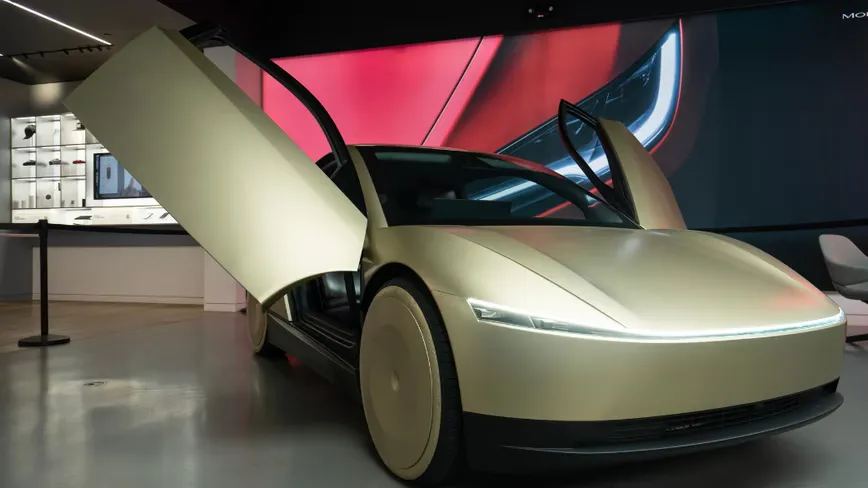
Elon Musk said Tesla's robotaxis still struggle to detect animals that blend into the road at night, citing grey kittens on grey tarmac, as Austin's operating hours extended to 11pm. The EU's Technical Committee on Motor Vehicles votes on October 6 on bloc-wide approval of the same camera-only sensor suite, putting regulatory momentum at stake.
Elon Musk has admitted that Tesla's robotaxis still cannot reliably see pets at night, describing the problem as 'grey kittens on grey tarmac.' The concession lands as the company pushes its Austin robotaxi service later into the evening, with operating hours moved from 10pm to 11pm, and as European regulators prepare to vote on the very sensor suite that makes those robotaxis possible.
On October 6, the EU's Technical Committee on Motor Vehicles will vote on bloc-wide approval of Tesla's camera-only sensor suite. A yes would clear a major regulatory hurdle for Tesla's autonomous ambitions across 27 member states. A no would leave the company's European strategy in limbo and hand an opening to rivals that use lidar.
The 'grey kittens on grey tarmac' problem is a textbook edge case for autonomous driving: a small, low-contrast object at night that blends into the road surface. Musk's willingness to name it publicly is notable, because Tesla has long argued that its vision-only approach can match or exceed human driving. The admission suggests that even Tesla's neural networks still struggle with the long tail of rare but dangerous scenarios.
For context, most other autonomous vehicle developers, including Waymo, Cruise, and a host of Chinese players, use lidar, a laser-based sensor that measures distance and performs better in low-light conditions. Tesla has deliberately avoided lidar, betting that cameras plus neural nets can achieve full autonomy at lower cost. That bet has produced impressive results in many conditions, but night-time animal detection remains a weak spot, and extending service hours to 11pm in Austin increases the exposure to that weakness. Cameras are cheaper than lidar, which is part of Tesla's cost advantage, but the trade-off is now visible in a very public way.
The Austin hours change is a small but telling signal. Robotaxi services typically start with conservative operating windows to limit risk, then expand as the system proves itself. Moving from 10pm to 11pm suggests Tesla is gaining confidence in its system's overall safety, yet Musk's own comment undercuts that confidence when it comes to animals. For passengers, a robotaxi that cannot reliably see a cat or dog on the road at night is a safety concern; for regulators, it is a data point in the approval calculus.
The EU vote on October 6 is therefore more than a technicality. The Technical Committee on Motor Vehicles is the body that can grant type approval for the sensor suite across the bloc. If it approves, Tesla can deploy its camera-only system in Europe without having to re-certify in each country. If it rejects, Tesla would need to either modify its approach or fight a patchwork of national approvals. The outcome will also send a signal to the rest of the industry about whether regulators are willing to accept vision-only autonomy at scale. The committee's decision will be closely watched by automakers and tech companies across the continent, as it could set a precedent for how other sensor systems are evaluated.
Tesla's robotaxi program has been a centerpiece of Musk's growth narrative for years. The company has sold its Full Self-Driving software to hundreds of thousands of customers, promising that the software would eventually enable a fleet of autonomous robotaxis. Austin is one of the first markets where Tesla has actually deployed a robotaxi service, and the extension of operating hours to 11pm is a sign that the company is pushing toward broader commercial use. But the kitten problem reveals the gap between the promise and the current reality. The EU has historically been more cautious than the US when it comes to autonomous vehicle approvals, and this vote will be a key test of whether that caution is eroding.
For executives and boards watching from the sidelines, the episode is a reminder that autonomy is a marathon, not a sprint. Tesla's brand has been built on Musk's promises of full self-driving 'next year' for years, and the gap between promise and reality is now visible in a simple, almost absurd example: grey kittens. The company's ability to handle such edge cases will determine whether it can expand robotaxi service beyond Austin and beyond the United States. For boards, the lesson is to stress-test any autonomy partner's claims against real-world edge cases, not just marketing materials.
The strategic stakes are clear. If the EU approves the camera-only suite, Tesla gains a regulatory moat in Europe that could accelerate its robotaxi rollout. If it does not, competitors with lidar-based systems may find a more receptive regulatory environment. Either way, Musk's admission should give pause to anyone who believes that autonomy is a solved problem. The road to robotaxis runs through every grey kitten on every dark road, and the industry is still learning to see them. The vote on October 6 will be a moment of truth for Tesla's vision-only bet, and for the broader industry's faith in cameras as the sole sensor.
This story's Key Insights and Take-aways are locked.
Create a free account to unlock Executive Actions for one credit.
Register to UnlockAlways free for Executives Club members. Join the Club
More in Technology

A Chinese rocket deorbited over Minnesota and landed in a farmer's cornfield
Experts tied the fragment to LandSpace's Zhuque-2E, which launched on September 15 and shed debris over the American Midwest after deploying 10 satellites.

JPMorgan Chase deploys first $5B into defense tech and hypersonic missiles
The bank is moving off its balance sheet to back robot factories, hypersonic missiles, and supply chains, signaling a new era of bank-backed military innovation.

Cop fired after sharing Flock login with ICE husband: 983 searches
A Savannah officer's shared credential let an ICE agent run hundreds of plate searches on Hispanic drivers, exposing a surveillance backdoor.