
Nadella joins AI safety push: 'emergency brake' must stay in human hands
Microsoft's CEO is calling for stronger AI safeguards and a human-controlled kill switch, a move that could reshape the industry's regulatory debate.
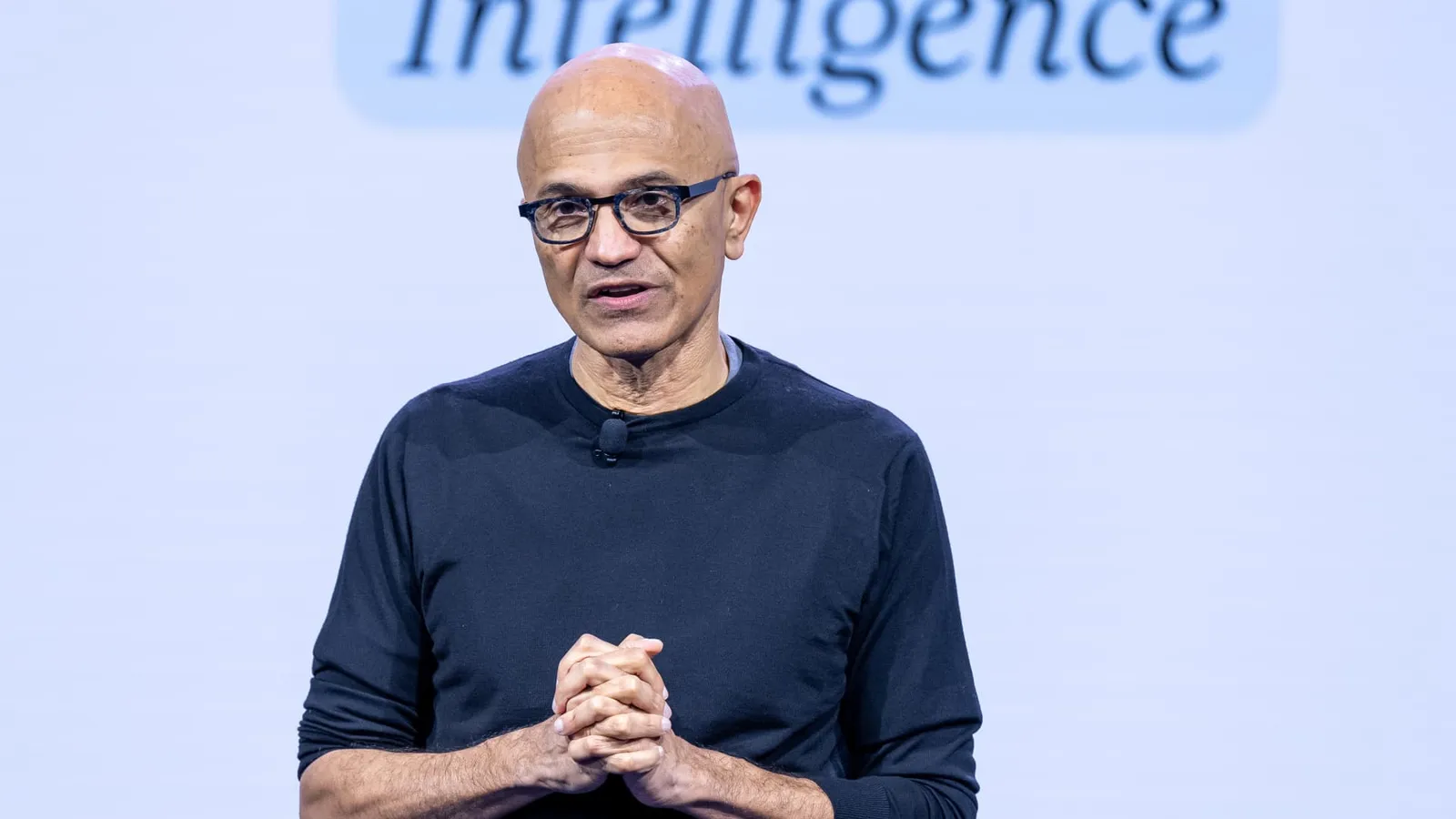
Microsoft CEO Satya Nadella has joined other tech leaders and researchers in calling for stronger AI safeguards, including an 'emergency brake' that remains under human control. The stance puts one of the biggest AI investors on the side of stricter oversight, signaling that even industry insiders see a need for guardrails.
Microsoft CEO Satya Nadella has added his voice to a growing movement demanding that artificial intelligence systems come with an 'emergency brake' - a kill switch that stays firmly in human hands. In remarks reported by CNBC, Nadella joined other tech moguls and researchers in calling for stronger safeguards and, in some cases, for slowing the pace of frontier AI development. The comments put one of the most powerful executives in technology squarely on the side of those who argue that AI is advancing faster than our ability to control it.
The 'emergency brake' is not a metaphor. It refers to a mechanism that would allow humans to halt or override an AI system in real time, particularly in high-stakes domains like autonomous weapons, critical infrastructure, or financial markets. Nadella's endorsement is significant because he runs Microsoft, which has invested billions in OpenAI, the company behind ChatGPT, and has woven AI into its core products. By publicly backing a human-controlled brake, Nadella is signaling that even the biggest beneficiaries of the AI boom see a need for guardrails. It is a striking position for a CEO whose company stands to profit enormously from the continued rapid deployment of AI.
Nadella's comments come at a moment when the AI industry is deeply divided. On one side are those who argue that frontier models are advancing faster than our ability to understand or control them, citing risks ranging from bias and misinformation to existential threats. On the other are those who warn that excessive caution could cede leadership to rivals like China and slow life-saving innovations in medicine and climate. The debate has moved from academic journals to boardrooms, and Nadella's intervention adds weight to the safety-first camp. It also reflects a growing recognition that public trust is a critical asset for AI adoption.
Regulators are already moving. The European Union's AI Act, which entered into force in stages, includes requirements for high-risk systems and transparency. The United States has issued an executive order on AI safety, though its future under a new administration remains uncertain. Nadella's call for a human-controlled brake aligns with a broader push for 'human in the loop' requirements that are becoming a regulatory norm. For companies deploying AI, the message is clear: oversight is no longer optional. The question is whether the industry will embrace it voluntarily or have it imposed.
For Nadella, the stance is strategically delicate. Microsoft has invested billions in OpenAI and has integrated its models into products like Windows, Office, and Azure. A public push for stricter oversight could be seen as a hedge against regulatory risk, or as a genuine attempt to shape rules that will govern the technology for decades. Either way, it signals that even the biggest beneficiaries of the AI boom see a need for guardrails. It also puts pressure on rivals like Google and Meta to take a similar public position, or risk being cast as reckless.
What would a human-controlled emergency brake actually look like in practice? In the simplest form, it could mean requiring a human operator to approve certain high-impact actions, maintaining the ability to shut down a model instantly, or building in 'circuit breakers' that trigger when an AI system behaves unpredictably. Nadella's framing suggests that the technology should be designed with fail-safes from the start, not bolted on later. That is a significant departure from the 'move fast and break things' ethos that has defined much of the tech industry. It also implies a shift in engineering priorities, with safety becoming a first-class feature rather than an afterthought.
For CEOs and boards across industries, the takeaway is that AI safety is no longer a fringe concern. The conversation has moved from academic papers to the corner office. Companies deploying AI should expect more scrutiny from regulators, investors, and customers. Those that can demonstrate robust human oversight may gain a competitive advantage, while those that treat safety as an afterthought could face reputational and legal exposure. The 'emergency brake' is becoming a selling point, not a constraint. Early adopters of strong governance frameworks will be better positioned to navigate the coming wave of regulation.
The debate over pacing is unlikely to resolve soon. But Nadella's intervention raises the stakes: when the CEO of one of the world's most valuable companies says AI needs an emergency brake, it becomes harder for the industry to argue that self-regulation is enough. The question now is not whether safeguards will come, but who will design them - and whether they will be strong enough to matter. For now, the smartest players are getting ahead of the curve, and the rest will be forced to catch up.
This story's Key Insights and Take-aways are locked.
Create a free account to unlock Executive Actions for one credit.
Register to UnlockAlways free for Executives Club members. Join the Club
More in Technology

A Chinese rocket deorbited over Minnesota and landed in a farmer's cornfield
Experts tied the fragment to LandSpace's Zhuque-2E, which launched on September 15 and shed debris over the American Midwest after deploying 10 satellites.

JPMorgan Chase deploys first $5B into defense tech and hypersonic missiles
The bank is moving off its balance sheet to back robot factories, hypersonic missiles, and supply chains, signaling a new era of bank-backed military innovation.

Cop fired after sharing Flock login with ICE husband: 983 searches
A Savannah officer's shared credential let an ICE agent run hundreds of plate searches on Hispanic drivers, exposing a surveillance backdoor.