
NASA may send PROMISE, its spare Mars RTG rover, to the Moon south pole
Artemis contracts line up new robotic landers, while JPL's Polar Rover for Observation could get a lunar testbed.
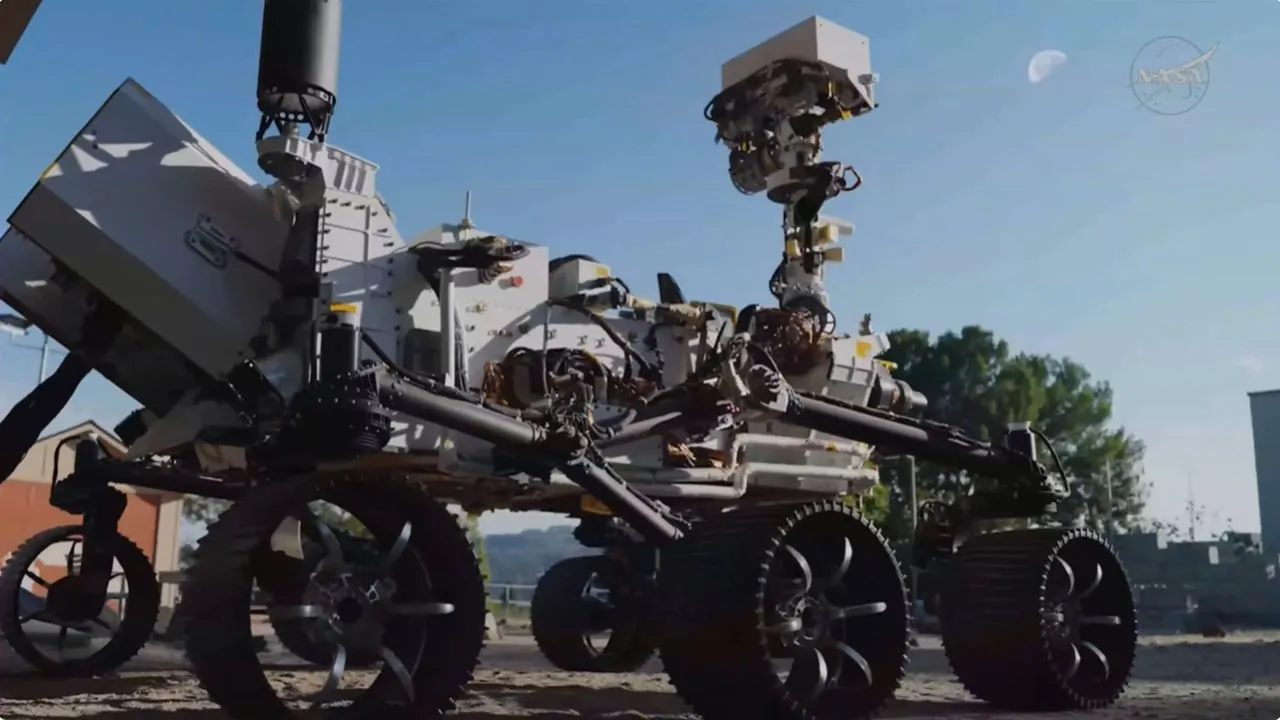
NASA is updating its Artemis Moon Base plans and announcing new lunar landing contracts while floating a new rover mission named PROMISE. Developed at JPL, the radioisotope-powered test rover could be refurbished and sent to the Moon to support pre-human science and operations.
On June 30, NASA used its latest Artemis Moon Base livestream to do two things at once: award new lunar landing contracts for the base program and quietly reopen the question of how to test rover operations before humans ever show up. The surprise twist is PROMISE, a rover originally built as a spare and test platform for Mars. NASA says it could be sent to the lunar surface, potentially to the Moon's south pole.
PROMISE stands for “Polar Rover for Observation, Mapping, and In-Situ Exploration” and was developed at NASA’s Jet Propulsion Laboratory in Southern California. It is powered by a radioisotope thermoelectric generator (RTG), which turns heat from naturally decaying radioactive material into electricity, meaning it would not depend on sunlight. NASA has plans to build its Artemis base near the south pole, a region thought to have water ice and relatively complex lighting conditions. The key operational idea: the Moon needs power even when sunlight disappears for long stretches, and RTGs are built for exactly that.
Why does this matter to decision-makers? Because it is an operational bet on testing. NASA’s update was explicit that PROMISE is currently an Earth-based testbed for engineers working on Perseverance and Curiosity. Both of those Mars rovers remain active on Mars, and NASA Administrator Jared Isaacman highlighted the “experimental approach” that supports a crewed lunar return, describing it as drawing on the playbook from NASA’s 1960s and saying they didn’t “just jump right to Apollo 11.” In other words, this is not just a new mission name. It is NASA thinking through where it can safely pressure-test hardware and command changes before it is committed to the real thing.
Isaacman also framed the PROMISE move as a practical trade: if PROMISE goes to the Moon, engineers lose a piece of their Earth-based Mars testing capability. But he argues it could be worth it, pointing to years of experience operating Perseverance and Curiosity and the fact that “the taxpayers have invested a lot in” that hardware. The decision logic is simple enough for anyone who has sat in a program review: if you already have a flight-like system and the environment is different enough to matter, you might repurpose it rather than start from scratch. PROMISE would get “a little refurbishment,” NASA said, to help advance lunar plans.
At the same time, NASA’s Artemis Moon Base program is moving forward with commercial delivery partners under CLPS, short for Commercial Lunar Payload Services. Through 2029, NASA hopes to launch up to 20 missions as part of the initiative’s first phase of moon base development. The landers announced on June 30 include Astrobotic, Firefly Aerospace, and Intuitive Machines, selected to deliver scientific payloads to the lunar surface while NASA tests and expands technologies required for a permanent human outpost.
NASA named four robotic landers and tied them to concrete near-term objectives. Two deliveries were awarded to Astrobotic’s Griffin 1 lander, including one that will carry Astrolab’s FLIP rover to the surface in the second half of 2026. Firefly’s Blue Ghost and Intuitive Machines’ Nova C were also selected for CLPS missions in the next few years. NASA noted that Blue Origin’s Blue Moon Mark 1 cargo lander was already expected this year as part of this broader commercial delivery pipeline, but that its New Glenn rocket exploded last month during an engine test, complicating the Blue Moon timeline. Blue Origin CEO Dave Limp has voiced confidence that New Glenn will launch again this year.
Each CLPS mission will carry at least three NASA payloads. The Stereo Camera for Lunar Plume Surface Studies (SCALPSS) array will study lander engine exhaust plume effects on lunar dust to better predict landing requirements and prevent erosion and dangerous ejecta. A Laser Retroreflector Array (LRA) will test whether landers can determine positioning and navigate using lasers and reflectors. And a Linear Energy Transfer Spectrometer (LETS) will measure radiation in the space around the Moon and in different areas on its surface. NASA’s Moon Base program manager, Carlos Garcia-Golan, underscored the purpose: NASA knows “a lot about the moon” and “some of the south pole,” but not enough for what it needs before sending humans and building a moon base. Putting different assets on the surface, prospecting, understanding the environment, and identifying where humans will go is “super critical.”
Garcia-Golan also backs the PROMISE concept. It might sound “crazy” to send a spare Mars rover to the Moon, he said, but it is the kind of crazy JPL is built for, pointing to the JPL motto “Dare mighty things.” The strategic stake here is that NASA is trying to reduce unknowns in a place that will be hard to fix once humans arrive. If PROMISE flies, NASA gets more than a new rover destination. It gets a second operational testbed in the lunar south pole environment, with a power system that does not require sunlight, while continuing CLPS lander work that will refine landing safety, navigation, and radiation understanding. For executives watching space capability buildouts, this is a signal that the bottleneck is shifting from “can we deliver?” to “can we operate reliably, safely, and repeatedly in the exact conditions that matter.”
This story's Key Insights and Take-aways are locked.
Create a free account to unlock Executive Actions for one credit.
Register to UnlockAlways free for Executives Club members. Join the Club
More in Business

Anthropic’s Levant Alpöge cracks the Jacobian conjecture after 87 years
A Harvard valedictorian used Claude to hit a 1939 breakthrough, but the missing “why” is the real problem.

Uber buys Delivery Hero for nearly $15B, vaulting to top food delivery outside China
The deal doubles Uber's dual-services footprint and pushes a ride-and-eats bundling play into 50 more markets.

Epic and Google drop settlement bid, forcing rival Android app stores by July 22
Google told the court it is ready to carry third-party app stores starting Wednesday, July 22.