
NASA pauses ISS repair, sends crew into Dragon as Zvezda leak persists
A paused Zvezda tunnel fix triggered Dragon safe-haven orders. The leak is back, business resumed, repairs stalled.
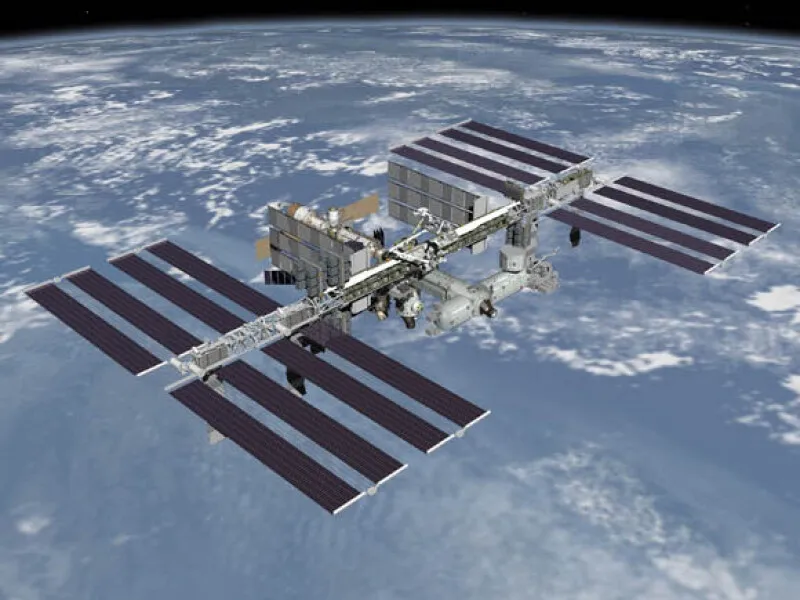
NASA spokesperson Bethany Stevens said NASA told ISS crew members in the docked SpaceX Dragon capsule to return to normal operations after Roscosmos paused repair work in the Zvezda service module transfer tunnel (PrK). Even as station operations largely resumed, concerns about a persistent air leak in the Russian segment remain unresolved, with leak estimates reportedly rising from about a pound of air per day to two pounds.
Operations on the International Space Station looked like they were getting back to business on Friday, but one big problem never fully went away: a persistent air leak in the Russian segment, centered on the Zvezda service module transfer tunnel known as PrK.
NASA spokesperson Bethany Stevens confirmed that NASA instructed astronauts Chris Williams and the four-member SpaceX Crew-12 team, while they were inside the docked Dragon spacecraft, to end their safe-haven procedures and return to planned operations aboard the ISS. The safe-haven order had been precautionary after Roscosmos paused repair work in the PrK transfer tunnel so engineers could reassess “measurements and data” tied to newly discovered leaks. In plain English, the station didn’t go dark. It just temporarily rerouted humans into the one place NASA felt safest while the repair plan got re-examined.
Why does this matter outside the physics enthusiast corner of the internet? Because on-orbit life support systems are not forgiving, and “leaks” are never just a background annoyance. The Register has been covering Russian segment leak issues since they were first identified in 2020, and the core theme in that history is brutal: multiple repair efforts over the past few years have failed to stop the leaks entirely. That doesn’t mean the ISS is instantly doomed. It does mean the leakage behavior is stubborn enough that NASA and Roscosmos have had to rely on ongoing mitigation rather than a clean, permanent fix.
Stevens put it this way in an X post, noting that “The cracks have always been a concern that NASA watches very closely.” She also said that NASA and Roscosmos have worked to determine the root cause of the cracks. Roscosmos, she said, manages the issue through operational mitigation measures and periodic partial-repair efforts. Translation: there is no single “flip the switch” solution yet. Instead, the organizations are stuck in a cycle of diagnose, patch partially, measure again, and hope the next set of measurements tells a better story.
Reuters reported that concerns over air leaks in the Russian module prompted NASA to order Williams and the SpaceX Crew-12 team into the Dragon spacecraft as a safe-haven procedure on Friday. Reuters added that the crew entered the spacecraft wearing spacesuits. Stevens did not specify exactly when the crew was told to shelter in place, but the operational sequence is clear enough: repair work paused, engineers gather more data, humans temporarily move to a spacecraft that functions as an emergency refuge, then NASA later authorizes a return to normal station operations after the immediate safe-haven requirement is lifted.
The unanswered question is whether the pause fixed the underlying risk or simply bought time. Russian news wire Interfax reported that cosmonauts identified two potential air leaks in the transfer chamber. One of those leaks was sealed on Friday using a layer of Germetall-1 two-component sealant. The second leak has not been addressed yet, and Roscosmos said “Efforts are underway to prepare it for hermetic sealing.” “Hermetic” is the key word here. It signals a goal state: a seal good enough to stop leakage through the relevant boundary. But as of Friday, that second candidate leak remains on the to-do list.
The Register notes that the latest discoveries were the longest cracks in the module it had seen, though the publication also states it is still not clear how large the cracks actually are. That uncertainty is more consequential than it sounds. Leak size estimates and crack dimensions drive how quickly teams can justify moving from mitigation to full repair, and how much risk NASA is willing to accept while deciding whether to adjust procedures. Reuters, citing an unnamed NASA official, said the leaks in the Russian section escalated this week from around a pound of air a day to two pounds. That is a meaningful jump in reported leakage rate even if the station remains operational. If you are an operator or investor tracking long-duration human infrastructure, a recurring leak pattern plus worsening measurements means you are effectively underwriting higher operational overhead and more frequent disruption to standard plans.
For decision-makers in the space economy, there is also a second-order governance angle. Human spaceflight depends on two different cultures of risk management: NASA’s emphasis on precautionary crew safety decisions and Roscosmos’s approach to managing cracks through operational mitigation and partial repairs. When repair work is paused pending “measurements and data,” it highlights how real-time technical uncertainty translates into immediate procedural shifts for crew activities. And for anyone planning for future stations, the lesson is that reliability is not a one-time engineering milestone. It is a running contract with the unknown, paid for with ongoing monitoring, repeat work, and contingency planning.
Finally, while Stevens’ order cleared the immediate safe-haven step for this particular day, the broader story is still unresolved. The Register wrote it could update the situation if NASA provides new information, including whether continued leaks, with cause unknown, could lead to an early retirement for the station. For ISS peers, suppliers, and anyone with skin in the long-term human-orbit timeline, the stakes are straightforward: persistent leaks that do not fully yield to repair efforts force planners to treat schedules, crew rotations, and downstream commercial opportunities as partially dependent on a problem that keeps reappearing.
This story's Key Insights and Take-aways are locked.
Create a free account to unlock Executive Actions for one credit.
Register to UnlockAlways free for Executives Club members. Join the Club
More in Technology

OpenAI says 10,000 agents cracked a 90-year math problem in 88 hours
The company's claim is audacious, but one mathematician is pushing back. Here's what it means for AI-driven discovery.
Meta still serves child sexual abuse ads on Instagram in India - BBC report
A new report following the BBC Eye investigation says the ads are still there - what it signals for every platform with a self-serve ad engine.
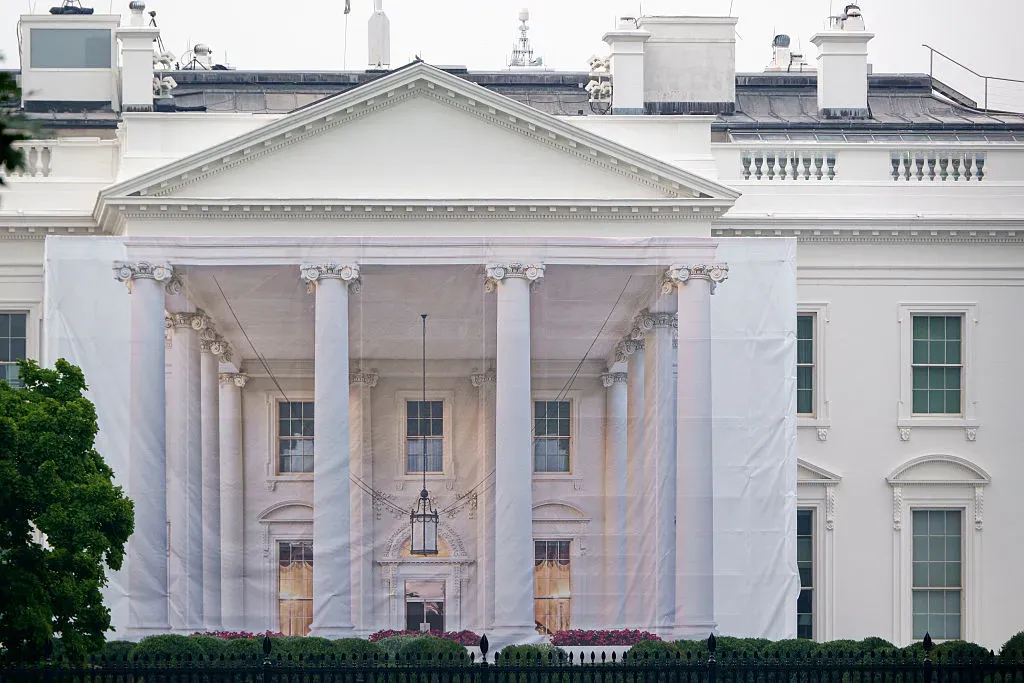
White House yanks 'Build the Wall' game after Tetris Company copyright warning
The administration's arcade game vanished in hours - and the takedown playbook every brand can learn from.