

NASA’s JPL proves asteroid 1998 SH2 is a comet after DSN radar missed it
Precise tracking showed nongravitational motion, and new telescope images captured a weak tail.
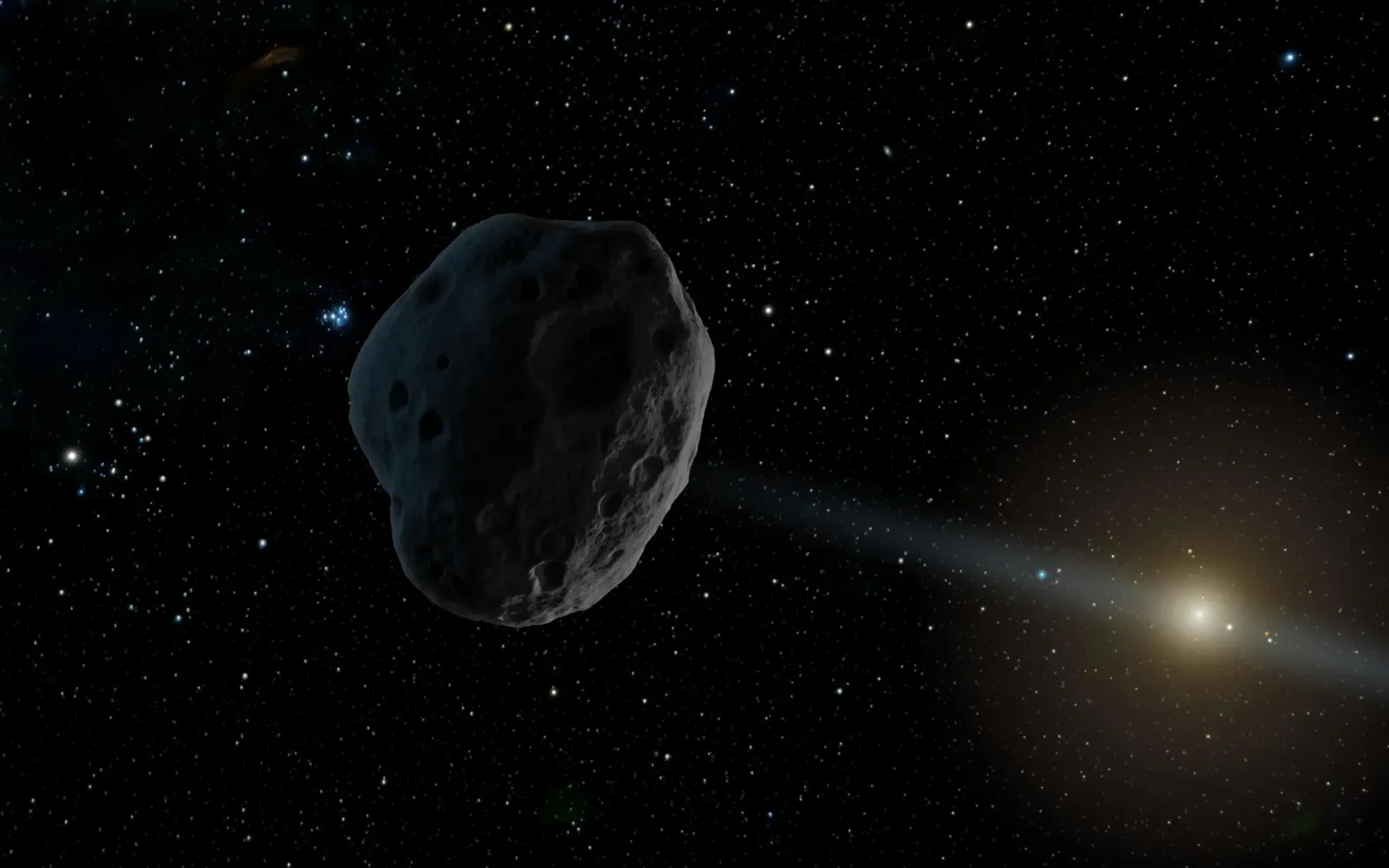
NASA JPL’s Center for Near-Earth Object Studies team, led by Davide Farnocchia, resolved the identity of asteroid 1998 SH2 after DSN planetary radar position errors forced a rethink. The finding, published in Nature Astronomy, improves how planetary defense distinguishes comets from asteroids and flags hidden, “dark” comet activity.
If you’re responsible for planetary defense or funding next-generation space situational awareness, this is the kind of result that makes your stomach drop for the right reason. NASA’s Jet Propulsion Laboratory (JPL) team discovered that what was tracked as asteroid 1998 SH2 behaved like a comet. The twist: earlier observations had not shown obvious cometlike activity, so the object’s “identity” was effectively ambiguous until its motion refused to stay on the script.
The paper’s key trigger came during the object’s August 2025 near-Earth pass. 1998 SH2, provisionally known as an asteroid, passed safely within 2 million miles (3 million kilometers) of Earth during its 4½-year orbit around the Sun. Researchers had calculated its position using prior orbital data and accounted for how gravity from the Sun and planets would perturb its path, then ran the NASA Deep Space Network (DSN) planetary radar attempts. When 1998 SH2 didn’t show up where expected, the team realized “something unanticipated” was influencing its motion.
That “something” turned out to be the non-gravitational behavior you’d expect from outgassing. Davide Farnocchia, a navigation engineer with NASA’s Center for Near-Earth Object Studies at JPL and study lead, said that after measuring the nongravitational perturbations affecting 1998 SH2’s motion and recognizing they weren’t compatible with it being an asteroid, the team suspected it could be an active comet. In plain English: the object’s path was being pushed, not just pulled, by physics beyond gravity alone.
Here is why that matters beyond this one object. The team notes that the orbit of 1998 SH2 had been well-tracked from 1998 to 2016, but the object completed two solar orbits without additional telescope observations until the 2025 DSN attempts. That observational gap is exactly how comets can masquerade as asteroids. With fewer chances to check for subtle activity, a “weakly active” comet may show little or no tail or coma in typical imaging.
To test the hypothesis, the researchers used optical astrometry, which is basically measuring where it appears in the sky with high precision. They analyzed all observations since the object’s discovery in 1998, determined the perturbations, and hypothesized that the object may have been generating a small thrust by venting gas into space, deviating from its predicted trajectory. The mechanism is familiar from regular comets: the Sun heats ice mixed with rocky material, turning ice into gas. For a typical bright comet, that gas and dust form a prominent tail and coma, the cloud around the nucleus. But if the activity is small enough, the tail and coma might be too faint to detect with most observatories.
And then the close approach delivered the evidence. During August 2025, the paper’s authors reached out to astronomers and observatories that could push down to faint signals. They involved the Canada-France-Hawaii Telescope (a 3.6-meter optical/infrared telescope near Mauna Kea), the 1.5-meter European Southern Observatory Danish Telescope in La Silla, Chile, and also observations from the European Southern Observatory’s 8.2-meter Very Large Telescope on Cerro Paranal. The images collected from these observatories showed “a weak but clear tail,” confirming that 1998 SH2 is, in fact, a comet. Olivier Hainaut, an astronomer with the European Southern Observatory and coauthor of the study, said the data was exactly what was needed to confirm the team’s hypothesis that 1998 SH2 was a comet.
Once confirmed, the object will receive an additional comet provisional designation: P/1998 SH2. That naming step is more than administrative housekeeping. It reflects a shift in how the object should be modeled, monitored, and assessed for risk. The study also connects the dots to a more unusual category: “dark comets.” Like 1998 SH2, dark comets can show significant irregularities in their trajectory (nongravitational perturbations) but lack other visible evidence of comet activity, meaning no obvious coma, tail, or visible outgassing. The paper describes two populations: larger dark comets with orbits similar to Jupiter-family comets (short-period comets with highly elliptical or eccentric orbits), and smaller ones orbiting closer to the Sun. Since the first dark comet was discovered in 2016, about a dozen more have been identified.
The broader boardroom implication is how this changes detection strategy and prioritization. The study’s authors suggest that many of the larger dark comets that have orbits like 1998 SH2’s could turn out to be regular comets when astronomers get the right observing opportunity with powerful telescopes capable of imaging extremely faint objects. They also argue that precision astrometry data can reveal more comets that had been designated as asteroids if they exhibit cometlike nongravitational perturbations. Farnocchia adds the planetary defense angle: because outgassing perturbs comet motion more than asteroids, detecting those perturbations can be an important diagnostic tool for planetary defense. That helps teams understand which objects are comets rather than asteroids, how their orbits evolve, and how that influences Earth impact risks.
NASA’s upcoming Near-Earth Object (NEO) Surveyor is positioned to support this effort by collecting data for hard-to-find targets, including dark asteroids and comets that do not reflect much visible light. The first space survey telescope built for planetary defense, NEO Surveyor will hunt for the kinds of objects that tend to stay invisible to conventional surveys. At JPL, the work involves NASA’s Center for Near Earth Object Studies, the Goldstone Solar System Radar Group, and NEO Surveyor, with planetary defense coordination in Washington through the Planetary Defense Coordination Office. Caltech manages JPL for NASA, and the DSN receives programmatic oversight from NASA’s SCaN (Space Communications and Navigation) program office.
For executives and investors tracking space tech, this is a clean example of why “monitoring” is not a side project. When a system like DSN radar expects an object at a predicted position and it does not arrive there, the downstream question becomes operational: Are we seeing only gravity, or is outgassing rewriting the future? The 1998 SH2 case shows how continuous tracking, combined with high-precision measurement and deep imaging, can correct identity errors that would otherwise linger for years. In planetary defense, that correction is not just scientific. It is how you reduce uncertainty, improve scheduling of follow-up observations, and better allocate attention to the objects that could matter most.
This story's Key Insights and Take-aways are locked.
Create a free account to unlock Executive Actions for one credit.
Register to UnlockAlways free for Executives Club members. Join the Club
More in Science

Alaska's 1,580-foot tsunami had warning signs. Scientists just found them.
Rapid glacier retreat, heavy rainfall, and thousands of tiny tremors preceded Alaska's 1,580-foot tsunami, a warning for every coastal community in a warming world.

The rare mutation that lets high-risk brains dodge Alzheimer's
Scientists found a natural defense against protein buildup, opening a new path to preventive treatments.

3,000 steps a day may halve Alzheimer's decline, study finds
New research links a modest daily walk to less tau buildup and nearly half the cognitive and functional decline, even for those with early signs.