

NASA scrambles to save Swift Observatory from burning up in months
Without a rescue mission, Swift will reenter the atmosphere soon, forcing NASA to manage an urgent, high-risk recovery window.
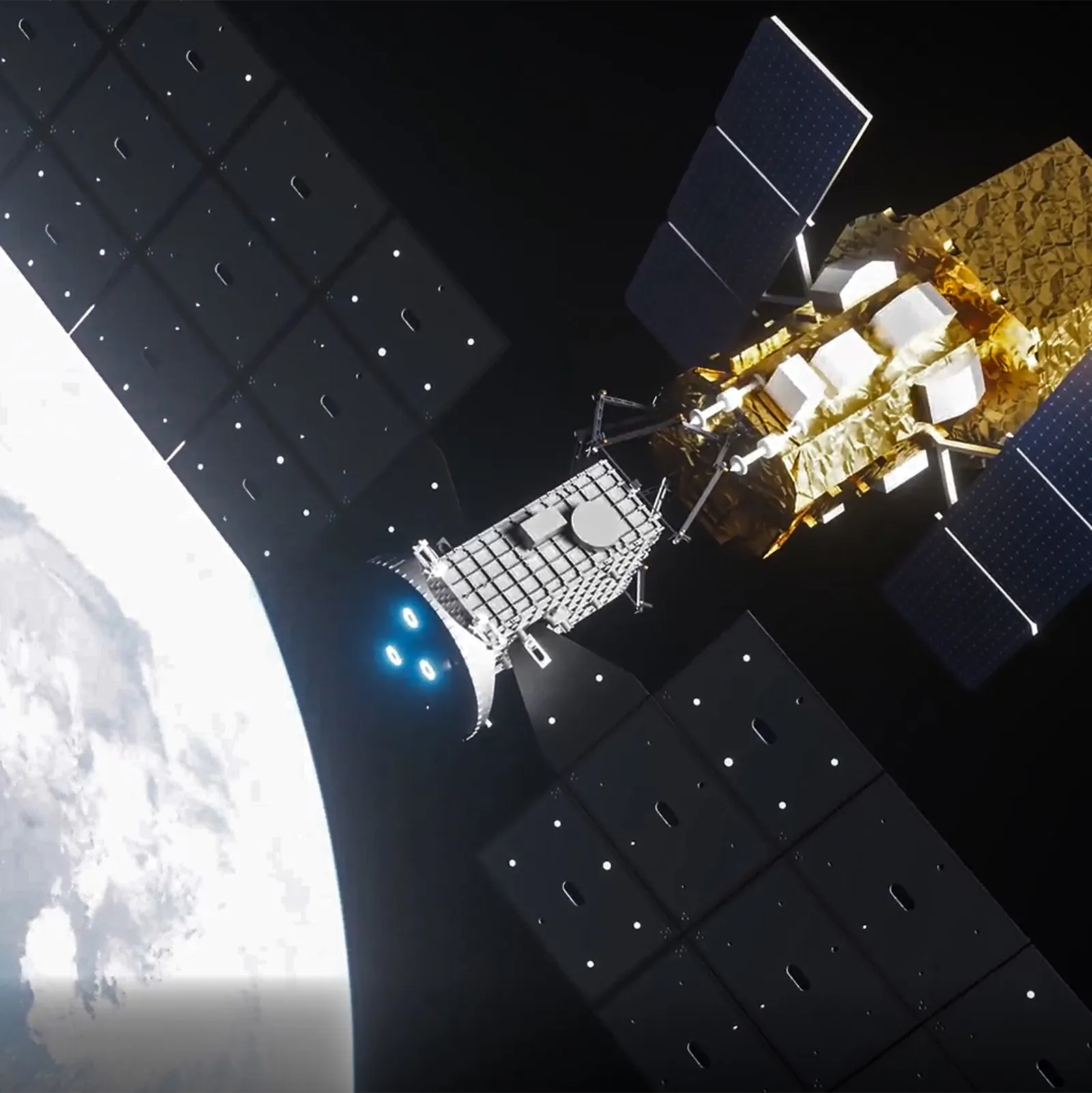
NASA is attempting to catch and push back up its Swift Observatory, a space telescope that studies some of the most powerful explosions in the universe. For decision-makers, the consequence is immediate: a rescue or Swift is lost to atmospheric burn-up within months.
NASA is racing to catch a falling Swift Observatory and push it back up, because without a rescue mission the spacecraft will burn up in the atmosphere within a few months. Swift is not just another satellite. It is a space telescope built to study some of the most powerful explosions in the universe, and that mission value disappears if the observatory is lost.
The timeline is the real story. “Within a few months” is not a slogan, it is a countdown, and it compresses every planning cycle, contractor schedule, and mission control decision into a narrow window. In other words, this is the kind of problem that turns “later” into “now,” because there is no second chance once a spacecraft starts an uncontrolled return to Earth.
To understand why this matters to executives beyond the space-systems nerds, you have to zoom out to how spacecraft missions behave once they start drifting toward end-of-life. Space hardware is expensive, highly regulated, and operationally constrained. You do not just swap components like you would in a factory. When something starts to go wrong late in a mission, the only lever that can still move the outcome is an active rescue plan, which typically means fast coordination across mission teams, engineering, launch or servicing capabilities, and the mission’s governance process.
The governance angle is where the boardroom instincts kick in. Space agencies and their partners do not fund rescue missions because they are fun. They fund them because the alternative is irreversible loss of both scientific capability and sunk investment. That makes rescue decisions inherently capital-allocator flavored: weigh the cost, weigh the probability of success, and decide whether preserving the mission justifies accelerating risk.
There is also a regulatory and oversight layer, even when the headline is about physics. Missions that involve spacecraft trajectory changes, rendezvous operations, or any sort of capture and propulsion plan are typically subject to deep scrutiny on safety, risk management, and operational control. The stakes are not just “can we do the maneuver,” but also “can we do it without creating a hazard for other space assets or endangering personnel involved in ground operations.” While the source does not provide additional regulatory specifics, the practical reality is that any rescue plan has to clear the same kinds of hurdles that define how space missions get approved and executed.
Swift’s purpose makes the loss particularly painful. The observatory studies some of the most powerful explosions in the universe. That phrase is not decorative. Explosions at the high-energy end of astrophysics are the kinds of events scientists watch for because they can reveal how extreme matter behaves, how energy propagates across the cosmos, and how the universe evolves. When the mission ends prematurely, the dataset pipeline ends with it. For researchers and for any stakeholders who care about the downstream science and reputational value of the mission, “burn up in the atmosphere” is not a technical footnote. It is a hard stop.
And that brings us to the second-order implications for peers. Even if you are not in space hardware, the operational lesson travels: when an asset is valuable and the window is short, you need decision systems that can compress time without skipping safety. Boards and executives in adjacent tech and infrastructure sectors recognize the same pattern. When the schedule slips beyond the safe zone, the solution is rarely “do the same thing slower.” It is “change the mission plan and mobilize now.”
In this case, NASA’s attempt to catch a falling Swift Observatory and push it back up is the difference between continuing an observing program and losing it to atmospheric burn-up within months. If the rescue succeeds, NASA preserves a tool designed to study powerful cosmic explosions. If it fails or never launches, Swift becomes a reminder of how quickly space operations can move from long-range planning to urgent triage. For decision-makers, that is the strategic stake: the ability to act in time, and the willingness to spend resources to prevent an irreversible loss.
This story's Key Insights and Take-aways are locked.
Create a free account to unlock Executive Actions for one credit.
Register to UnlockAlways free for Executives Club members. Join the Club
More in Science

Cardiff University finds walking soccer helps older adults stay “alive and kicking”
The rules are simple, the stereotypes are not. Here is what walking soccer gets right for aging fitness.
Malaria’s 60-second moving junction finally gets an explanation that could spawn new drugs
A long-mystery invasion structure now has a clearer role, offering a proof-of-concept path to antimalarial therapies.

OCI MSA nails optical architecture, but manufacturing decides if AI scale keeps working
A slow-and-wide NRZ DWDM roadmap is settled. The hard part is how to build 8 to 16 wavelengths at hyperscale volumes.