
NASA told it may not be ready: Kennedy infrastructure dated as Starship launches near-every-8-days
A NASA watchdog report warns launch capacity at Kennedy Space Center is aging as SpaceX and Blue Origin ramp up.
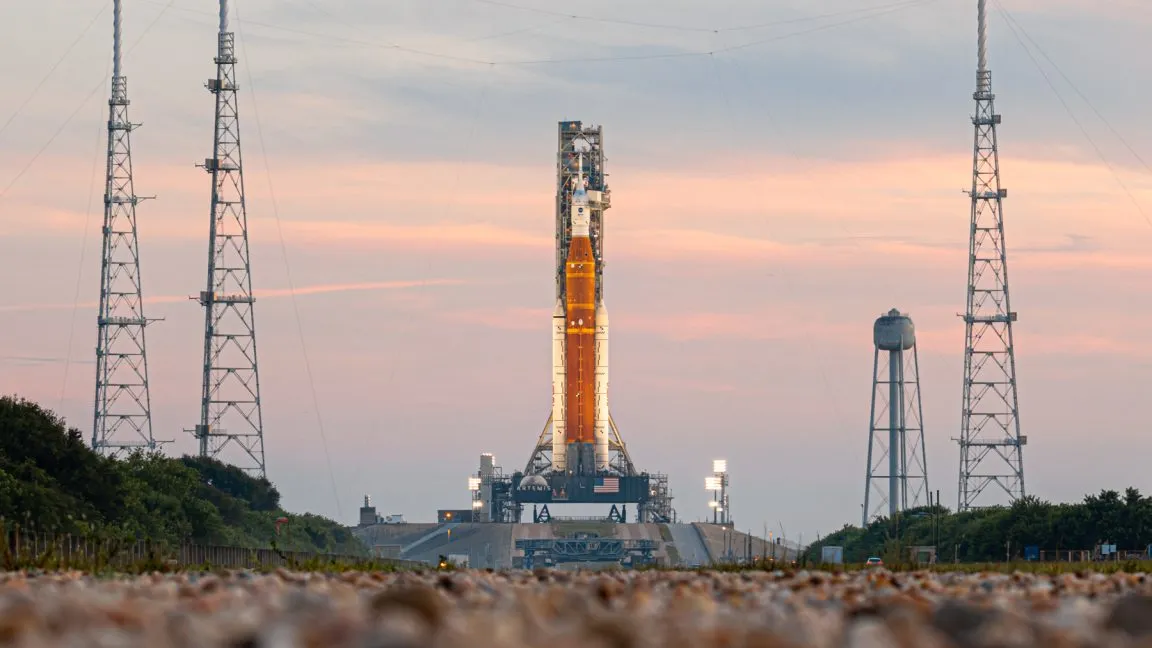
SpaceX has told NASA it plans to launch Starship every eight days from Kennedy Space Center, while a NASA Office of Inspector General report finds NASA's launch infrastructure at Kennedy is dated and often cannot meet growing demand. The consequence for decision-makers is a growing risk of schedule and access bottlenecks for NASA and commercial partners at the nation's key launch hub.
SpaceX told NASA it plans to launch Starship every eight days from Kennedy Space Center. That is a blistering cadence, and a new report from the NASA Office of Inspector General says Kennedy's launch infrastructure is not keeping up with the demand that kind of schedule implies.
The watchdog report, covering NASA's launch facilities at the Kennedy Space Center in Florida and the Wallops Flight Facility in Virginia, makes the blunt point that NASA's launch infrastructure is “vital” for getting the agency, other government agencies, and commercial partners to space for their “most complex and expensive missions.” But it adds that NASA’s launch infrastructure is “dated and often does not provide the capacity to meet the growing demands of the agency and its partners.” In other words: the crown jewel is not broken, but it is approaching its limits as commercial heavy-lift demand spikes.
Why does this matter beyond NASA's internal planning? Because the space race for delivery speed is no longer just about rockets. It is about how quickly launch sites can cycle hardware, process missions, support range operations, and keep schedules from cascading into delays. If Kennedy cannot handle the rising throughput from multiple commercial programs, the bottleneck stops being a rocket problem and turns into a system problem, the kind that hits budgets, contract milestones, and launch pricing power.
The report flags that the problem is driven by increased demand from private companies, including SpaceX and Blue Origin. Specifically, it highlights expected stress from two next-generation vehicles: SpaceX's Starship and Blue Origin's New Glenn. Starship is the obvious pressure test because a plan to launch every eight days is less like “occasional flights” and more like an industrial production rhythm. New Glenn adds another layer of load as Blue Origin moves through development and into operational campaigns.
It is also worth noting what the watchdog is actually claiming, and what it is not. The report does not say that commercial rockets cannot launch from Kennedy. What it says is capacity is the issue, and that NASA's infrastructure often does not provide enough capacity for the growing demand of the agency and its partners. That framing matters for decision-makers, because capacity gaps rarely show up as a single dramatic failure. More often, they show up as friction: fewer available windows, slower turnaround, more coordination overhead, and increased chance that one program’s schedule impacts another.
From a governance standpoint, this is the kind of issue that executive teams cannot treat as background noise. When a NASA watchdog calls infrastructure “dated,” it signals a mismatch between long-term capability and current operational expectations. And when the mismatch is at Kennedy, the center of gravity for U.S. high-energy launch operations, the ripple effects are likely to extend to partner planning across years, not weeks.
For boards, investors, and enterprise operators watching space commercialization, the second-order implication is simple: if the national launch complex is the limiting factor, commercial advantage becomes not only about rocket performance, but also about operational access. Companies can design increasingly capable vehicles, but they still need reliable, repeatable runway time at the spaceport. If infrastructure constraints persist, contract terms, launch insurance assumptions, and mission timelines can all come under pressure.
In the end, the story is less about one rocket or one month of activity, and more about a transition that is already underway. Private companies are driving higher cadence and new vehicle classes. NASA wants to keep enabling “complex and expensive missions.” The Inspector General report says the bridge between those goals is strained. If you are an executive in the space ecosystem, this is the moment to treat launch-site capacity as a strategic asset, not a backdrop, because the next era of super heavy rockets will be decided by more than engine thrust.
This story's Key Insights and Take-aways are locked.
Create a free account to unlock Executive Actions for one credit.
Register to UnlockAlways free for Executives Club members. Join the Club
More in Technology

Nvidia's $89B data center quarter: the 9 companies cashing in
The AI buildout is minting fortunes beyond GPUs, and memory, cloud, and cooling suppliers are riding the same wave.

Google quietly links your phone number to every Android account on your SIM
Adding a SIM now ties your phone number to all Google accounts - and future accounts inherit it. Here's the security and privacy stakes.

Hijacker AI 'Skynet mode' runs 100,000 attack steps against exposed models
Symantec caught a criminal AI agent that borrows other models, steals data, and mines crypto; the only relief is no confirmed victims yet.