
Nasdaq drops 2.2% Tuesday as AI valuation doubts ripple from Wall Street to Asia
Investors reset expectations for AI spending and chip demand, pulling major US indexes and global markets lower.
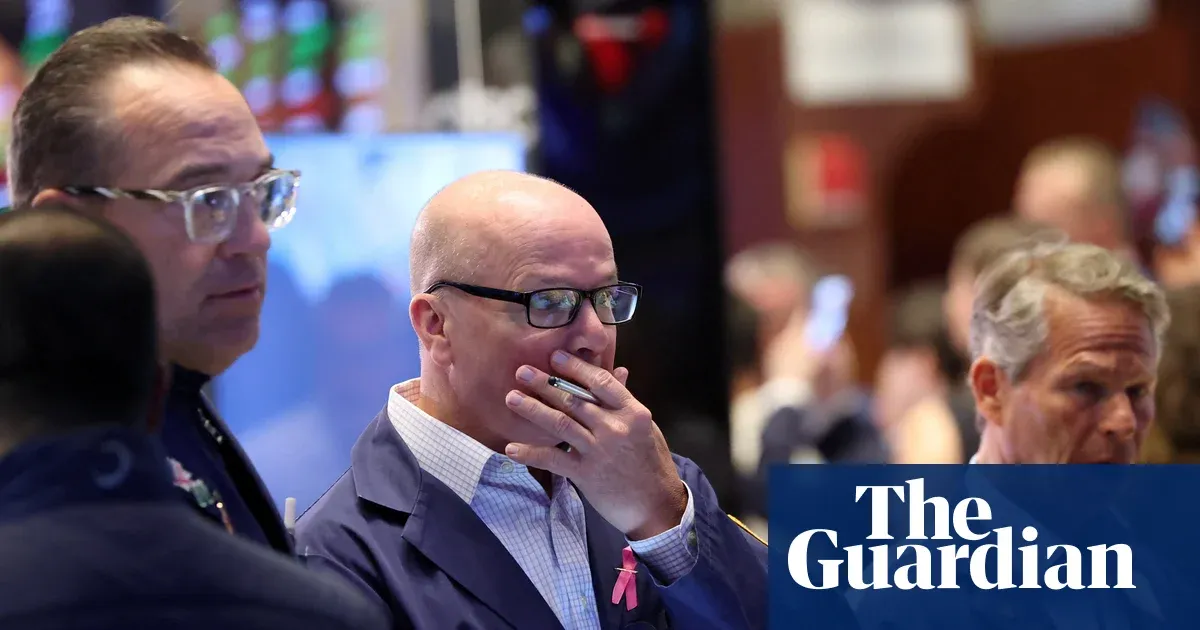
A tech-heavy sell-off hit US and global markets on Tuesday, with the Nasdaq closing 2.2% lower. The move followed investor focus shifting from developments in the US war with Iran toward the future of AI companies and chipmakers.
Tuesday’s global tech sell-off came down to one uncomfortable question: if AI hype has already priced in “everything,” what happens when investors start doubting valuations and AI infrastructure spending. The attention shift was visible across markets. Instead of focusing on developments in the US war with Iran, investors turned back toward the companies and supply chain that have powered record stock highs. And the reaction was immediate. Losses spread globally as the market repriced AI expectations.
In the US, the tech-heavy Nasdaq index closed 2.2% lower on Tuesday. The S&P 500 was also down by Tuesday afternoon, dropping 1.43%, while the Dow remained steady. That split matters. It suggests the sell pressure was concentrated in growth and tech names that have been most closely associated with AI and the chipmakers positioned to benefit from AI infrastructure build-outs. In other words, investors were not broadly retreating from stocks. They were retreating from a specific narrative, at least temporarily.
This is the kind of market move that tends to feel sudden in the moment and obvious in hindsight, because it usually reflects a timing problem between expectations and what investors think they will pay. When valuations soar, every future milestone becomes more expensive to “beat.” If a stock already assumes aggressive AI adoption, then any hint that infrastructure spending might be slower, more capital intensive than expected, or simply harder to monetize can trigger a fast rotation. The key is that this did not read like “AI is over.” It read like “the price of AI is under review.”
The fact that losses reached Asia too is another clue that this was not only a US positioning trade. When a US tech index like the Nasdaq drops sharply, it changes risk appetite elsewhere because many global funds use US tech benchmarks as a reference point. If US investors are questioning soaring valuations and AI infrastructure spending, Asia-based investors and institutions that hold similar exposure often respond by cutting risk too, even if their local story is different. In market terms, it is the same beta. In real terms, it means capital moves faster than company fundamentals.
There is also a political layer in the background, and the Guardian pointed it out directly. Investors were previously focused on developments in the US war with Iran. Then, on Tuesday, attention shifted toward the future of AI companies and chipmakers. That matters because geopolitical headlines can temporarily dominate short-term trading, but markets eventually circle back to economics. AI, chips, and data center investment are where the economic story is. So when the pivot happened, the market used that moment to reprice what it believes will come next.
For executives at AI software firms, chip ecosystem players, and data center suppliers, this kind of move is a capital markets warning light. Equity valuations are not just a scoreboard for past execution. They shape incentives for future behavior: how much stock-based compensation matters, whether M&A is attractive, how expensive new equity becomes, and how investors weigh near-term spending versus long-term payoff. Even a “2.2% down” headline can have outsized implications if it signals a broader shift in investor frameworks from enthusiasm to scrutiny.
Board dynamics can be especially sensitive here. When markets question valuations and spending, directors and CFOs tend to get pressed for clarity: what milestones are tied to AI infrastructure investment, how quickly demand converts into revenue, and what contingency plans exist if growth takes longer than the market’s pricing assumes. You do not need a regulatory or legal trigger to justify tougher questions. The pricing itself is the trigger.
Looking outward, the second-order implication is that peers across the AI supply chain often move together. Chipmakers, AI infrastructure providers, and the companies building on top of them are linked by investor expectations about build-outs, capacity expansion, and utilization. If investors begin to question the “spend now, monetize later” timeline, the market can punish multiple categories at once. That can tighten financing conditions for companies that rely on continued investor faith.
So the strategic stake is simple: Tuesday’s sell-off was not just a bad day for tech. It was a signal that the market’s tolerance for rapidly rising valuations is not infinite, and that focus can snap from geopolitics back to AI economics in a matter of hours. For executives watching their stock, their cost of capital, and their narrative with investors, the message is clear: expectations are moving targets, and AI companies and chipmakers are still being priced like the future depends on them. Because, right now, the market is deciding it does.
This story's Key Insights and Take-aways are locked.
Create a free account to unlock Executive Actions for one credit.
Register to UnlockAlways free for Executives Club members. Join the Club
More in Business

A flaw in PHP just forced governments to pull their own sites offline
European agencies from Belgium to Germany took websites dark to patch a critical weakness in the language behind almost 70% of the web, and the blast radius extends far beyond government portals.

BioWare shuts down, Mass Effect 5 dead after $55B EA buyout
The legendary RPG studio's closure lands months after a $55 billion investment group buyout of EA, raising tough questions for gaming's biggest acquirers.

Musk weighs Tesla-SpaceX mega-merger as boards form review panels
Special committees at both companies will examine a tie-up that could fuse electric vehicles and space launch, forcing a fresh look at governance and valuation.