

Nasdaq posts biggest daily fall since early 2025 as Big Tech fears shake Wall Street
Investors brace for volatility after a major tech-led selloff, with regulators and positioning pressures looming behind the move.
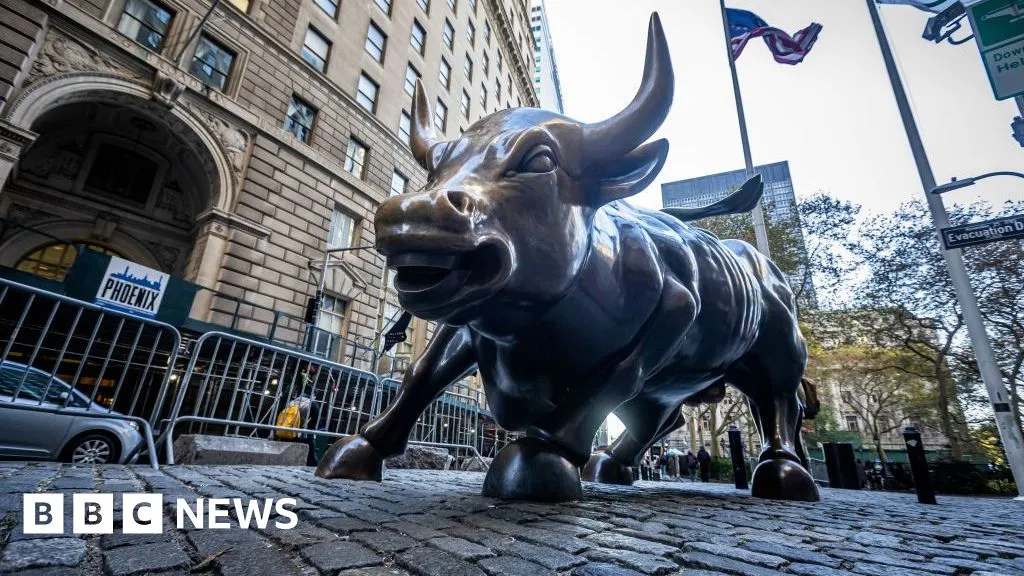
The BBC reports that US stocks dropped and the Nasdaq recorded its biggest daily fall since early 2025, driven by fears around Big Tech. For decision-makers, the immediate consequence is a risk-off market mood that can tighten financial conditions and slow high-growth funding appetite.
US stocks are sliding as investors hit the brakes on Big Tech, and the Nasdaq is taking the biggest hit. According to the BBC, the Nasdaq saw its biggest daily fall since early 2025, a clear signal that this is not just routine churn. When the Nasdaq, the market’s heavyweights in growth and tech, falls this sharply, it usually means something broader than a single bad company day is going on. It is market-wide uncertainty pressing on valuations that are already sensitive to rates, expectations, and sentiment.
The key fact is simple: the Nasdaq’s biggest daily fall since early 2025 is happening now. That matters because the Nasdaq does not move like the average index. It is where the market prices the future. So when it drops hard, it is investors repricing the runway for profits that may arrive later, cost more, or face more friction than they previously assumed. The BBC links the selloff to fears over Big Tech shaking Wall Street. In practical terms, that fear can spill across the ecosystem quickly: analysts update models, traders reduce exposure, and institutions manage risk by selling what looks most crowded.
To understand why Big Tech fears can move an entire exchange, you have to think about how the market is built. Tech giants and adjacent platform companies often sit at the center of liquidity, benchmarks, and index inclusion. Even when the underlying issue is not exactly the same for every company, the market trades narratives in clusters. If the narrative becomes “regulatory scrutiny will rise,” “advertising demand might soften,” “antitrust risk is increasing,” or “earnings visibility is shrinking,” investors tend to de-risk across multiple names at once. That cluster effect is what turns a sector concern into an index event.
There is also a timing dynamic. The BBC highlights “fears over Big Tech” as the driver of this move. Fear is rarely specific to one quarter, because it often reflects uncertainty about what comes next. Regulatory processes, investigations, and rulemaking can be slow, but markets discount uncertainty immediately. Even before any final action, the prospect of hearings, enforcement, settlements, or structural changes can lead investors to demand a higher margin of safety. In growth stocks, a higher margin of safety can translate fast into lower valuations.
When the Nasdaq falls sharply, it also changes boardroom math. Boards and C-suites are used to thinking in terms of long-term strategy, product roadmaps, and capital allocation. But equity markets are the scoreboard that can tighten the short-term levers companies pull. A selloff can raise the cost of new capital, pressure incentive compensation tied to stock performance, and force management teams to manage expectations more carefully. Even if fundamentals do not change overnight, the perception of risk can. And perception is enough to move prices.
For executives, the second-order implications are less about whether Big Tech “deserves” fear and more about how fear behaves. In periods like this, investors can move from company-specific questions to factor bets. That means the market may sell not just the story that looks worst today, but also the category most associated with the perceived risk. The result can be a wider than expected drawdown in companies that have nothing to do with the initial concern, simply because they share the same index weight or thematic exposure.
Peers in similar roles should read this as a reminder that risk management is part of strategy. A Nasdaq drop of this magnitude, described by the BBC as the biggest daily fall since early 2025, is the kind of data point that can reset the mood for weeks. It can affect how quickly capital returns, how aggressive investors are about new deals, and how cautious institutions are about re-entering crowded trades. In the short term, decision-makers should focus on liquidity, messaging discipline, and resilience in investor relations. In the medium term, they should expect more scrutiny on the sources of growth, the durability of margins, and the real-world impact of regulatory overhangs.
In other words: this is a market that is pricing the future more harshly today. When the Nasdaq is hit like this, everyone gets a new risk dashboard, whether they asked for one or not.
This story's Key Insights and Take-aways are locked.
Create a free account to unlock Executive Actions for one credit.
Register to UnlockAlways free for Executives Club members. Join the Club
More in Business

Anthropic’s Levant Alpöge cracks the Jacobian conjecture after 87 years
A Harvard valedictorian used Claude to hit a 1939 breakthrough, but the missing “why” is the real problem.

Uber buys Delivery Hero for nearly $15B, vaulting to top food delivery outside China
The deal doubles Uber's dual-services footprint and pushes a ride-and-eats bundling play into 50 more markets.

Epic and Google drop settlement bid, forcing rival Android app stores by July 22
Google told the court it is ready to carry third-party app stores starting Wednesday, July 22.