
NBER finds $192,735 lifetime savings from GLP-1s, but access gaps may erase it
Middle-aged Americans could save nearly $193K in medical costs, yet affordability and discontinuation risk threaten the benefit.
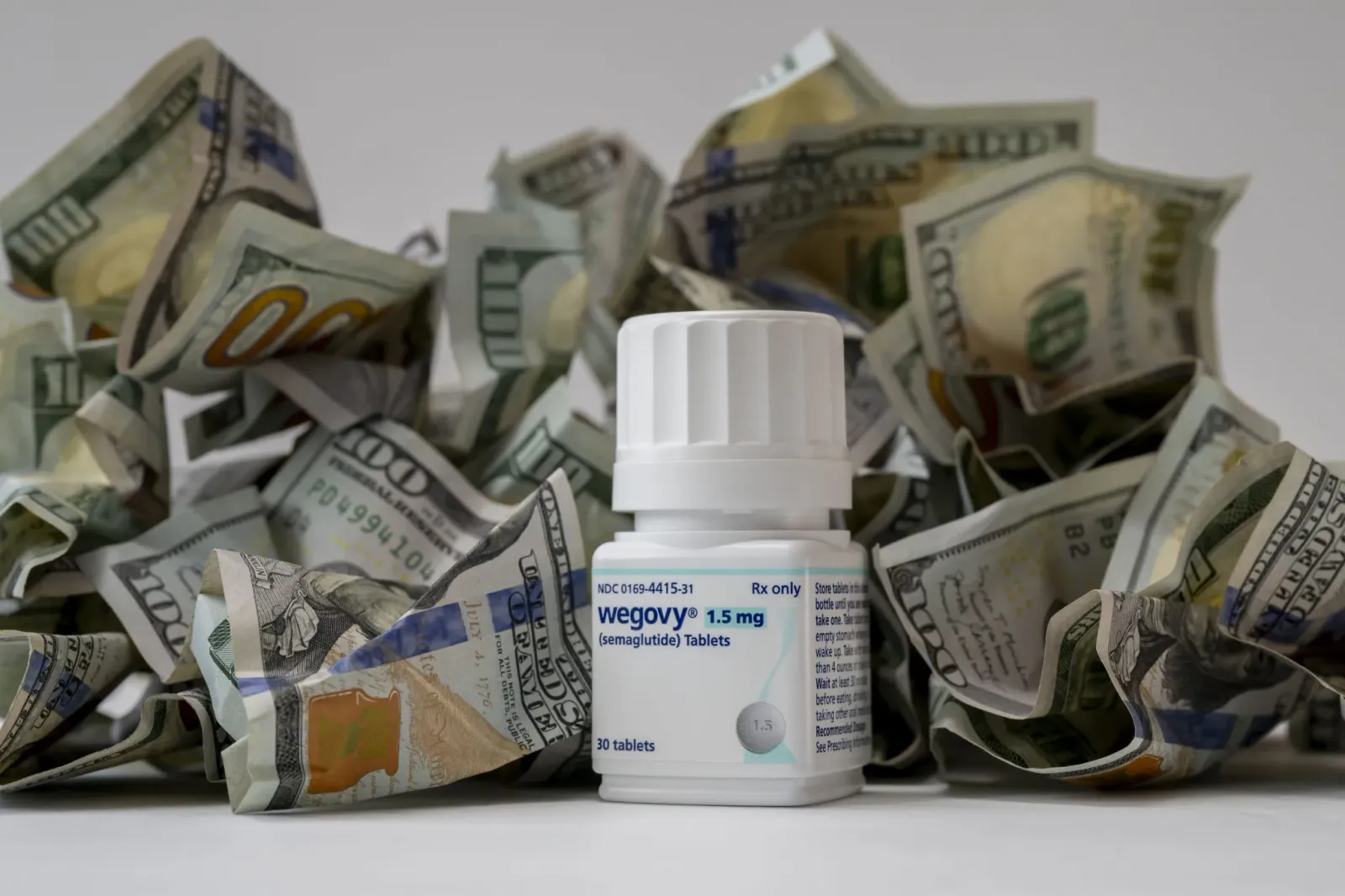
A National Bureau of Economic Research (NBER) study led by Felipe Montano-Campos estimates that middle-aged adults using GLP-1s for obesity could save about $192,735 in lifetime medical bills. The study also finds larger savings for adults without college degrees, raising an access equity question for employers and health plans.
A new NBER study led by Felipe Montano-Campos puts a dollar value on one of the biggest healthcare questions of the decade: what happens to long-term medical costs if middle-aged adults use GLP-1s for obesity. The headline number is specific and big. For people ages 40 to 50, the report estimates average lifetime medical bill savings of $192,735. And that figure climbs to about $220,000 for adults in the same age range without college degrees.
So why does the study matter beyond curiosity? Because it reframes GLP-1s from a “weight loss drug” into a chronic disease cost lever with a distributional twist. The NBER analysis concludes that using GLP-1s could compress health inequality by delivering larger health and cost benefits to lower-educated groups, who may face more time constraints and financial friction around the traditional weight-loss playbook of strict diet and exercise.
Here is the mechanism the study points to, explained in plain terms. Obesity is a comorbidity, meaning it tends to travel with other chronic conditions. If GLP-1s help treat obesity, that can ripple into fewer downstream complications and, ultimately, lower lifetime costs. Montano-Campos told Fortune that GLP-1s “trickle down” across chronic conditions, saving money. The study’s reasoning leans on something practical: GLP-1s directly target appetite and metabolism, rather than demanding that patients rely entirely on sustained lifestyle regimens.
The report’s simulations are built around a standard health economics method that translates health improvements and cost savings into dollars. Researchers simulated the U.S. adult population age 25 and up, comparing two life-long scenarios. In one, adults did not use GLP-1s. In the other, adults met obesity-defined criteria, described as having a BMI above 30, and then sustained GLP-1 consumption for the duration of the simulation. When you run those two pathways through the valuation model, the savings are not uniform. For adults without college diplomas, estimated savings land around $219,000 to $220,000. For college-educated individuals, the estimated savings fall to about $163,000.
The “bigger savings without college degrees” part is where boards and health plan leaders should sit up. Not because it implies anything moralistic about education. It implies something about constraints. Montano-Campos said everyone gets a positive treatment effect, but the largest beneficiaries are lower-educated individuals. The explanation is time and access. He noted that because GLP-1s are less dependent on constant lifestyle enforcement, they may help people who have less time, including those working multiple jobs, or those who face lower socioeconomic status barriers like purchasing healthier foods or maintaining gym routines.
But the study also has a built-in tension: the savings assume sustained access to the medication. That is where the real-world friction shows up. Fatima Cody Stanford, an obesity medicine physician at Massachusetts General Hospital, told Fortune that achieving the full extent of health benefits would require paying “at least hundreds of dollars per month indefinitely.” When patients stop, Stanford said, they can experience weight regain and the re-emergence of the cardiometabolic diseases the drugs were meant to treat.
The price tag is the obvious culprit. Stanford said the average American taking GLP-1s could pay about $350 to $450 per month, referencing FDA-approved weight management options like Wegovy. She characterized that as “outside of reach” for most Americans, especially those who might benefit the most. The source notes that Wegovy without insurance typically costs $1,350 per month. There is also mention of a $349 to $399 range on TrumpRx for direct-to-consumer purchase, though the underlying point is the same: sustained access is not guaranteed for many patients.
And even if payers cover the drugs, continuity is the battleground. Montano-Campos acknowledged the NBER study does not take into account discontinuation due to financial reasons because the simulation assumes lifetime access on a consistent basis. It also does not fully reflect discontinuation likelihood due to side effects, another factor health plan providers weigh when deciding whether to cover GLP-1s for obesity. Morgan Lee, lead researcher of Pharmaceutical Strategies Group (PSG)’s 2026 survey, told Fortune that continuity matters for long-term outcomes. Even if a plan “gets the price right” and covers the drug, they also need people to stay on it long enough to experience long-term health benefits and deliver a return on investment.
This is where the market context gets loud. Over 40 million Americans have reported using GLP-1 drugs for weight loss, a behavior shift influencing healthcare and pop culture, and the drugs could reach a market size as large as $240 billion. While Eli Lilly and Novo Nordisk have benefited from social media and celebrity endorsements, this NBER research suggests another stakeholder class may be quietly affected: employers, health plans, and unions managing long-term claims. Yet PSG’s survey, which included 237 benefits leaders representing employers, health plans, and unions, indicates a reluctance to cover obesity-related weight loss. About 75% of health plan providers do not cover GLP-1s for obesity-related weight loss, and nearly half “indicated they would not cover GLP-1s for obesity at any price,” per the report.
The strategic stake is straightforward. The study’s lead author hopes the research anchors the access conversation because the findings suggest medical innovation can compress health inequality. That is a powerful board-level storyline. But the counterweight is equally clear: if discontinuation is driven by affordability or side effects, the modeled $192,735 average savings for ages 40 to 50, and the $220,000 figure for adults without college degrees, may not show up in actuarial reality. For decision-makers, the question stops being “are GLP-1s effective?” and becomes “will patients be able to access and stay on them long enough for insurers to realize the modeled downstream savings?”
This story's Key Insights and Take-aways are locked.
Create a free account to unlock Executive Actions for one credit.
Register to UnlockAlways free for Executives Club members. Join the Club
More in Business

SpaceX debuts on Nasdaq Friday, leaps into top-6 U.S. by market cap
The IPO flips expectations: a rocket company lands among megacaps even while revenue is far smaller.

Mena construction CPMI slips 12% in April 2026, but execution momentum rebounds to 1.01
GlobalData’s April CPMI shows resilience masking pre-execution caution, with conflict risk surfacing unevenly by country and sector.

SpaceX IPO turns Elon Musk trillionaire, but “1% inefficiency” can burn $10B
A new wealth-management class appears overnight: governance, litigation risk, and liquidity mechanics at trillionaire scale.