

Netflix’s Next Games ships couch co-op “Netflix Minigolf” on July 28
A minigolf-pinball hybrid with Stranger Things and Squid Game characters enters Netflix’s biggest screen: the TV.
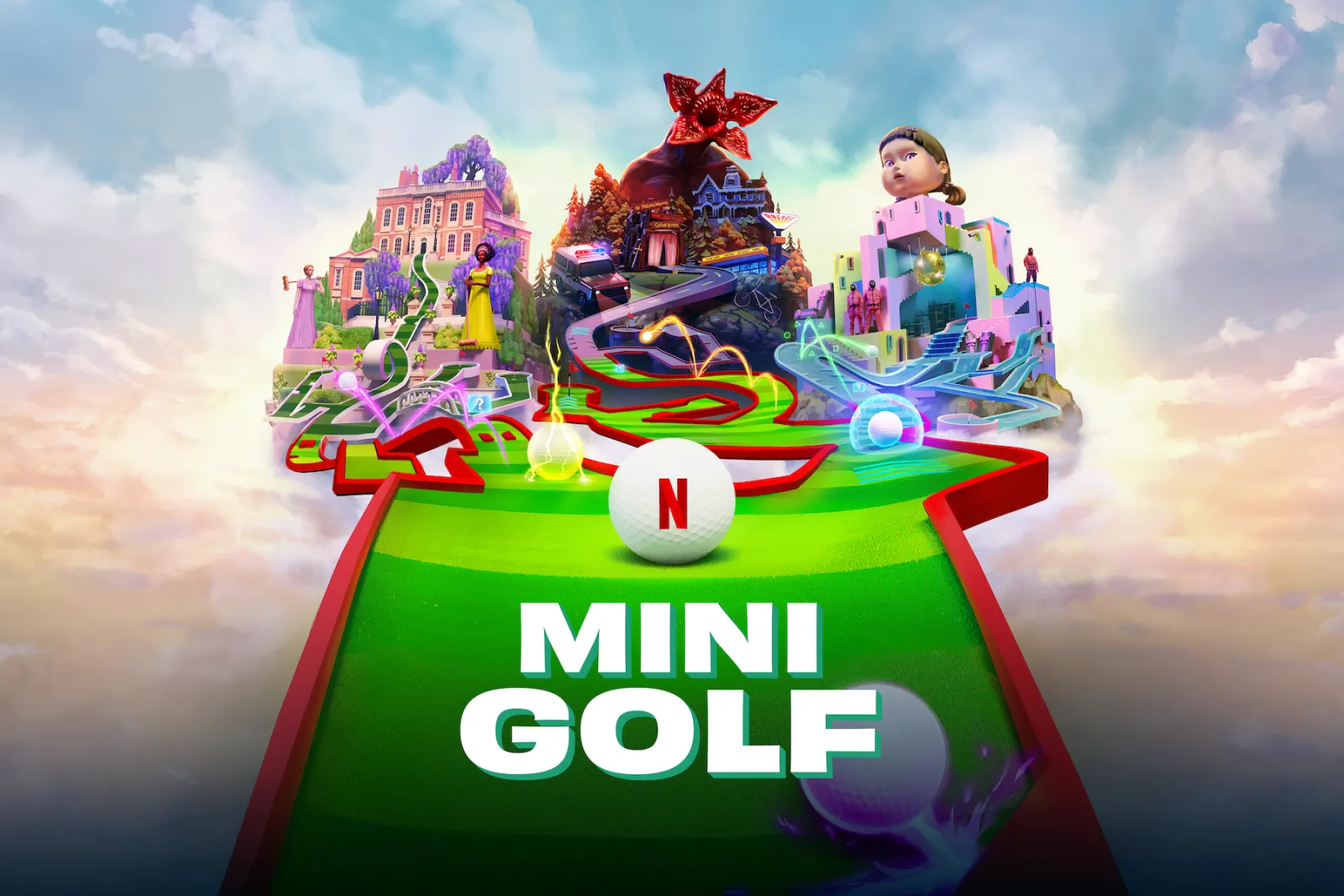
Netflix is launching “Netflix Minigolf,” a couch co-op party game, on July 28. The game is developed by Netflix-owned studio Next Games and blends minigolf with pinball while featuring a Stranger Things Demogorgon and “Squid Game” characters.
Netflix is rolling out a new couch co-op party game, “Netflix Minigolf,” and it launches July 28. Developed by Netflix-owned gaming studio Next Games, the game is pitched as a mix between minigolf and pinball, but with a very Netflix-specific twist: levels inspired by “Stranger Things,” “Squid Game,” and “Bridgerton.”
The most immediately playable hook is the way Netflix is turning IP into mechanics. The game adds a “Stranger Things” Demogorgon or Young-hee from “Squid Game,” and then wraps that character presence into its minigolf-and-pinball play loop. In other words, it is not just licensed theme dressing. It is using recognizable worlds and characters to make “one more round” easier to justify for households that want a shared screen moment.
This matters because Netflix is not trying to become “the next PlayStation.” It is trying to become something closer to an entertainment operating system for the living room. Couch co-op party games are built for passive engagement and low friction. You do not need a gaming background to understand them. That is a strategic advantage in a market where many console and mobile games depend on deep onboarding, complex controls, or a tight community to keep players coming back.
Netflix’s approach also signals where it believes growth can happen. Variety describes “Netflix Minigolf” as a party game that sits between two familiar genres: minigolf and pinball. That hybrid framing is not random. Minigolf provides the approachable, physics-lite structure of aiming for a hole. Pinball brings the kinetic, chaotic feel that makes short sessions satisfying and replayable. By combining the two, Netflix is aiming for a game that can be played in bursts, fits naturally into gatherings, and still has enough unpredictability to avoid becoming too repetitive.
Next Games, the studio developing the title, is the piece of Netflix’s strategy that should interest operators and investors. A vertically integrated gaming effort lets Netflix control more than branding. It can align the game’s release schedule and feature set with what Netflix thinks is resonating with its audience. That is especially relevant when you consider how streaming companies already have a powerful distribution engine: subscribers do not have to discover a game in the same way they discover a new app store download. Netflix can ship an experience directly into its ecosystem and ride the existing attention cycle around shows.
There is also a regulatory and policy backdrop worth noting, even if the article itself stays focused on the game. Gaming across mobile, consoles, and PCs is increasingly shaped by local rules around content ratings, monetization mechanics, and data handling. A couch co-op party game tends to have fewer of the friction points that have attracted scrutiny in other parts of the industry, like aggressive loot systems or youth-targeted dark patterns. The key point for decision-makers: Netflix can expand into interactive entertainment while potentially keeping the design philosophy closer to “play now, share with friends,” rather than “optimize spending loops.”
Second-order implications are where boards and execs should pay attention. When a streaming platform pushes into game IP, it is not just launching one title. It is testing whether viewers will accept characters and worlds moving from passive watching into interactive participation, and whether those experiences can strengthen the brand loop. If “Netflix Minigolf” performs well, it gives Netflix a template for future minigame formats, franchise-specific mechanics, and cross-title engagement. If it underperforms, it still functions as a learning cycle for production choices, audience appetite, and which IP themes translate into gameplay moments worth sharing.
For peers in media, entertainment, and tech, the strategic stakes are clear: distribution is no longer the only moat. Netflix is betting that distribution plus recognizable IP plus approachable gameplay can create a new engagement surface on the TV screen. “Netflix Minigolf” launches July 28, and the market will watch closely not only for downloads, but for whether a minigolf-pinball party game with “Stranger Things,” “Squid Game,” and “Bridgerton”-inspired levels can turn household viewing habits into something more active.
This story's Key Insights and Take-aways are locked.
Create a free account to unlock Executive Actions for one credit.
Register to UnlockAlways free for Executives Club members. Join the Club
More in Entertainment

12TB Steam 'teraleak' goes beyond Valve: GTA 3, Mafia 2 prototypes exposed
A 12-terabyte dump of Steam data reveals prototypes and builds of third-party classics like GTA 3 and Mafia 2, plus unreleased Valve content, rewriting game history.

LinkedIn's romance problem: 1 in 4 workers say dating on it is fair game
A new survey shows a quarter of U.S. employees treat the professional network as fair game for romance, even as LinkedIn bans it and removes hundreds of thousands of offending posts.

Enhypen's first No. 1 album breaks K-pop's Billboard 200 streak
The K-pop group's 98,000-unit debut tops the chart while Dolly Parton's catalog reentry shows how death reshapes streaming.