
NEURA Robotics raises up to $1.4B Series C, valued around $7B
A record full-stack robotics round backed by Nvidia, Amazon, and Tether signals a new playbook for scaling cognitive systems.
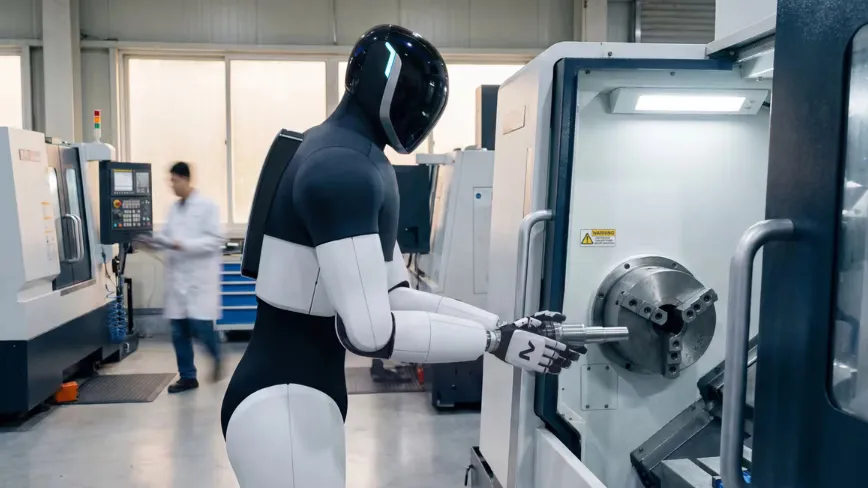
NEURA Robotics, a German robotics company, announced up to $1.4 billion in Series C funding to scale its cognitive robotics platform, valuing it at about $7 billion, according to Bloomberg. For decision-makers, the size and investor mix show where strategic capital is flowing in full-stack robotics.
NEURA Robotics is raising up to $1.4 billion in Series C funding, in what it says is the largest funding round ever raised by a full-stack robotics company. Bloomberg values the company at approximately $7 billion. For anyone tracking robotics as more than a moonshot, this is the kind of round that turns “cool demos” into an operations question: can the platform scale at a pace that matches investor expectations and hardware realities.
The point is not just the headline number. NEURA is explicitly using this money to scale its “cognitive robotics platform,” and that phrasing matters because it frames the bet as software-plus-robotics execution, not one-off deployments. When capital markets show up with chip, cloud, and ecosystem backers, they usually want compounding advantages. In this case, the round is backed by Nvidia, Amazon, and Tether, which telegraphs that the buildout is expected to lean on compute, infrastructure, and go-to-market pathways those players can influence.
If you zoom out, full-stack robotics has historically struggled with two simultaneous problems. First is the engineering problem: robotics is expensive, iterative, and unforgiving. You cannot “move fast” through failures in the same way you can with pure software. Second is the integration problem: a working system has to combine perception, planning, control, and real-world deployment under constraints like safety, reliability, and cost per deployed unit.
That is why NEURA’s claim about being full-stack is strategically important. Investors that write big checks are not just funding research. They are funding a pipeline from cognition to a deployable product. The round size suggests NEURA is positioning itself to become the kind of robotics provider that can deliver consistent performance across environments, rather than a system that only works when everything goes perfectly in a lab setting.
The investor list adds another layer. The source notes the round spans crypto, chips, and cloud. That mix is more than thematic. Chips and cloud backers typically care about throughput, data workflows, and the ability to scale training and inference. Crypto-linked capital often brings a different time horizon and distribution logic, but it also signals that the robotics narrative is reaching beyond classic “industrial automation” circles and into broader capital networks. For boards and founders, this is a reminder that the category’s funding map is changing, and it is not being driven solely by traditional industrial strategics.
Regulatory and governance considerations, while not described in detail in the source, are part of the real-world backdrop for any cognitive robotics platform. When robotics moves from controlled environments to real users, the stakes broaden. Safety expectations, liability questions, and compliance burdens can shape product timelines as much as engineering does. Big funding rounds often accelerate development, but they also bring scrutiny: investors want clear milestones, risk management, and evidence that scaling will not create new failure modes at higher volumes.
There is also a board-level dynamic to consider. A valuation of around $7 billion, paired with up to $1.4 billion in Series C capital, implies a major inflection point for corporate governance and execution discipline. That kind of capital does not just buy time. It typically comes with strong expectations on commercial traction, technical milestones, and how the company captures value as it scales. When such capital is added, management has to translate platform claims into measurable outcomes, because future fundraising becomes less about the story and more about the scoreboard.
For peers, the strategic implication is straightforward. If NEURA can credibly scale a full-stack cognitive robotics platform, the rest of the field has to answer a hard question: will the market reward specialized components, or will it reward orchestrators that can integrate across the stack? Rounds like this can also change hiring and partnerships across the ecosystem, since talented engineers and scarce integration talent tend to follow capital that is committed to operational scale.
NEURA’s announcement therefore reads like more than a funding update. It is a category signal. A record full-stack robotics round of up to $1.4 billion backed by Nvidia, Amazon, and Tether, with Bloomberg citing a roughly $7 billion valuation, suggests strategic capital is ready to underwrite robotics at scale. Decision-makers in adjacent robotics startups, enterprise automation firms, and platform investors should treat this as a real checkpoint for how quickly cognition-based robotics is moving from prototype to production ambition.
This story's Key Insights and Take-aways are locked.
Create a free account to unlock Executive Actions for one credit.
Register to UnlockAlways free for Executives Club members. Join the Club
More in Business

Anthropic’s Levant Alpöge cracks the Jacobian conjecture after 87 years
A Harvard valedictorian used Claude to hit a 1939 breakthrough, but the missing “why” is the real problem.

Uber buys Delivery Hero for nearly $15B, vaulting to top food delivery outside China
The deal doubles Uber's dual-services footprint and pushes a ride-and-eats bundling play into 50 more markets.

Epic and Google drop settlement bid, forcing rival Android app stores by July 22
Google told the court it is ready to carry third-party app stores starting Wednesday, July 22.