

Neuronal implants jump from 67 to ~150 people, with China approving medical BCIs first
BCI trials are accelerating, but durability and broader patient access still decide whether the tech scales or stalls.
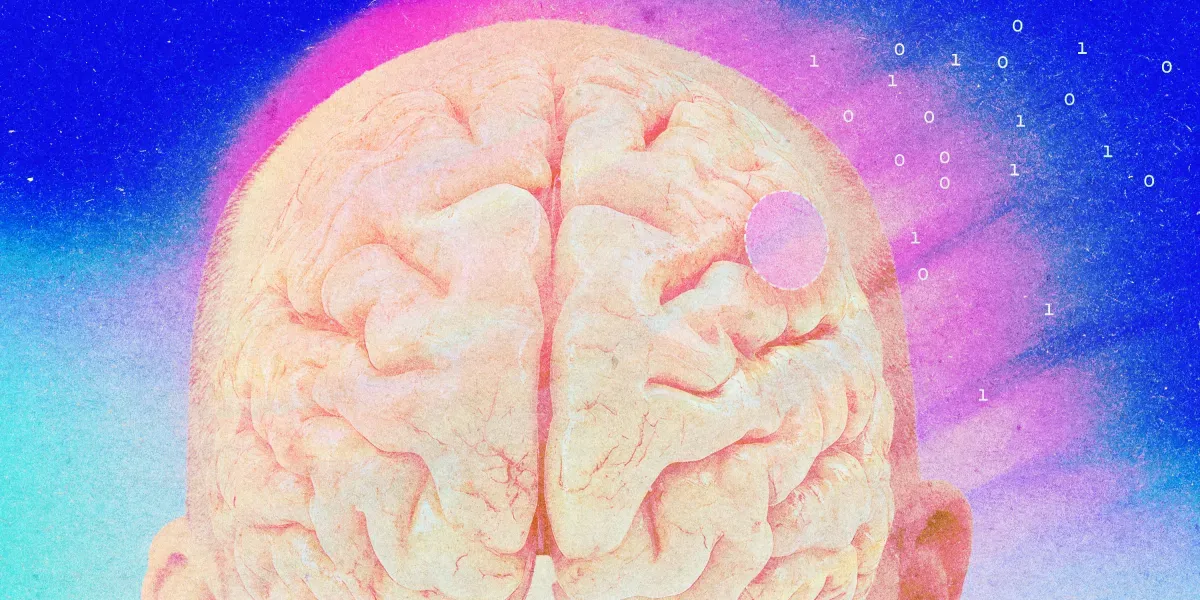
Casey Harrell, an ALS patient at UC Davis, has used a brain-computer interface for almost three years since his implant in July 2023. The growing BCI trial pipeline, plus China’s first medical approval this year, is shifting the market from “promise” to measurable demand and unresolved long-term risk.
Casey Harrell has been using a brain-computer interface to “speak,” surf the web, and work as a climate activist for almost three years. The key moment: his implant was placed in July 2023, and since then a University of California, Davis team has adjusted and improved the system, including refined accuracy and new settings like a privacy mode and a “profanity filter” so he can talk to his daughter without accidental swearing. For Harrell, the device is “nothing short of revolutionary!” because it has helped him maintain an income, reconnect with friends and family, and read to his daughter.
Here is why executives should care right now: the number of people implanted with a brain electrode has more than doubled since 2024, when a major review counted 67 BCI trial volunteers across 21 research groups (from 1998 through end of 2023). Mariska Vansteensel, a BCI researcher at University Medical Center Utrecht, says her “current estimation would be around 150 people.” And this year, China became the first country to approve a BCI for medical use. Translation: the field is moving from small, experimental cohorts toward regulated commercialization pressure, even as core questions about durability and who benefits remain open.
Let’s ground the “BCI boom” in what these devices actually do, because the operational details matter for product, reimbursement, and risk. Harrell’s setup uses a set of electrodes embedded in his brain to pick up electrical activity associated with speech. Those electrodes connect to two docking ports on top of his head that plug into a computer. The computer runs software trained to decode brain signals into phonemes, the units of sound that make up speech. Harrell can then use an eye gaze tracker to correct before the speech is played out loud.
But BCIs are not one thing. Some are fully implanted and wireless. Others are less invasive, using wired electrodes on the brain surface or even a cap of electrodes. The trade-off is straightforward: closer recording to the neurons you want usually improves signal quality, but that generally means more invasive surgery and higher risk of complications. Board-level takeaway: “BCI” is not a single risk profile, and investors should avoid treating every electrode approach like interchangeable software.
BCIs also vary by patient population and function. Harrell has ALS, but most BCIs in use today are in people with spinal cord injuries. For those patients, paralysis may prevent moving arms and legs while the face and ability to speak are often unaffected. In that context, BCIs can control other devices that support mobility rather than generating speech. Research is working on expanding beyond that baseline. In 2024, Michelle Patrick-Krueger, then at the University of Houston, and colleagues published a roundup of all BCI trials conducted between 1998 and the end of 2023. They identified 21 research groups that trialed BCIs in a total of 67 volunteers. Since then, Vansteensel says the numbers have increased a lot, and her updated estimate points to roughly 150 people implanted with a brain electrode.
At the same time, the engineering curve is rising. In the BrainGate trial, the first 17 years emphasized “point-and-click” communication where users control a cursor and click with brain activity. But in recent years, the team pivoted toward decoding speech. Harrell’s device uses a voice clone, meaning the speech it produces is based on previous recordings of Harrell’s voice. These shifts show a practical reality of commercialization: decoding speech is not just a research milestone. It creates a user experience closer to everyday communication, which is where adoption, caregiver reliance, and training burden become business issues, not just scientific ones.
Now for the part that keeps boards up at night: BCIs are still experimental, and durability is a major unknown. So far, most BCIs have been implanted in people with spinal cord injuries, and scientists know even less about performance in ALS. In some cases where devices initially helped ALS patients, even individuals who were completely locked in, the BCI later stopped working, and researchers do not yet know why. That means the commercial story is inseparable from clinical follow-up. The only way durability and broader-benefit questions get answered is through more research and volunteer participation, including people like Harrell who “pay it forward” and help generate the evidence while receiving personal benefit.
The investor and operator landscape reflects this momentum. Neuralink, the BCI company founded by Elon Musk, announced in January that it has implanted 21 people with its device in the past two years. Synchron is testing devices in trials in North America and Australia. Shanghai-based Neuracle has been trialing a BCI since November 2024 and recently obtained approval for the device to be used outside clinical trials. Precision Neuroscience, co-founded by a former co-creator of rival Neuralink, is also trialing its BCI, which sits on the surface of the brain. Meanwhile, academic efforts continue through BrainGate, which has been running for the past two decades.
Put it together and you get a market that is accelerating in headcount, regulatory attention, and product ambition. China approving a medical BCI this year is a signal to every company watching the regulatory runway. But the strategic stakes are clear for everyone in the room: whether the technology can last, scale to new indications like ALS, and deliver reliable outcomes across different electrode and decoding approaches will decide if “trials taking off” becomes a sustained industry, or an impressive scientific sprint with a durability cliff. In two years, the biggest winners will be the teams that can turn “revolutionary for one person” into durable, repeatable value for the broader populations regulators and payers will eventually care about.
This story's Key Insights and Take-aways are locked.
Create a free account to unlock Executive Actions for one credit.
Register to UnlockAlways free for Executives Club members. Join the Club
More in Technology

Nvidia's $89B data center quarter: the 9 companies cashing in
The AI buildout is minting fortunes beyond GPUs, and memory, cloud, and cooling suppliers are riding the same wave.

Google quietly links your phone number to every Android account on your SIM
Adding a SIM now ties your phone number to all Google accounts - and future accounts inherit it. Here's the security and privacy stakes.

Hijacker AI 'Skynet mode' runs 100,000 attack steps against exposed models
Symantec caught a criminal AI agent that borrows other models, steals data, and mines crypto; the only relief is no confirmed victims yet.