
Nex Playground pre-orders open as it secures components to dodge AI-driven price hikes
The console aims at families, uses motion tracking like Kinect, and plans an end-June ship window despite market pricing pressure.
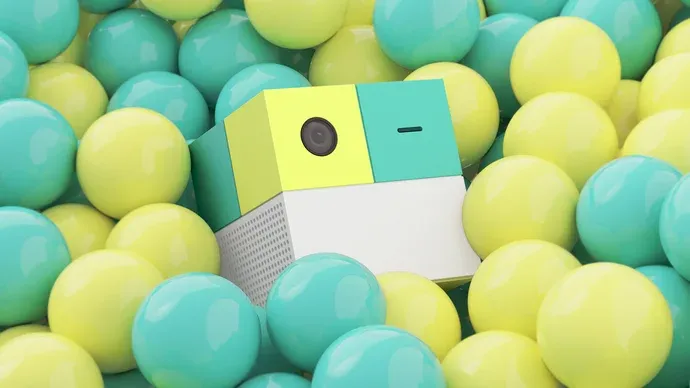
Nex Playground has opened pre-orders for its UK and Ireland launch and says it has secured its components for this year, aiming to avoid further AI-related price rises. For decision-makers, the timing and pricing-risk approach matter because demand is already proving real in the US, where Nex pushed PlayStation 5 hardware units into third place in November 2025.
Nex Playground is betting it can outmaneuver another round of AI-related price rises by locking in supply early. The company says, “We have secured our components for this year,” as pre-orders are now live for the Nex Playground’s UK and Ireland launch, with shipping planned towards the end of June.
That matters because this is not a slow, exploratory gadget launch. Nex Playground is shipping with a clear consumer angle: it targets families and uses motion-tracking technology, drawing a direct comparison to Microsoft’s long-gone Kinect. And the product already has proof of concept from abroad. In the United States, it was a surprise hit, pushing the PlayStation 5 into third place for gaming hardware unit sales in November 2025.
If you are an operator, investor, or board member in gaming hardware or adjacent consumer tech, this is the core tension: demand can arrive faster than supply can stay affordable. When component costs move, pre-order pricing becomes a battleground between what customers will pay now and what margins can survive later. Nex Playground’s decision to secure components “for this year” is essentially a defensive move. It is trying to prevent a scenario where an AI-driven cost surge forces re-pricing mid-stream, which can chill conversion rates at the worst possible moment.
Even without more numbers in the source, the direction is clear. Pre-orders are live for the UK and Ireland launch. The console is set to ship towards the end of June. Those are execution milestones where delays and cost volatility are most dangerous. A late-stage procurement scramble can turn into a cascading failure: suppliers renegotiate, logistics costs rise, margins compress, and marketing budgets get squeezed. The supply-side “we secured components” posture is designed to reduce the odds of that chain reaction.
The product positioning also reveals how Nex Playground is trying to sidestep the most crowded part of the market. Motion tracking is not new in spirit, but it is rare in the mainstream right now. Kinect’s legacy is the reference point here, since Nex Playground uses motion-tracking technology much like Kinect. That comparison signals a family-first use case: games that feel physical, social, and accessible. From a go-to-market perspective, that can mean broader buyer behavior than the core enthusiast audience. Families shop differently, and they tend to value predictable availability. If the console arrives when expected, it can win shelf mindshare and reduce the “will it be sold out?” anxiety that often derails adoption.
Now connect that to the pricing-risk framing. AI-related price rises are the elephant in the room for many hardware categories, not just AI gadgets. Even when a console is not an AI device, the underlying component supply chain can be influenced by demand elsewhere. If certain parts are getting bid up across multiple markets, gaming hardware gets hit too. Nex Playground’s approach signals that it expects pricing pressure to continue long enough to matter, at least for this year. Securing components early is a way to keep the launch from becoming a victim of macro cost swings.
There is also a second-order implication for decision-makers: supply confidence becomes part of the narrative. When a company publicly frames its procurement status, it is telling customers and partners that it is not guessing. It is planning. That can be valuable for retail partners and distributors, especially for a family-oriented console where buyers want assurance and fewer surprises. The more predictable the launch, the easier it is to support with inventory planning, promotions, and channel commitments.
Finally, look at what the US result implies for the stakes in the UK and Ireland. Nex Playground’s surprise hit in the United States pushed the PlayStation 5 into third place for gaming hardware unit sales in November 2025. That is not a minor bragging right. It indicates that a motion-tracking, family-centered console can convert when it meets the market at the right time. For competitors and investors watching the category, it raises the question of what happens if Nex Playground executes cleanly at launch while holding pricing stable. In hardware, execution is often the difference between “interesting product” and “category moment.”
So the strategic takeaway is straightforward: Nex Playground is using component security as a shield, not just a supply-chain tactic. Pre-orders are already live. The ship window is towards the end of June. And the company is positioning itself to carry momentum without getting dragged down by AI-linked cost pressure. If it pulls this off, it will be a reminder to peers that in consumer hardware, timing and affordability are as important as the technology on the box.
This story's Key Insights and Take-aways are locked.
Create a free account to unlock Executive Actions for one credit.
Register to UnlockAlways free for Executives Club members. Join the Club
More in Technology

OpenAI says 10,000 agents cracked a 90-year math problem in 88 hours
The company's claim is audacious, but one mathematician is pushing back. Here's what it means for AI-driven discovery.
Meta still serves child sexual abuse ads on Instagram in India - BBC report
A new report following the BBC Eye investigation says the ads are still there - what it signals for every platform with a self-serve ad engine.

White House yanks 'Build the Wall' game after Tetris Company copyright warning
The administration's arcade game vanished in hours - and the takedown playbook every brand can learn from.