
Noah Greenberg posts viral $200,000 “head of content” jobs, arguing it’s still editorial
Stacker’s CEO turns LinkedIn job lists into a business model and a debate about what “journalism” means.
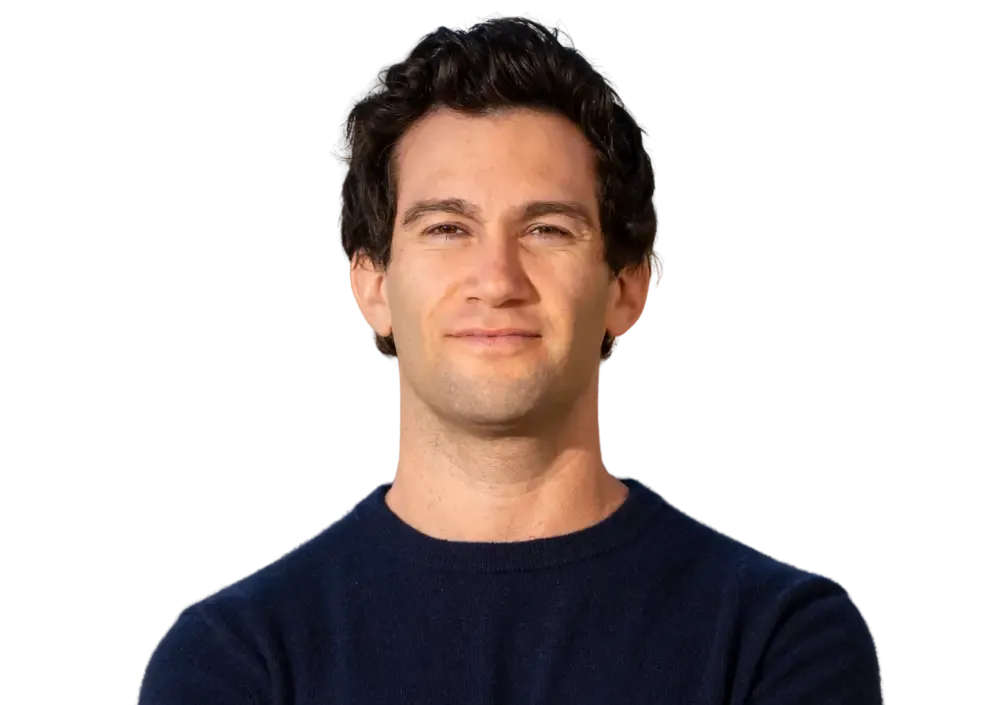
Noah Greenberg, CEO of content syndication company Stacker, says his LinkedIn practice of posting news-style editor and head-of-content job listings is intentional marketing. He backs the approach with a bootstrapped business, strict in-house editorial checks, and examples of “brand journalism” earning awards and distribution.
Noah Greenberg, CEO of Stacker, keeps doing something that reliably stops journalists mid-scroll: he posts lists of “editor-in-chief” and “head of content” jobs, including roles that pay about $200,000, at fintech, tech, and healthcare companies. He’s not just collecting attention. He says he started posting two years ago because “no one had heard of us,” using a “cheap trick” once a week: show journalists the kinds of jobs he believes are growing, and watch the engagement come in.
The point of the viral posts is also the point of contention. Greenberg told Fortune he is not celebrating “the death of journalism,” and he frames the real story as a shift in who funds editorial work. His examples are specific: “The tech editor at the Wall Street Journal is now the managing editor at NVIDIA,” referring to Shara Tibken; Robinhood has purchased newsletters including Chartr and MarketSnacks; and it hired Josh Topolsky, described by Fortune as a former Verge, Vox and Bloomberg editor, to be editor-in-chief. When those listings circulate, Greenberg says three groups message him: journalists curious about switching careers, journalists who already made the leap and want to promote it, and journalists who are furious at what they see as an equivalence between these jobs and journalism.
Zoom out and the incentives become clearer. Stacker itself, Greenberg says, has grown from a $3 million run rate to north of $10 million in under two years without raising venture capital. That matters because it suggests this is not a hype-driven detour. It is a business that found a customer willingness and a distribution machine that sticks. Brands pay Stacker to help produce and distribute data-driven features. Stacker then runs each piece through an in-house editorial team before it goes out. And several thousand news outlets, about 90% local, pull from the feed for no cost and with no obligation. Partners include McClatchy, Lee Enterprises, Gray TV and the Local Media Consortium.
Greenberg’s thesis lives in the space between “content marketing” and “newsroom publishing.” He uses the language of journalism without insisting on the label. “To me,” he told Fortune, “it’s less important what it’s called, and more important that the work exists.” The tension here is obvious: brand-funded stories can look like journalism from a distance, but they are paid for by organizations that also want something out of the arrangement. Greenberg’s answer is to lean on process. Fortune reports that Stacker’s in-house editorial standards are stricter than you might expect from syndication. Instacart, for example, cannot describe itself as “the number one food delivery service in the country.” Experian can’t slip in a line recommending its credit-boosting product. And a recent shipping logistics piece on tariffs went out untouched because the underlying data was real and the story was newsworthy.
That process, Greenberg argues, turns distribution into leverage. His framing is blunt: at Stacker’s best, it’s “hanging distribution as a carrot to incentivize [brands] to improve the quality of their content.” In other words, he is not trying to replace editorial judgment with a wire and a stamp. He is trying to reward better inputs, then let outlets publish without the brand needing to “pitch” in the traditional way. It also reframes the power dynamics. Instead of traditional newsrooms sorting through “100 pitches,” as Greenberg described the early insight, a data-driven brand story can travel through Stacker’s editorial gate and into the news ecosystem.
The human side of the shift shows up in the journalists Greenberg posts about. Fortune profiles Tracy Middleton, who spent 20 years in magazines including Men’s Health and Women’s Health, and served as editor-in-chief of Yoga Journal, before nearly five years ago joining Hone Health, a men’s hormone health company, to build its editorial operation. Middleton calls herself a “brand journalist.” Her team includes an executive editor from Reader’s Digest, Prevention and U.S. News & World Report, plus an SEO/GEO specialist who went to journalism school. One story she’s proud of began with patient data, not a meeting. Middleton noticed a disproportionate share of Hone members were military veterans. She started asking why, contacted the VA for comment, interviewed former servicemembers, engaged an independent fact-checker, and published a deep dive linking traumatic brain injury, chronic stress, and sleep deprivation during service to hormone imbalances, conditions the VA Department was reportedly not addressing adequately. It won an award from the Association of Health Care Journalists, which Middleton points to as evidence that brand journalism can matter.
Then there is Anneken Tappe at Chime, a fintech company, who Fortune reports is a former economics reporter at CNN and Axios. She is clear-eyed about the trade-off. Breaking-news desk work can be exhilarating, but she says the editorial instincts do not go away. In her words as reported by Fortune, she has “found a new home for them,” describing corporate storytelling and owned content as strategically interesting because the stakes are the business itself. Middleton and Tappe together represent the career switch Greenberg’s LinkedIn bait reveals: one journalist trading a legacy editorial lane for a startup’s backend data, and another trading competitive desks for the “pulse” of a company’s own narrative needs.
For executives and boards, the bigger question is not whether this work counts as journalism to purists. It’s who gets to control distribution, credibility, and feedback loops. Stacker says total revenue for its Stacker Connect distribution product exceeded $5 million last year and is on pace for $10 million in 2026, based on records Fortune reviewed. It also earns revenue from a services/studio business and selling advertising on its site, and it has never raised outside funding. That kind of traction can pressure traditional publishers to rethink their revenue sources, because brand-funded operations are buying staff, newsletters, and newsroom-adjacent storytelling capacity. And for regulators and risk managers, the underlying issue is verification: Stacker’s examples show how editorial standards can constrain marketing language and filter claims through data. But the reality remains that brand-funded publishing changes the ecosystem, which can affect how audiences evaluate authority and how platforms decide what to amplify.
The strategic stakes are immediate: if more editors and content leads choose corporate storytelling jobs, then distribution partners and editorial gatekeepers will become the new battlegrounds for trust. Greenberg’s posts are provocative, but his business suggests this is not a temporary fad. It is an operational model that links hired editorial talent, proprietary data access, and a distribution network that news outlets already use. The question now is whether peers treat this as a threat to be dismissed, or as a structural shift that requires better standards, clearer labeling, and tougher incentives around facts.
This story's Key Insights and Take-aways are locked.
Create a free account to unlock Executive Actions for one credit.
Register to UnlockAlways free for Executives Club members. Join the Club
More in Business

Anthropic’s Levant Alpöge cracks the Jacobian conjecture after 87 years
A Harvard valedictorian used Claude to hit a 1939 breakthrough, but the missing “why” is the real problem.

Uber buys Delivery Hero for nearly $15B, vaulting to top food delivery outside China
The deal doubles Uber's dual-services footprint and pushes a ride-and-eats bundling play into 50 more markets.

Epic and Google drop settlement bid, forcing rival Android app stores by July 22
Google told the court it is ready to carry third-party app stores starting Wednesday, July 22.