

NotebookLM adds 60-second TikTok-style research clips for AI Ultra and Pro users
Google’s new Short Video Overviews turn uploaded sources into vertical AI summaries, starting with Google AI Ultra and Pro.
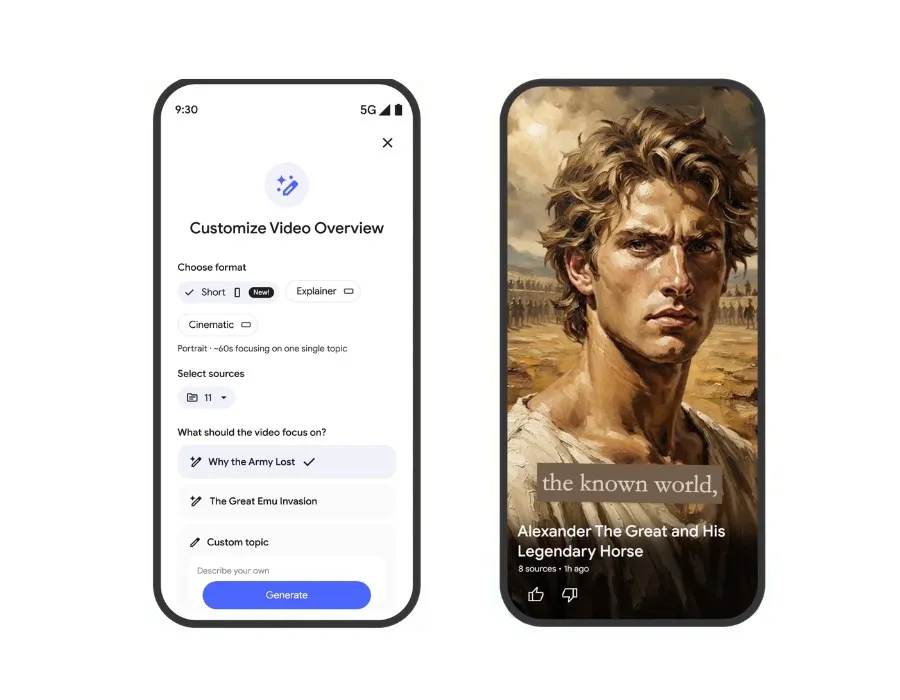
Google is rolling out NotebookLM Short Video Overviews that generate 60-second vertical AI clips from sources users upload. The feature changes how research gets consumed, compressing “catch up” into scrollable video and reshaping expectations for AI study tools.
Google’s NotebookLM is adding a new way to catch up on your notes: TikTok-style AI videos. Starting with Google AI Ultra and Pro subscribers, the app will generate 60-second vertical AI clips based on the sources you upload. The pitch is simple: instead of reading through your research materials again, you get a short, vertically formatted recap you can watch.
Google’s own example shows what that looks like in practice: it uses Australia’s unsuccessful war on emus, pairing paper cutout-style AI art of emus with narration. In other words, NotebookLM is not just summarizing text anymore. It is packaging your uploaded materials into a clip designed to land fast, visually, and on the same time scale as modern short-form video.
This matters because the “how” of consuming information is turning into a competitive feature, not a nice-to-have. NotebookLM already lets users interact with research in multiple formats, including generating AI podcasts, cinematic videos, and visual explainers. The new Short Video Overviews slot into that same ecosystem, but they emphasize one specific behavior: scrolling. A 60-second vertical summary is built for the moment you are not fully committed to reading, and that changes what users will expect from AI research tools.
The distribution also matters. The Verge reports the new feature is rolling out to Google AI Ultra and Pro subscribers, not everyone. That is a classic monetization move: attach a fresh capability to higher subscription tiers to drive upgrades, while still using the broader user base to generate awareness. For decision-makers, the implication is that “AI features” are quickly becoming tiered product surfaces. Even if the underlying model capabilities are improving across the board, the user experience you get can depend on what you pay.
From a governance and risk perspective, the feature is still grounded in a familiar workflow: you upload sources to NotebookLM, and the output is derived from those materials. That is important context when you think about accuracy, provenance, and the expectations users bring to AI-generated summaries. A short clip can make errors feel more “finished” than a text draft, because video reads as polished. The upside is accessibility and speed. The downside is that a confident format can reduce the instinct to verify.
Regulators are already looking at AI systems that generate or transform content, even when the content is based on user-provided inputs. While the source here does not mention regulatory filings or specific enforcement actions, the direction is clear: AI summaries are becoming more lifelike and easier to share. Turning research into a TikTok-style clip could increase the speed at which misinformation or misinterpretation spreads, especially if users share clips without sharing the underlying sources.
Zooming out, this is part of a broader second-order shift: education and research tools are being pushed closer to entertainment formats. NotebookLM’s earlier outputs, like AI podcasts and cinematic videos, already hinted at the trend. Now the product is borrowing the scroll-native structure of short-form platforms. That could reshape what “good summarization” means. If users get used to watching research recaps, they may ask for the same style across classes, work streams, and customer-facing knowledge bases, pushing everyone in the AI productivity space to match the delivery format, not just the content.
For boards and leadership teams at AI and productivity companies, the strategic stakes are straightforward. If the winner is the tool that gets you through your backlog quickest, then format is leverage. Google is betting that 60 seconds beats a fresh read, and that vertical, clip-sized explanations will become the default interface for research catch-up. If you are building in this category, you are not only competing on model quality. You are competing on attention economics, output presentation, and the subscription packaging that determines who experiences the feature first.
This story's Key Insights and Take-aways are locked.
Create a free account to unlock Executive Actions for one credit.
Register to UnlockAlways free for Executives Club members. Join the Club
More in Technology

Nvidia's $89B data center quarter: the 9 companies cashing in
The AI buildout is minting fortunes beyond GPUs, and memory, cloud, and cooling suppliers are riding the same wave.

Google quietly links your phone number to every Android account on your SIM
Adding a SIM now ties your phone number to all Google accounts - and future accounts inherit it. Here's the security and privacy stakes.

Hijacker AI 'Skynet mode' runs 100,000 attack steps against exposed models
Symantec caught a criminal AI agent that borrows other models, steals data, and mines crypto; the only relief is no confirmed victims yet.