

Novak Djokovic joins General Atlantic as global strategic advisor
General Atlantic hires tennis icon Novak Djokovic, signaling how private equity is courting global influence beyond financial returns.
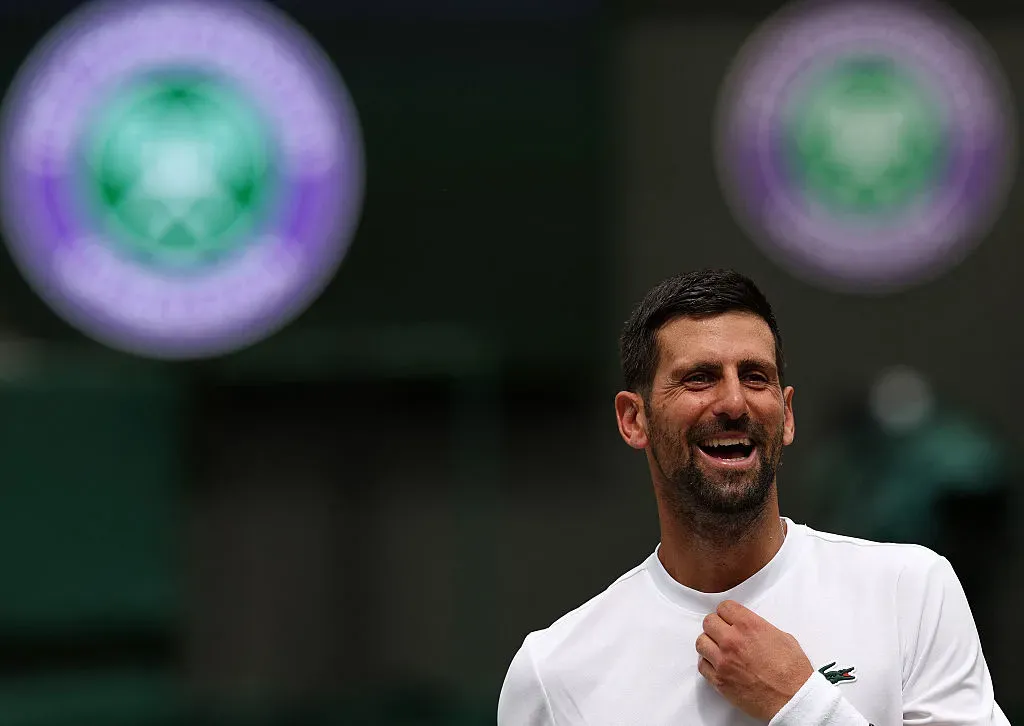
General Atlantic has tapped tennis legend Novak Djokovic to serve as a global strategic advisor. For decision-makers, it is a reminder that elite brands and global reach are increasingly part of how capital markets sell credibility and access.
General Atlantic has tapped tennis legend Novak Djokovic to serve as a global strategic advisor. That is the whole headline, but the consequences are wider than a sports headline crossing into finance. When a private equity firm brings in a global celebrity with deep brand equity and an international footprint, it is not just adding a name to a roster. It is making a bet on networks, perception, and the kind of strategic visibility that can matter when you are raising funds, building partnerships, and competing for deals across geographies.
Why this matters right now: private equity firms operate in a world where relationships and reputations move alongside valuation models. A strategic advisor, especially one with Djokovic's level of recognition, can help a firm communicate its story to stakeholders who might otherwise be hard to reach. That includes entrepreneurs seeking capital, co-investors looking for alignment, and institutional audiences evaluating a firm's leadership. In other words, the job title is “advisor,” but the value proposition often shows up in the days and months around the first conversation, not just in committee decks.
General Atlantic is known as a firm that invests across growth and value creation themes, and global positioning is usually central to how these firms operate. The addition of a globally recognized sports figure suggests the firm wants to strengthen its strategic influence in the “outside the spreadsheet” layer: brand credibility, cross-border visibility, and an informal bridge into communities that might not naturally intersect with traditional finance. For founders and operating executives, it can also change the feel of the room. When a firm signals it is willing to engage talent that resonates globally, it can make the process feel less like a purely transactional pitch and more like a partnership with global storytelling.
There is also a practical governance angle. Strategic advisors typically do not control investment decisions in the way partners and investment committees do. But they can shape how the firm thinks about opportunities, especially where consumer demand, international market dynamics, and reputational factors matter. At scale, that can influence which industries or regions executives prioritize for outreach. It can also affect how a firm calibrates its messaging around impact, growth strategy, or brand building, since these are the areas where an advisor with mainstream global awareness can contribute.
This move lands in the broader context of how private equity competes. The capital allocation environment is crowded. Many firms can underwrite a similar range of financial outcomes, at least on paper. The differentiator becomes, “Who can actually open doors?” When firms add high-profile advisors, they are leaning into a truth that is obvious in venture and consumer finance but sometimes underestimated in PE: trust travels faster when the messenger is instantly recognizable and globally credible.
Regulatory and reputation risks are part of the equation too, even when the source story is straightforward. Whenever a finance firm adds a public figure, boards and legal teams generally need to consider compliance, public perception, and any jurisdiction-specific concerns that could affect how the advisor relationship is structured. The point is not to imply any wrongdoing. It is to underline how, in 2026-era markets, governance is inseparable from branding. A strategic advisor relationship has to be clean, documented, and aligned with the firm’s policies, because perception can become a proxy for diligence in the eyes of limited partners and portfolio companies.
Second-order implications: if General Atlantic is willing to bring Djokovic into its strategic orbit, other firms may evaluate whether similarly prominent advisors could help them with market access, talent perception, or partnership signaling. Founders pitching PE will also take note. Advisors can be part of an ecosystem that makes some firms feel more globally “native,” even if the investment thesis is the same. That can influence which fund executives get first meetings with, and which firms get the benefit of the doubt when uncertainties appear.
So for executives in adjacent roles, the strategic stake is simple. This is not just a sports crossover. It is a real signal of how private equity is evolving from a purely capital-centered model to a capital-plus-influence model, where perception, networks, and global reach can be competitive assets. If you are leading a fund, sitting on an investment committee, or running a portfolio company, the question to ask is: how are you building the credibility and access that make deals easier to win, not just easier to underwrite?
This story's Key Insights and Take-aways are locked.
Create a free account to unlock Executive Actions for one credit.
Register to UnlockAlways free for Executives Club members. Join the Club
More in Business

Anthropic’s Levant Alpöge cracks the Jacobian conjecture after 87 years
A Harvard valedictorian used Claude to hit a 1939 breakthrough, but the missing “why” is the real problem.

Uber buys Delivery Hero for nearly $15B, vaulting to top food delivery outside China
The deal doubles Uber's dual-services footprint and pushes a ride-and-eats bundling play into 50 more markets.

Epic and Google drop settlement bid, forcing rival Android app stores by July 22
Google told the court it is ready to carry third-party app stores starting Wednesday, July 22.