
Nvidia's $12.9B Hugging Face grab is an antitrust trap regulators must stop
The GPU giant's acquisition of AI's neutral model hub threatens to tilt the entire ecosystem toward its own hardware - and regulators are the only brake.
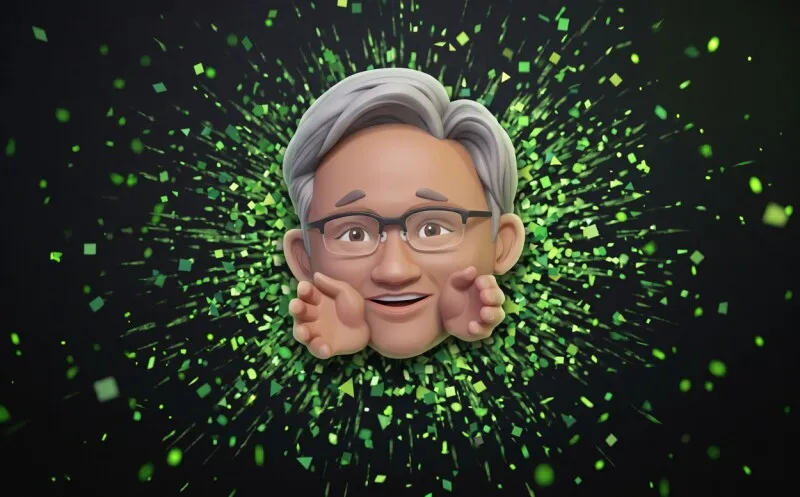
Nvidia announced a $12.9 billion agreement to acquire Hugging Face, the open-source AI model repository that has become the neutral hub for the machine learning community. The deal, if approved, would give Nvidia control over the platform that most developers use to download and run open-weight models, raising serious antitrust concerns about competition in AI infrastructure.
Nvidia's $12.9 billion agreement to acquire Hugging Face, announced Thursday, is the kind of deal that should make every antitrust regulator sit up and take notice. The GPU giant is buying the neutral ground where the AI community shares, downloads, and collaborates on open-weight models - the closest thing the industry has to a Switzerland. The problem isn't just that Nvidia would own the platform; it's that the platform has become the primary distribution channel for AI models and the documentation that goes with them. As The Register's opinion piece argues, letting Nvidia control Hugging Face is like letting an automaker buy the fuel distribution network and the mechanics' training school. The temptation to favor its own hardware and software would be overwhelming, even if Nvidia promises to keep the platform open.
Hugging Face, founded in 2016, has become the beating heart of the machine learning community. When a new open-weights model drops, Hugging Face is the first place people look. Its unrelenting commitment to open source AI has made it a sort of Switzerland for researchers, enthusiasts, and software devs to collaborate on neutral ground. If you've ever downloaded an open-weights model, it almost certainly came from Hugging Face, whether you knew it or not. The platform stores petabytes of models and datasets, and serves them at scale - a capital-intensive business that requires constant infrastructure investment. Nvidia's involvement all but ensures Hugging Face never has to worry about infrastructure demand going forward, but that financial security comes with a strategic cost.
The acquisition puts Nvidia in a prime position to prioritize its own hardware and software products. Hugging Face is home to arguably the most comprehensive documentation on AI development on the internet, and it hosts key software like the llama.cpp inference engine and the Transformers Python library, which are integral to major inference platforms like vLLM and SGLang - direct competitors to Nvidia's own TRT-LLM offering. Nvidia wouldn't need to do something as brash as ending support for competing platforms. It could simply ensure that the models and frameworks it favors are always better documented, and run first on its kit. One method to tip the scales would be to flood Hugging Face with cheap Nvidia-based compute. Hugging Face has offered compute resources through its inference endpoints, providers, and Spaces for years, working with a range of hardware vendors including AMD, Cerebras, SambaNova, and Groq. As parent company, Nvidia could subsidize compute through its partners and economically incentivize developers to build for its hardware first - subtly, without raising too many suspicions.
Hugging Face CEO Clem Delangue sang Nvidia's praises on Thursday, casting the acquisition as an opportunity to grow the user base from around 18 million today to more than 100 million in the years to come. Yet just a year ago, Hugging Face rebuffed a $500 million investment by Nvidia, suggesting Delangue knows he's made a deal with the devil. With $1 billion earmarked for Hugging Face employees joining Nvidia, Delangue and his cohort will have plenty of financial cushion to wipe away any tears of regret. The deal is expected to close next year, assuming regulators don't get in the way - and they should.
The regulatory landscape is the crux. The Register's opinion piece argues that the Trump administration likely lacks both the competence and teeth necessary to litigate the case, something that probably factored into CEO Jensen Huang's decision to buy Hugging Face now. As antitrust magnets go, Nvidia buying Hugging Face takes the cake. You wouldn't let an automaker acquire the primary means of fuel distribution, nor would you let it buy the primary means by which mechanics are trained. Yet Nvidia's acquisition is tantamount to both. The deal would inevitably cement Nvidia's market dominance and harm competition in the process. Hugging Face works better as AI Switzerland than it does as part of the most powerful company in the industry.
For executives and boards across the AI ecosystem, this deal is a wake-up call. If you rely on Hugging Face for model distribution, documentation, or inference, you are now exposed to Nvidia's strategic priorities. The platform's neutrality was its greatest asset; that neutrality is now in question. Competitors like AMD, Groq, and Cerebras, who have partnered with Hugging Face for compute, may find themselves squeezed as Nvidia steers resources toward its own stack. The broader lesson is that open-source infrastructure is not immune to consolidation - and the companies that control the rails often control the traffic. Regulators should take note, but so should every founder and operator who has built on top of Hugging Face's open ecosystem. The deal may close, but the fight over AI's neutral ground is just beginning.
This story's Key Insights and Take-aways are locked.
Create a free account to unlock Executive Actions for one credit.
Register to UnlockAlways free for Executives Club members. Join the Club
More in Business
Tim Cook steps down as Apple CEO, stays on as chair with $45M equity
The 'Trump whisperer' keeps his White House and Beijing access as Apple navigates tariffs and a $4.6 trillion market cap.

Snowflake shares surge as AI data demand crushes estimates, lifting full-year forecast
Stocks jumped on stronger-than-expected guidance, signaling enterprise AI workloads are accelerating faster than Wall Street priced in.
Tim Cook's 15-year Apple CEO run ends: 3 lessons for any successor
After 15 years, Tim Cook hands Apple to John Ternus - here's how he turned a $350B company into a $4.6T juggernaut.