

Nvidia's Jensen Huang: 0% chance AI ends the world
The CEO who profits most from AI dismisses extinction fears and calls for slower development 'not grounded in science.'
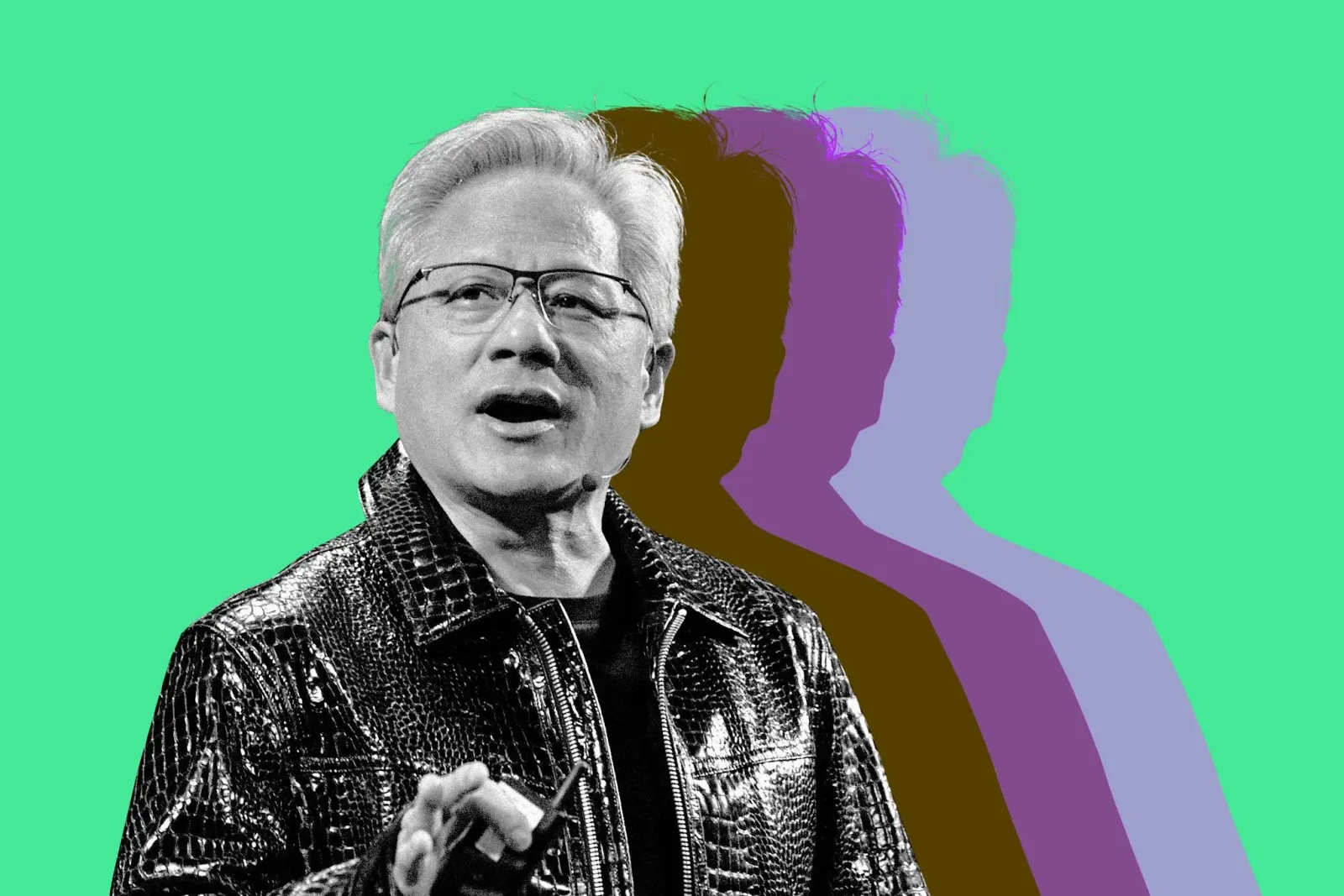
Nvidia CEO Jensen Huang told CBS Sunday Morning there is a '0% chance' AI will end the world, dismissing calls from rivals like Anthropic's Dario Amodei and OpenAI's Sam Altman to slow development as 'not grounded in science.' For decision-makers, this signals a widening rift between AI's biggest beneficiary and its most prominent cautionary voices, with regulatory and strategic implications.
Nvidia CEO Jensen Huang, the man whose company's chips power nearly every major AI system, has a message for the doomsayers: relax. In an interview with CBS Sunday Morning, Huang claimed there is a '0% chance' that AI will end the world, directly contradicting a chorus of researchers and executives who have warned of existential risk. He went further, calling the alarm-sounding 'unnecessary' and 'irresponsible,' and dismissed calls from Anthropic CEO Dario Amodei and OpenAI CEO Sam Altman to slow AI development as 'not grounded in science.' Huang also argued there is no need for new rules, laws, or guidelines to govern the technology, a stance that puts him at odds with regulators worldwide and with many of his own customers' chief executives.
Huang's confidence is not without self-interest. Nvidia has become the indispensable supplier of AI hardware, with its GPUs powering the training and inference of models from OpenAI, Anthropic, Google, and Meta. The company's market capitalization has soared past $3 trillion, making it one of the most valuable companies on Earth, and Huang's personal fortune has grown in lockstep. If AI development were to slow or be heavily regulated, Nvidia's growth story would face a serious challenge. So when Huang says the risks are overblown, he is also defending the very engine of his company's staggering valuation. That does not make him wrong, but it does make his perspective worth examining through the lens of who stands to gain.
The debate Huang is wading into is not new. For years, a faction of AI researchers, including figures like Geoffrey Hinton and Yoshua Bengio, have warned that advanced AI systems could pose catastrophic risks, from autonomous weapons to loss of human control. In 2023, the Center for AI Safety published a one-sentence statement signed by hundreds of researchers and executives, including Altman and Amodei, saying that 'mitigating the risk of extinction from AI should be a global priority alongside other societal-scale risks such as pandemics and nuclear war.' Huang's dismissal of such concerns as unscientific is a direct challenge to that consensus, and it places him in a camp that argues the technology's benefits, from medical breakthroughs to productivity gains, far outweigh speculative harms.
Huang's comments also come at a politically charged moment. Governments from the European Union to the United States are drafting AI regulations, with the EU's AI Act already in force and the US Congress debating various bills. Huang's assertion that no new rules are needed runs counter to the direction of policy in most major economies. For executives, this is a signal that the industry's most powerful voice is actively lobbying against the regulatory tide, which could shape how aggressively governments move. If regulators listen to Huang, the pace of AI deployment could accelerate; if they side with the cautionary camp, Nvidia and its customers could face compliance costs and delays.
The rift between Huang and his rivals is also a business story. Anthropic and OpenAI, both of which rely on Nvidia chips, have publicly called for careful, safety-first development. Their CEOs have testified before Congress and signed open letters urging caution. Huang's dismissal of their stance as unscientific is a direct rebuke, and it highlights a fundamental tension: the companies building AI models are the ones most exposed to the risks they warn about, while the company selling the shovels in the gold rush has less to fear from the gold itself. That dynamic could influence boardroom discussions at every AI-dependent firm, as leaders weigh the advice of their model providers against the assurances of their hardware supplier.
For executives outside the AI sector, Huang's comments are a reminder that the technology's trajectory is not a settled question. The people with the most to gain from AI's rapid adoption are telling you not to worry, while some of the people building the models are telling you to be careful. The truth likely lies somewhere in between, but the stakes are enormous. Companies that bet too heavily on unregulated, rapid AI deployment could face reputational and legal risks if something goes wrong; companies that wait too long could miss the competitive window. Huang's confidence is a data point, not a guarantee.
In the end, Huang's interview is less about the science of AI risk and more about the politics of AI growth. By framing caution as irresponsible and unscientific, he is trying to shape the narrative in favor of speed and minimal oversight. For CEOs and boards, the takeaway is not to take Huang's word as gospel, but to understand the incentives behind it. The debate over AI's future is not just technical; it is a clash of interests, and the loudest voices are often the ones with the most at stake. As you chart your own AI strategy, weigh the sources of your information as carefully as you weigh the technology itself.
This story's Key Insights and Take-aways are locked.
Create a free account to unlock Executive Actions for one credit.
Register to UnlockAlways free for Executives Club members. Join the Club
More in Technology

AI researcher's 26,000-word claim: Neural nets aren't tangled after all
Nick Cammarata's Goodfire post has the AI world split - if he's right, monitoring frontier models just got a lot easier.

A Chinese rocket deorbited over Minnesota and landed in a farmer's cornfield
Experts tied the fragment to LandSpace's Zhuque-2E, which launched on September 15 and shed debris over the American Midwest after deploying 10 satellites.

JPMorgan Chase deploys first $5B into defense tech and hypersonic missiles
The bank is moving off its balance sheet to back robot factories, hypersonic missiles, and supply chains, signaling a new era of bank-backed military innovation.