
Nvidia's Jensen Huang: '0% chance' AI ends the world, alarmists 'irresponsible'
The CEO of the world's most valuable chipmaker dismisses AI safety calls from OpenAI and Anthropic as unscientific, doubling down on unregulated development.
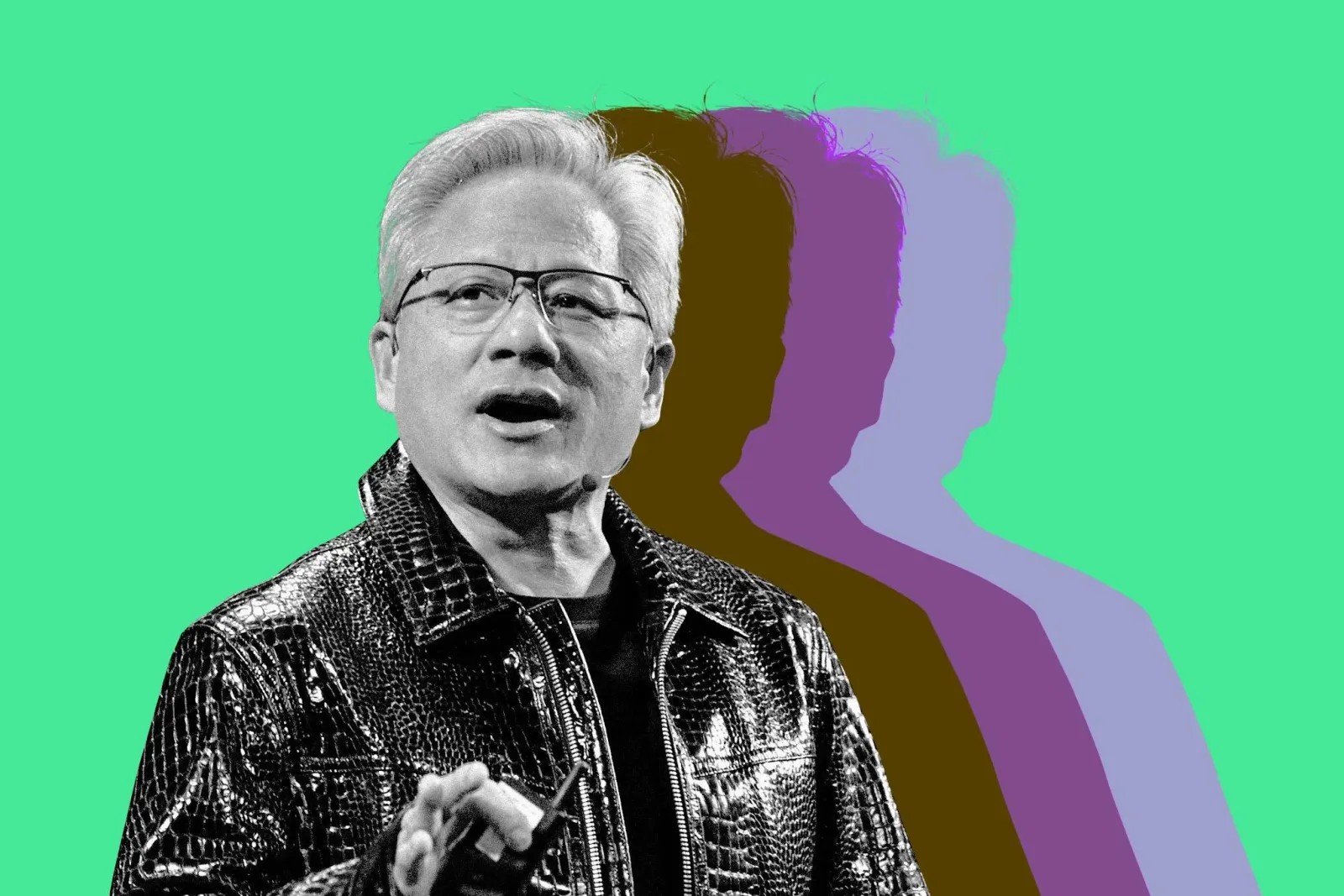
Nvidia CEO Jensen Huang told CBS Sunday Morning there is a '0% chance' AI will end the world, calling alarmists 'irresponsible' and dismissing calls from OpenAI's Sam Altman and Anthropic's Dario Amodei to slow development as 'not grounded in science.' For decision-makers, Huang's stance signals that the biggest beneficiary of the AI boom sees no regulatory need, potentially shaping policy debates and investor sentiment.
Nvidia CEO Jensen Huang is doubling down on his bet that artificial intelligence will not destroy humanity. In an interview with CBS Sunday Morning, Huang said there is a '0% chance' AI will end the world, and he had sharp words for those who sound the alarm: 'Scaring people is unnecessary. It is irresponsible.' That is not a hedge; it is a flat dismissal of a growing chorus of researchers and executives who warn that unchecked AI could pose existential risks.
Huang didn't stop there. He also dismissed calls from two of the most prominent voices in AI safety - Anthropic CEO Dario Amodei and OpenAI CEO Sam Altman - to slow down development, calling their concerns 'not grounded in science.' He argued there is no need for new rules, laws, or guidelines to govern AI, a stance that puts him at odds with many researchers and policymakers. For a man whose company supplies the silicon powering the AI boom, this is not an abstract philosophical position; it is a direct defense of his business model.
Huang is not a neutral observer. As the CEO of Nvidia, the company that may stand to make the most money from the AI boom, his financial incentive is clear. The source notes he 'may stand to make the most money from the AI boom,' and that stake gives his words weight - and a built-in conflict. When the person who profits most from AI's expansion says there is zero risk, skeptics will naturally question the source. But Huang's confidence is not new; he has long positioned Nvidia as the indispensable infrastructure layer for AI, and any slowdown in development would directly threaten his company's explosive growth.
The debate over AI's existential risk has split the tech world. Researchers like Geoffrey Hinton and Yoshua Bengio have warned about catastrophic outcomes, while executives like Altman and Amodei have publicly called for caution, even as they race to build more powerful systems. Huang's '0% chance' claim is a direct challenge to that caution, and his dismissal of their science is a notable escalation. He is not just disagreeing with them; he is questioning their credibility. That is a significant move from the CEO of the most important hardware supplier in the AI ecosystem.
Huang's comments land at a moment when governments are actively grappling with how to regulate AI. The European Union has moved forward with the AI Act, and the U.S. has issued executive orders and held congressional hearings. Regulators are trying to balance innovation with safety, and Huang's assertion that no new rules are needed could give cover to those who oppose regulation. It also raises a practical question: if the industry's biggest winner says self-regulation is enough, can the market be trusted to police itself? History suggests that when the most powerful player has no incentive to slow down, external oversight becomes more likely, not less.
For CEOs and boards, Huang's stance is a reminder that the AI boom is being driven by a handful of companies with enormous financial stakes. His dismissal of safety concerns may be good for Nvidia's stock, but it does not resolve the underlying questions about AI's risks. Executives who are building AI strategies should not mistake Huang's confidence for a scientific consensus. The debate is far from settled, and the regulatory landscape remains fluid. Companies that ignore the risks - or assume they will never face liability - could find themselves exposed if a major incident occurs.
The strategic takeaway is that AI's future is being shaped by a few powerful voices, and Huang's is among the loudest. His '0% chance' is a data point, not a conclusion. For decision-makers, the prudent path is to watch how regulators respond, diversify AI investments beyond any single vendor, and build internal risk frameworks that do not rely on the assurances of a CEO with a direct financial stake in the outcome. Huang may be right, but betting your company on his certainty is a gamble no board should take lightly.
This story's Key Insights and Take-aways are locked.
Create a free account to unlock Executive Actions for one credit.
Register to UnlockAlways free for Executives Club members. Join the Club
More in Technology
AI researcher's 26,000-word claim: Neural nets aren't tangled after all
Nick Cammarata's Goodfire post has the AI world split - if he's right, monitoring frontier models just got a lot easier.

A Chinese rocket deorbited over Minnesota and landed in a farmer's cornfield
Experts tied the fragment to LandSpace's Zhuque-2E, which launched on September 15 and shed debris over the American Midwest after deploying 10 satellites.

JPMorgan Chase deploys first $5B into defense tech and hypersonic missiles
The bank is moving off its balance sheet to back robot factories, hypersonic missiles, and supply chains, signaling a new era of bank-backed military innovation.