

Obama’s sketch debut and an America-250 pitch pulled Larry David out of “No.”
Higher Ground’s America 250 request became HBO’s “Life, Larry and the Pursuit of Unhappiness,” a more cinematic Curb-style gamble.
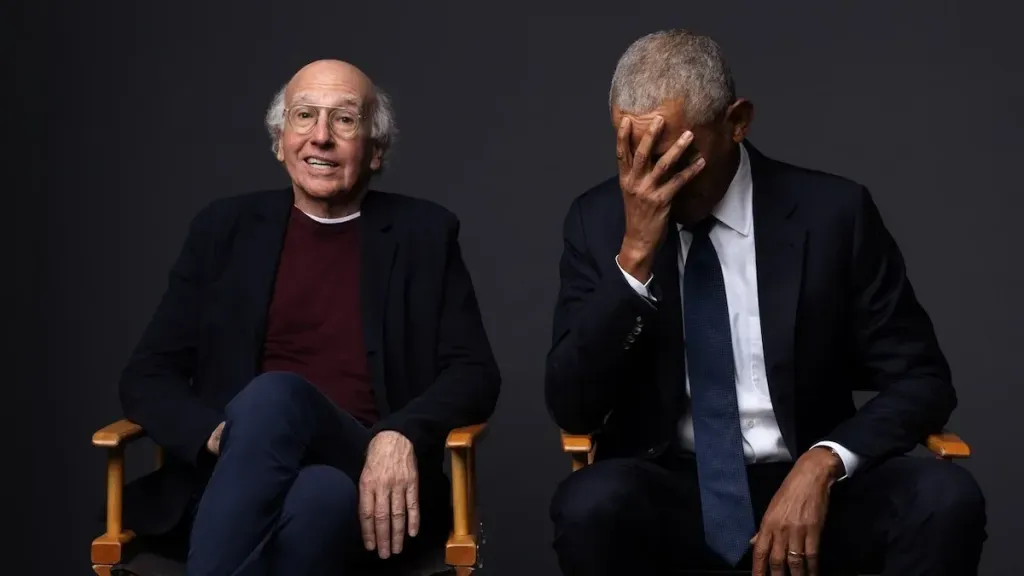
Former President Barack Obama and First Lady Michelle Obama’s Higher Ground asked Larry David to make a project for America’s 250th anniversary, sparking HBO’s “Life, Larry and the Pursuit of Unhappiness.” For decision-makers, it shows how a big-brand cultural moment and celebrity improv can reshape a premium platform’s creative risk profile.
Larry David’s default setting is rejection. In fact, his longtime writing and producing partner Jeff Schaffer has called him “the fastest no in show business.” But the “no” didn’t last after Barack and Michelle Obama’s Higher Ground asked David about a project for America’s 250th anniversary. That initial ask became HBO’s new sketch comedy series, “Life, Larry and the Pursuit of Unhappiness,” and the premise is almost offensively specific: drop Larry, TV’s favorite curmudgeon, into history’s biggest moments.
Schaffer’s explanation for why this pivot worked is basically a founder story in comedy form. He says David was a history buff who studied American history and “loves American history,” so the combination of President Obama and Larry David, which sounds “really weird” on paper, ended up being “the perfect person.” Then Schaffer connects it to the timing of David’s availability: David had wrapped “Curb Your Enthusiasm” after 12 seasons and 24 years on HBO. So when Higher Ground knocked, it wasn’t just a prestigious cultural commission. It was an opening in David’s calendar that met his interests.
The production story also reads like how modern premium media gets greenlit. Schaffer says he and David were already considering new TV ideas as well as a movie before Higher Ground came knocking. When the Higher Ground pitch landed, the team brought it to HBO through a direct value proposition: “two people that half of America love.” Schaffer recalls calling HBO’s Amy Gravitt and pitching, and she pushed back with confusion at first, asking, “What are you talking about?” Then HBO moved to “Great, let’s do it,” though Schaffer also notes he wasn’t sure everyone understood what they were really making.
That ambiguity matters, because it’s where strategic risk hides. HBO did not only finance a famous face in a familiar format. It backed a hybrid: improv-style sketches that still take advantage of the “Curb” DNA, but are designed to look more cinematic. Schaffer says the show was built with physical set pieces like “the Wright flyer” and shot scenarios including “a World War I trench.” His point is simple: the sketches are “little movies,” not “shot like ‘Curb.’” That’s an important signal for platforms trying to refresh a proven brand. Keep the signature voice, but change the visual and pacing “feel” so the audience experiences it as more than a reboot.
And yes, the cast is a strategic argument, not just star power. Schaffer describes a lineup of flashy guest stars ranging from familiar faces from David’s body of work, including Jerry Seinfeld, Susie Essman, J.B. Smoove, and Vince Vaughn, plus new collaborators like Kathryn Hahn and Bill Hader, and even President Obama. On Obama’s involvement, Schaffer delivers the core behind-the-scenes detail: they got “a decent amount of time filming with him,” and he wasn’t just present, he was funny, with “great timing.” Schaffer says Obama enjoyed “annoying Larry and being annoyed by Larry,” and that there are lines David and Schaffer “can take no credit for,” which Schaffer frames as “100% Barack.”
For executives, there’s a more operational implication here: the show wasn’t merely written with Obama as a guest. Schaffer says they spent time together from the first meeting, and that daily experience was varied, from being “in a World War I trench” to places like the Boston Tea Party and “the Great Depression.” In other words, the production design is engineered to make a sketch premise scale. If you can place the same comedic engine across different eras, you can create repeatable audience novelty without constantly starting from scratch.
Schaffer also traces David’s willingness to return to TV to an earlier creative spark: an FTX commercial David did four years ago, where he played himself throughout time, pooh-poohing every good invention humanity has created. Schaffer argues David remembered how fun it was to be in costume, and that he “forgot how much he hated being in wigs and hair and makeup.” The business takeaway is quietly useful. Creators don’t just decide based on story. They decide based on discomfort, craft friction, and the joy of the performance. When that equation flips, a “no” can become a “go.”
The series adds another premium-layer decision through narration. Samuel L. Jackson lends his voice as the show’s narrator, and Schaffer explains how the involvement came together after David and Schaffer had already finished shooting. They developed what Schaffer called “historical Russian roulette,” using documentary-style lead-ins where Jackson provides context before each sketch. The operational intent is clear: they needed to tell viewers what the Alamo or the Red Scare is, but doing it in that fast-paced, context-setting way allows the sketch to be comedy because you get the setup. Schaffer says the production needed a voice “instantly recognizable” with gravitas, plus bounce and slap, so it wouldn’t feel like history class. The team’s working method was intense: Schaffer says they wrote 28 of those rapid-fire lead-ins as Jackson came in around his own schedule, doing it “for a day,” and “knocked it out of the park.”
Finally, the “grievances” mechanism lands as a structural engine for the premiere. In the Friday premiere, the show spoofs the signing of the Declaration of Independence and uses a central list of grievances. Schaffer says the grievances were all written down in handwritten font, that he has a giant poster signed by President Obama that is one of his favorite possessions, and that Larry has “more complaints than we could fit into a sketch.” The show keeps some surprises close to the vest, but Schaffer emphasizes that everyone “really came to play,” and that each day was a different “movie.”
“Life, Larry and the Pursuit of Unhappiness” airs Fridays at 9 p.m. ET/PT on HBO and HBO Max. For peers making premium bets, the second-order lesson is how cultural timing, creator psychology, and platform brand elevation can combine into a safer-than-it-looks gamble. You’re not just borrowing fame. You’re aligning incentives across a legacy HBO voice, a history-obsessed performer, and a political milestone, then packaging it with cinematic craft and instant-recognizable narration. That is exactly the kind of creative risk management that separates “greenlit” from “sticky.”
This story's Key Insights and Take-aways are locked.
Create a free account to unlock Executive Actions for one credit.
Register to UnlockAlways free for Executives Club members. Join the Club
More in Entertainment

Russell Brand's accuser 'bewildered and confused' as he denies 7 sex charges
The criminal case against the comedian is a live test of how media companies manage talent risk when serious allegations go public.

'It's a Magic Trick': Ballet Experts Say Rosalía's SNL Pose Is Impossible
Three ballet experts tell Rolling Stone Rosalía's gravity-defying SNL stillness shouldn't be possible - and why the debate is now part of the show.

Activision CMO: GTA 6 Will Boost Call of Duty, Not Bury It
Activision's top marketer says Rockstar's blockbuster will drive players back to consoles and into Modern Warfare 4, even as the company admits its recent strategy failed.