
Odesa hit as von der Leyen lands in Kyiv; Russia kills 3, Ukraine claims 20 vessels struck
Three people died in Odesa during a Russian strike as Ursula von der Leyen arrived for defense talks and Kyiv cited 20 Black Sea vessel hits.
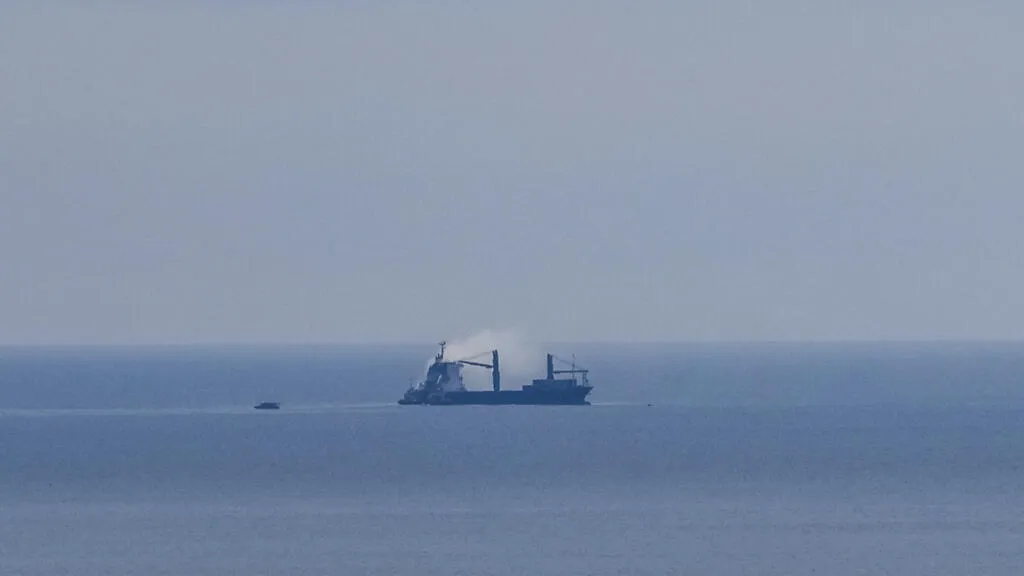
Russia carried out a strike on Odesa that killed three, a local official reported on Wednesday. As European Commission President Ursula von der Leyen arrived in Kyiv to announce new defense initiatives, Ukraine also said it struck 20 Russian vessels in the Black Sea, including gas tankers.
A Russian strike hit Odesa, killing three people, according to a local official, on Wednesday. The timing matters: European Commission President Ursula von der Leyen arrived in Kyiv at the same moment to announce new defense initiatives, turning the visit into more than diplomacy. It becomes a real-time signal of Europe’s priorities at a moment when maritime risk is spiking and supply chains around the Black Sea face new disruption pressure.
The same day, Ukraine also claimed it struck 20 Russian vessels in the Black Sea overnight, including gas tankers. Put those two facts together and you get the operational reality behind the headlines: the conflict is not only moving on land, it is attacking the arteries of trade and energy logistics. For executives, boards, and investors trying to model risk, this is the kind of development that forces scenario planning to move from “what if” to “what next,” especially for businesses with shipping exposure, insurance dependencies, port-side contracts, energy procurement, or compliance burdens tied to sanctions.
To understand why this matters beyond the immediate casualties, it helps to remember how European defense and industrial policy typically works. New initiatives from a top EU official often come with downstream effects like procurement pathways, industrial coordination, and cross-border funding structures that aim to speed up capabilities or redirect industrial output. Von der Leyen’s presence in Kyiv to announce new defense initiatives is part of that pattern, even if the source here does not specify the exact measures. The key point for decision-makers is that EU leadership visits during active strikes are usually used to align political urgency with operational follow-through, which can translate into faster policy motion for the defense ecosystem.
Meanwhile, the Black Sea claim of striking 20 Russian vessels, including gas tankers, is an unusually direct indicator of where pressure is being applied. Tankers are not just ships; they represent energy movement and the infrastructure that can influence broader pricing dynamics in adjacent markets. When gas tankers are specifically mentioned, it suggests the target set includes logistics that matter to energy flows. That does not automatically tell you who will be paid, what contracts will be honored, or how insurers will price risk next. But it does tell you the risk is visible to the market and that counterparties will respond, because the combination of kinetic events and energy assets tends to raise uncertainty quickly.
There is also a financial and regulatory angle that executives cannot ignore. Russia-Ukraine conflict-related shipping risk tends to pull in a web of compliance, including sanctions screening, export controls, trade documentation, and counterparty risk management. Even if a company is not directly “in defense,” it can be affected through transport dependencies, port access terms, payment systems, and insurance coverage. Claims like “20 vessels struck” can change behavior almost immediately: insurers reassess liability exposure, shipping lines adjust routes, and counterparties tighten contract language around force majeure, war risk clauses, and delivery guarantees.
For boards, the second-order implication is board-level oversight: cybersecurity and operational resilience usually get attention in peacetime, but kinetic disruptions force a broader lens that includes physical logistics and financial settlement pathways. If ports are hit and tankers are targeted, the question becomes how quickly obligations can be rerouted, what vendors can absorb losses, and how management documents decisions for audit and risk committees. In practical terms, the strategic stakes are about continuity and cost: not just whether disruption happens, but how long it lasts and who bears the losses when it does.
Finally, look at the combined signal. A strike in Odesa that kills three people is a stark reminder of human cost. Ukraine’s claim of 20 Russian vessels struck, including gas tankers, signals that naval and energy-linked operations are squarely in the crosshairs. And von der Leyen’s arrival in Kyiv for defense initiatives shows Europe is trying to translate that battlefield reality into policy and industrial action. Executives in neighboring sectors should treat this as a prompt to reassess assumptions: where the next disruptions could occur, how quickly policy support could affect procurement and supply chains, and how tightening maritime risk could cascade into energy, insurance, and sanctions compliance costs.
In short, this is not just “another strike” in a long war. It is a day where battlefield actions and high-level EU defense engagement line up, and the Black Sea logistics picture is shifting fast. If you run a company that depends on maritime movement, energy flows, or compliance-heavy cross-border trade, the strategic homework is immediate.
This story's Key Insights and Take-aways are locked.
Create a free account to unlock Executive Actions for one credit.
Register to UnlockAlways free for Executives Club members. Join the Club
More in Politics

LA County: DOJ's 20,000 'noncitizen' voter list is 'unreliable,' includes U.S.-born
Preliminary review by Los Angeles County election officials finds errors in the federal list, raising the stakes for voter roll integrity ahead of November.

Trump's $1.5B Pentagon chip investment lands in North Carolina
A $1.5 billion defense infusion for North Carolina chipmaking signals a new era of Pentagon-backed reshoring - here's what it means for the industry.

Nigeria confirms first Ebola case in Abuja, a woman just off a Uganda flight
Health Minister Muhammad Ali Pate says the patient flew in from Uganda, putting Africa's latest outbreak on Nigeria's doorstep.