
Ontario threatens to cut US electricity: 'Everything's on the table'
Canada's most populous province is ready to weaponize power exports, critical minerals, and fuel as the trade war escalates.

Ontario Premier Doug Ford said Canada is ready to escalate the US-Canada trade war, with electricity, critical minerals, and fuel exports all on the table. The threat raises the stakes for US manufacturers, utilities, and automakers that depend on Canadian energy and inputs.
Ontario Premier Doug Ford is done with diplomatic restraint. In a Monday press conference, Ford said Canada is willing to go much further in the escalating trade war with the US than President Donald Trump realizes, warning that "everything's on the table" - including electricity, critical minerals, and fuel exports. "We can put massive pain on the US," Ford told reporters. "President Trump underestimates us, and that's the biggest mistake: underestimating your opponent." The comments came just days after Trump's latest round of tariffs on Canadian goods took effect Saturday, hitting everything from alcohol and hockey equipment to paper and construction materials. Ford's message was blunt: if the trade war continues, Canada will leverage every export it has. "We need everyone to be on Team Canada and throw everything and the kitchen sink at them," he said.
The electricity threat is not idle. Canada exported $3.3 billion worth of electricity to the US in 2025, according to Canadian government figures, and more than 20 states import Canadian power. New York, Michigan, Washington, Minnesota, and North Dakota are among the largest importers, with New York and Michigan drawing the most from Ontario specifically. In an interview with The Associated Press on Monday, Ford said he could cut off Ontario's electricity exports to the US entirely. "Up here, we're at a fever pitch; everyone's in for an economic war," he told AP. "They know they're going to have to sacrifice." For US grid operators and utilities, a sudden loss of Canadian electricity would be more than an inconvenience - it would test the resilience of regional power systems at a time when demand is rising and supply is already tight in many markets.
Ford also pointed to other Canadian products that could be leveraged in the dispute, including oil, nickel, uranium, and potash. Those are not minor bargaining chips. Canada is a major supplier of several inputs that US manufacturers and energy companies rely on, and Ford made clear he sees them as tools in an economic war. "He wants to put pain on Canadians? We'll leverage every bit of pain we possibly can on Americans," he said. The premier also doubled down on an earlier radio comment in which he told Trump to "kiss my ass." The personal jab drew an immediate response from Trump, who posted on Truth Social that Ford is "the less charismatic, intelligent, and overall unimpressive brother of the late, great, Rob Ford." The White House did not respond to Business Insider's request for comment.
Trump, meanwhile, is escalating on his own side. The president said Monday that starting January 1, 2027, tariffs on cars, trucks, auto parts, and steel would be increased to 50%. That timeline gives automakers and parts suppliers roughly a year to rethink supply chains, but it also signals that the White House sees tariffs as a long-term tool, not a short-term negotiating tactic. For Canadian producers, the threat of 50% tariffs on their largest export market is existential pressure. For US consumers, it points to higher prices on vehicles and steel-based goods. For executives in both countries, it means the trade relationship can no longer be treated as stable background noise - it is now a live risk factor in every sourcing decision.
Tensions between the US and Canada have been strained since early 2025, when Trump first levied broad tariffs on goods from Canada and Mexico. Canadians responded by boycotting some US goods and avoiding travel to the US, and the latest tariffs have renewed those calls. Canada is expected to announce its own retaliatory tariffs, with Prime Minister Mark Carney saying the country will match US tariffs "dollar-for-dollar" starting September 8. That coordinated response - provincial premiers and the federal government aligning on retaliation - is itself a signal. Canada is not treating this as a series of isolated disputes; it is treating it as a unified economic confrontation.
For US executives, the immediate takeaway is that Canadian energy and critical minerals are now explicitly political weapons. Companies that source electricity, nickel, uranium, or potash from Canada should be stress-testing their supply chains for disruption, even if no cutoffs happen tomorrow. The same logic applies to Canadian companies that sell into the US: the 50% tariff threat on autos and steel is a concrete planning scenario, not a distant hypothetical. Boards should be asking what their exposure is to cross-border trade policy and whether they have contingency plans for a world where the US-Canada relationship is adversarial rather than cooperative.
The deeper strategic point is that Ford's rhetoric reflects a broader Canadian mood. "Everyone's in for an economic war" is not the language of a leader looking for a graceful exit; it is the language of a leader preparing his constituents for sacrifice. That matters for anyone doing business across the border. When both sides are willing to absorb pain to make a point, the range of possible outcomes widens - and the cost of being unprepared goes up. The trade war is no longer just about tariffs on goods. It is now about energy security, critical minerals, and the reliability of cross-border infrastructure. Executives who treat it as anything less are underestimating the stakes, and Ford's warning applies to them as much as to Trump.
This story's Key Insights and Take-aways are locked.
Create a free account to unlock Executive Actions for one credit.
Register to UnlockAlways free for Executives Club members. Join the Club
More in Business
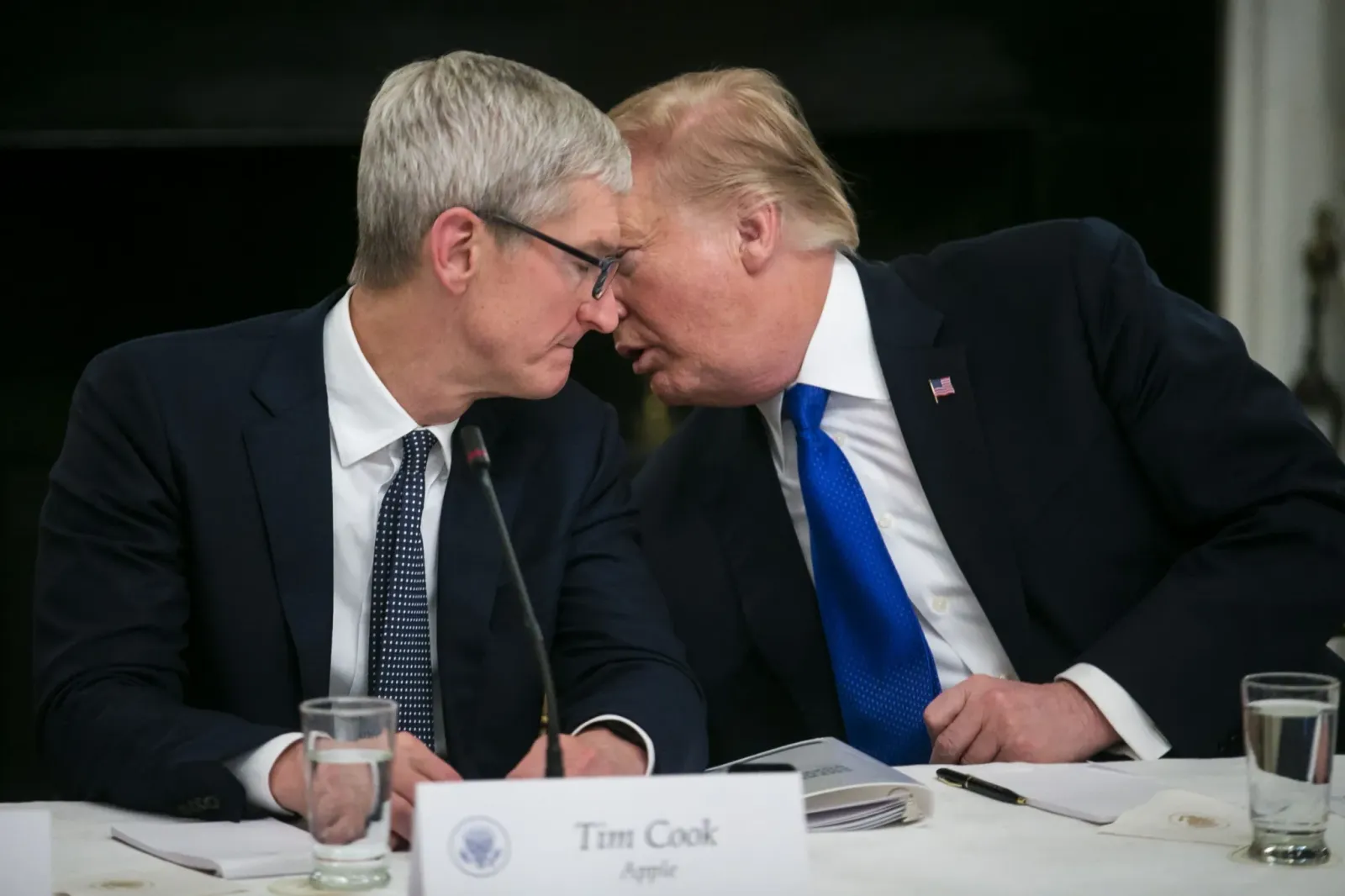
Tim Cook steps down as Apple CEO, stays on as chair with $45M equity
The 'Trump whisperer' keeps his White House and Beijing access as Apple navigates tariffs and a $4.6 trillion market cap.

Snowflake shares surge as AI data demand crushes estimates, lifting full-year forecast
Stocks jumped on stronger-than-expected guidance, signaling enterprise AI workloads are accelerating faster than Wall Street priced in.

Tim Cook's 15-year Apple CEO run ends: 3 lessons for any successor
After 15 years, Tim Cook hands Apple to John Ternus - here's how he turned a $350B company into a $4.6T juggernaut.