

OpenAI Dot vs. Meta Muse: The AI agent war just got real
Two of AI's biggest names are now head-to-head with consumer agents. Here's what the comparison means for your stack.
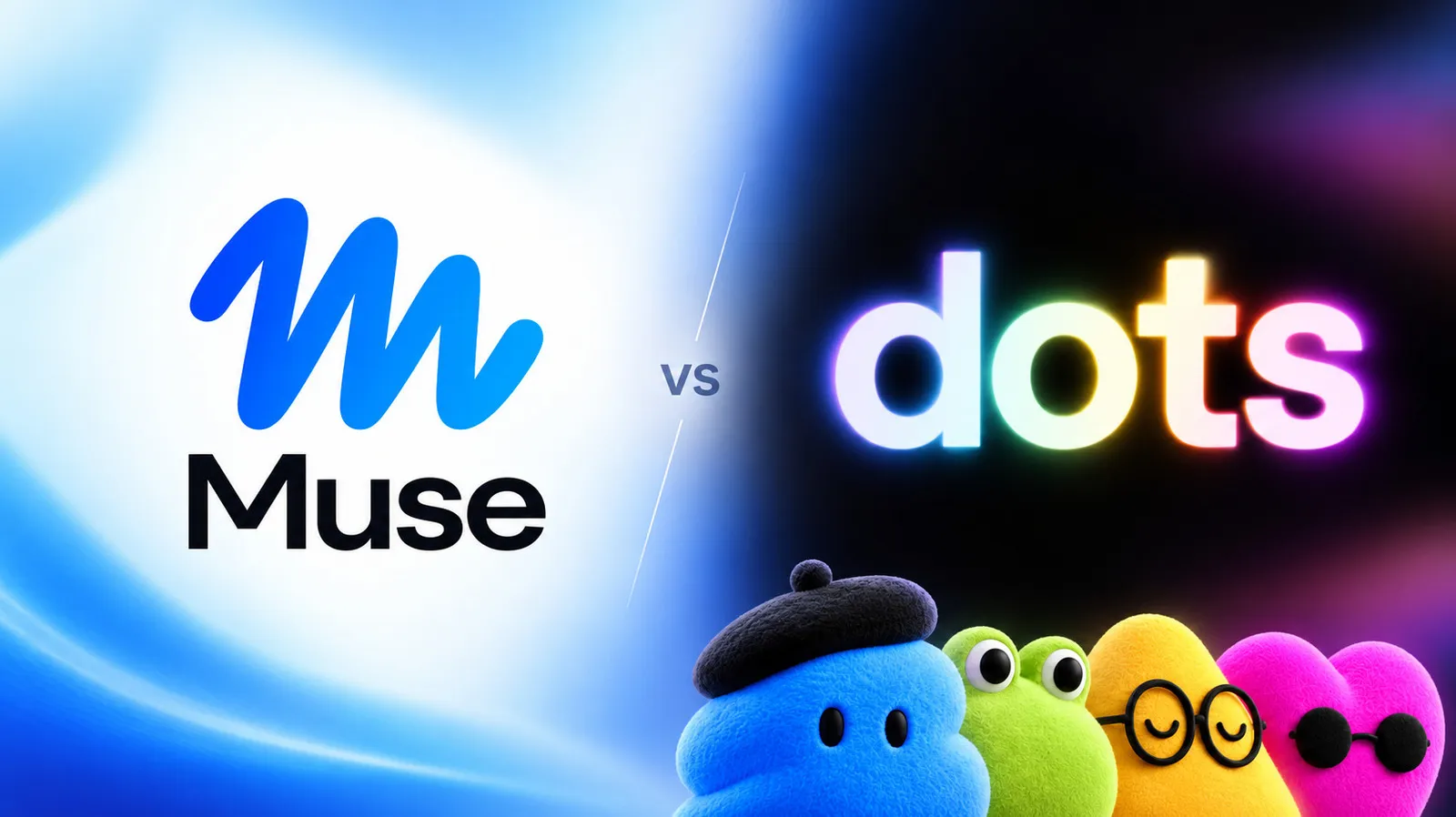
OpenAI and Meta have each launched AI agents, Dot and Muse, placing the two companies in direct competition. For decision-makers, the battle over capabilities, pricing, and access will shape which AI ecosystem becomes the default.
OpenAI's Dot and Meta's Muse are now officially rivals. The two companies have launched competing AI agents, and the comparison breaks down along three axes: what each agent can do, what it costs, and who gets access. That is the entire ballgame, and it is a direct fight for the same user. The stakes could not be higher for anyone who builds on, invests in, or simply uses AI tools.
This is not a side experiment. OpenAI and Meta are the two most influential companies in AI, and they are now betting that the next big interface is an agent that does things for you, not just a chatbot that answers questions. For anyone building a business, choosing a tool, or deciding which ecosystem to bet on, this comparison is the opening salvo in a war that will define how software gets used. The winner of this battle will not just sell a product; it will set the default way people delegate tasks to machines.
Start with capabilities. The source comparison focuses on what each agent can do, and that is the right place to start. An AI agent's value is measured by the tasks it can complete autonomously, the reliability of its execution, and the complexity of the workflows it can handle. OpenAI brings the muscle of ChatGPT and its developer ecosystem, which has already become a go-to for millions of users and thousands of companies. Meta brings the distribution of billions of users across its apps, plus a deep history of consumer product design. The agent that wins on capability will likely be the one that integrates most seamlessly into the tools people already use, and that integration is where the real competitive advantage will be built.
Then there is price. Cost is the second battleground, and it is where the strategic pressure shows. In the AI industry, pricing is often used as a weapon to capture market share early, with companies subsidizing usage to build habits. The comparison between Dot and Muse will likely reveal different approaches, but the underlying logic is the same: the agent that delivers the most value per dollar will win the budget-conscious user, while the premium option must prove it is worth the extra spend. For businesses, this means the cost curve matters as much as the feature list, because the agent you adopt today may change its pricing model tomorrow as the market matures.
Access is the third lever, and it may be the most consequential. Who gets to use these agents, and on what platforms, determines how quickly they spread. A limited rollout creates scarcity and buzz, but a wide release can flood the market. For Meta, access could mean deep integration with WhatsApp, Instagram, and Facebook, putting an agent in the hands of billions of people who have never opened a dedicated AI app. For OpenAI, access could mean a seamless extension of ChatGPT's existing reach, turning a familiar interface into an action-taking engine. The winner here will be the one that turns access into daily habit, and that is a race that will be won in the first few months of availability.
Zoom out, and the bigger story is that the AI industry is shifting from conversation to action. Chatbots answer questions; agents execute tasks. That shift has massive implications for every software category, from productivity tools to customer service to e-commerce. The Dot vs. Muse comparison is a snapshot of that transition, and it is happening in real time. For context, the last two years were dominated by generative AI that produced text, images, and code. The next phase is about AI that takes initiative, and both OpenAI and Meta are staking their futures on that vision.
For executives and founders, the immediate takeaway is to avoid locking in too early. The agent landscape is moving fast, and today's leader can be tomorrow's also-ran. Watch how pricing evolves, how access expands, and which integrations ship first. Those signals will tell you which ecosystem is gaining real traction, and that will inform everything from internal tooling to customer-facing features. The cost of switching later will be high, so the smart move is to run controlled experiments with both agents rather than making a single bet now.
The bottom line: OpenAI and Meta are now fighting for the same territory, and the comparison between Dot and Muse is the first clear map of the battlefield. The winner is not decided, but the stakes are enormous. The agent that becomes the default will own a massive share of how people interact with software, and that is a prize worth watching closely. For decision-makers, the message is simple: this is the moment to start paying attention, because the agent war is not coming. It is already here.
This story's Key Insights and Take-aways are locked.
Create a free account to unlock Executive Actions for one credit.
Register to UnlockAlways free for Executives Club members. Join the Club
More in Technology

A Chinese rocket deorbited over Minnesota and landed in a farmer's cornfield
Experts tied the fragment to LandSpace's Zhuque-2E, which launched on September 15 and shed debris over the American Midwest after deploying 10 satellites.

JPMorgan Chase deploys first $5B into defense tech and hypersonic missiles
The bank is moving off its balance sheet to back robot factories, hypersonic missiles, and supply chains, signaling a new era of bank-backed military innovation.

Cop fired after sharing Flock login with ICE husband: 983 searches
A Savannah officer's shared credential let an ICE agent run hundreds of plate searches on Hispanic drivers, exposing a surveillance backdoor.