
OpenAI files confidentially for an IPO as Anthropic and SpaceX prepare theirs
Three high-profile moves in weeks means the AI public-market queue is getting crowded, fast.
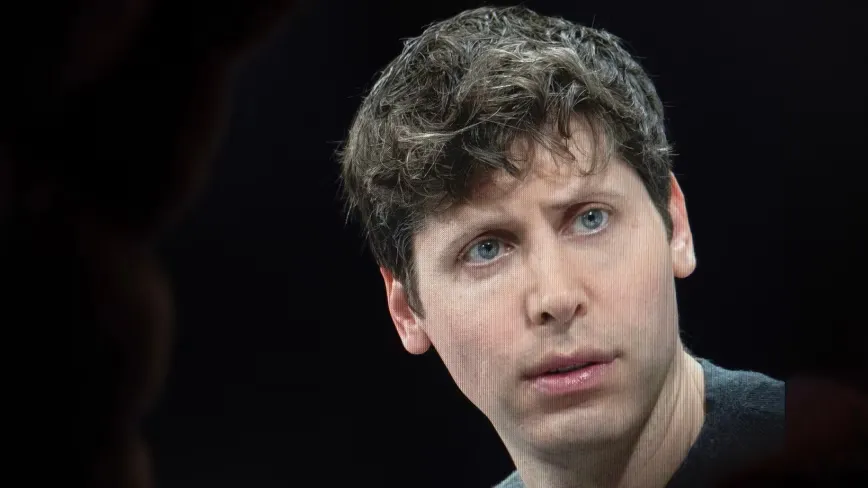
OpenAI confirmed it filed confidential IPO paperwork with the SEC on Monday. The filing comes after Anthropic’s IPO filing last week and alongside SpaceX’s expected listing on Thursday, with Goldman Sachs and Morgan Stanley advising a potential OpenAI listing as soon as autumn.
OpenAI has submitted confidential IPO paperwork to the SEC, and the company confirmed the move on Monday. That act alone is big, but the timing is what makes it feel like a stampede: Anthropic filed last week, and SpaceX is listed on Thursday. Put those together and the message is hard to miss. The AI public markets are not just opening. They are getting crowded, quickly.
According to people familiar with the matter, Goldman Sachs and Morgan Stanley are advising on a potential listing that could come as soon as the autumn. In other words, OpenAI is not merely testing the idea. It is lining up the advisers and paperwork steps in a way that suggests an actual path to public trading, with an “autumn” window in the air. For decision-makers, this matters because IPO timing influences everything from investor expectations to valuation benchmarks to competitive fundraising strategies.
Stepping back, a confidential SEC filing is designed to give a company room to maneuver. It signals serious intent without forcing every detail into the open immediately. That is a practical advantage when there are still moving parts: the final structure of the offering, the initial investor base, and the public narrative around growth and profitability. Even without the full disclosures in the open, the market reads the direction. And in this case, OpenAI’s direction lands right in the middle of a crowded AI moment, not in a quiet stretch.
Why are these moves landing close together? The source frames it as OpenAI becoming the third major AI-adjacent company to move toward public markets in a single stretch. That puts pressure on everyone watching from the sidelines, including peers who are private and still deciding whether to go public, stay private longer, or restructure their capital strategy. When multiple players show up at once, it can change how the public market prices “AI exposure” as a category. Investors can diversify across stories, but they can also compare them more aggressively. The IPO queue becomes a competitive marketplace for attention.
There is also the underappreciated angle: IPOs pull regulatory attention even before the company is “public public.” SEC filings, even confidential ones, start the clock on scrutiny around governance, revenue recognition, risk factors, and how the business model holds up under public market math. For AI-native or AI-adjacent companies, the hard questions usually revolve around sustainability, concentration risks, and what exactly drives margins over time. The source does not provide details on those points for OpenAI specifically. But the process itself signals the company is preparing to answer them.
Advisers matter here too. Goldman Sachs and Morgan Stanley being named as advisers (per people familiar with the matter) is not just a branding footnote. Big-bank involvement typically indicates the company is working through the mechanics of a real listing, not just exploring a theoretical option. Those firms sit at the center of deal distribution to institutional investors, and they also help calibrate the timing and structure of an offering. If autumn is on the table, advisers are likely already thinking about market conditions, investor appetite, and how to position the story against other high-profile listings.
And then there are the “who is next” dynamics. The source stacks three events across different companies: OpenAI’s confidential filing on Monday, Anthropic’s filing last week, and SpaceX’s listing expected on Thursday. The proximity creates second-order effects that go beyond headlines. Executives at other AI-adjacent companies will have to consider how investors might rotate capital between platforms, infrastructure, and applications. Boards may also feel pressure to revisit timelines. If the market is about to price a new wave of AI risk in public markets, waiting too long could mean missing the window where investors are still willing to pay for growth before skepticism catches up.
For founders and operators, there is a practical implication: public-market readiness is not just financial. It includes reporting discipline, governance structures, and investor communication. For CFOs and finance teams, it includes building the internal machinery that can support life as a public company. And for investors, the consequence is simple but uncomfortable: attention is a finite resource. A crowded IPO calendar can boost optionality for capital allocators who want exposure to multiple stories. But it can also increase competition for valuation and narrative clarity, which can change what “fair” looks like for the next deal.
The big strategic stakes for decision-makers is whether this becomes a one-time flurry or the start of a broader re-rating of AI-adjacent businesses. OpenAI’s confidential SEC filing, paired with Anthropic’s move and SpaceX’s imminent listing, strongly suggests the former is not the plan. The market is preparing for a batch of high-profile entrants. If you run one of these businesses, or sit on a board, the question is no longer whether AI goes public. It is how to prepare for a market that is about to decide, in real time, which AI stories hold up after the hype fades.
This story's Key Insights and Take-aways are locked.
Create a free account to unlock Executive Actions for one credit.
Register to UnlockAlways free for Executives Club members. Join the Club
More in Technology

OpenAI says 10,000 agents cracked a 90-year math problem in 88 hours
The company's claim is audacious, but one mathematician is pushing back. Here's what it means for AI-driven discovery.
Meta still serves child sexual abuse ads on Instagram in India - BBC report
A new report following the BBC Eye investigation says the ads are still there - what it signals for every platform with a self-serve ad engine.
White House yanks 'Build the Wall' game after Tetris Company copyright warning
The administration's arcade game vanished in hours - and the takedown playbook every brand can learn from.